

• Home
  • Agric
  • Sci & Tech
  • Health
  • Environment
  • Hausa News
  • More
    • Business/Banking & Finance
    • Politics/Elections
    • Entertainments & Sports
    • International
    • Investigation
    • Law & Human Rights
    • Africa
    • ACCOUNTABILITY/CORRUPTION
    • Hassan Gimba
    • Column
    • Prof. Jibrin Ibrahim
    • Prof. M.K. Othman
    • Defense/Security
    • Education
    • Energy/Electricity
    • Entertainment/Arts & Sports
    • Society and Lifestyle
    • Food & Agriculture
    • Health & Healthy Living
    • International News
    • Interviews
    • Investigation/Fact-Check
    • Judiciary/Legislature/Law & Human Rights
    • Oil & Gas/Mineral Resources
    • Press Freedom/Media/PR/Journalism
    • General News
    • Presidency
  • About Us
    • Contact Us
    • Board Of Advisory
    • Privacy Policy
    • Ethics Policy
    • Teamwork And Collaboration Policy
    • Fact-Checking Policy
    • Advertising
  • Media OutReach Newswire
    • Wire News
  • The Stories
Facebook Twitter Instagram
Trending
  • US-Nigeria working group concludes strategic security session in Abuja
  • Lagos begins statewide measles-rubella, immunization drive
  • Doctor links diabetes surge to fake drugs, self-medication
  • Tachi mobilises APC members for mass e-registration in Niger
  • WEF: Shettima arrives Abuja after international economic mission
  • FG pledges support to University’s Agriculture Programme
  • LP donates N2m to Sokoto market fire victims
  • Simi: Why my song with Chike was delayed
Facebook Twitter Instagram YouTube
AsheNewsAsheNews
  • Home
  • Agric

    FG pledges support to University’s Agriculture Programme

    January 24, 2026

    Youth, farmers benefit from FG/IFAD agricultural programme in Kogi

    January 24, 2026

    World Bank approves $50m to scale solar farming solutions across Nigeria, 5 African states

    January 23, 2026

    [VIEWPOINT] How pigeonpea planting could boost agricultural production, by Zablon Oyugi

    January 23, 2026

    L-PRES approves establishment of livestock service centre in Bauchi

    January 23, 2026
  • Sci & Tech

    Meta blocks minors access to AI characters

    January 24, 2026

    Apple to replace Siri with Campos AI chatbot

    January 23, 2026

    Amazon to launch satellite internet in South Africa

    January 23, 2026

    Scientists discover 2.6-m-year-old paranthropus fossil in Ethiopia’s Afar region

    January 23, 2026

    Digital age stalking poses serious risks to women

    January 23, 2026
  • Health

    Lagos begins statewide measles-rubella, immunization drive

    January 24, 2026

    Doctor links diabetes surge to fake drugs, self-medication

    January 24, 2026

    Gombe, UNICEF inaugurate sexual assault referral centre

    January 24, 2026

    Ebonyi to tackle open defecation, poor immunization — Nwifuru

    January 24, 2026

    Agbelebu foundation boosts healthcare access for elderly, PWDs

    January 24, 2026
  • Environment

    Over 8,000 flights cancelled as powerful winter storm batters large swath of US

    January 24, 2026

    Utsev tours Benue water supply, irrigation projects

    January 24, 2026

    SRADeV commends NAFDAC on enforcement of sachet alcohol ban

    January 24, 2026

    Gov. Otti lauds rehabilitation of NYSC camp in Abia

    January 24, 2026

    NCF awards research grants to 2 environmental PhD students

    January 23, 2026
  • Hausa News

    Anti-quackery task force seals 4 fake hospitals in Rivers

    August 29, 2025

    [BIDIYO] Yadda na lashe gasa ta duniya a fannin Ingilishi – Rukayya ‘yar shekara 17

    August 6, 2025

    A Saka Baki, A Sasanta Saɓani Tsakanin ‘Yanjarida Da Liman, Daga Muhammad Sajo

    May 21, 2025

    Dan majalisa ya raba kayan miliyoyi a Funtuwa da Dandume

    March 18, 2025

    [VIDIYO] Fassarar mafalki akan aikin Hajji

    January 6, 2025
  • More
    1. Business/Banking & Finance
    2. Politics/Elections
    3. Entertainments & Sports
    4. International
    5. Investigation
    6. Law & Human Rights
    7. Africa
    8. ACCOUNTABILITY/CORRUPTION
    9. Hassan Gimba
    10. Column
    11. Prof. Jibrin Ibrahim
    12. Prof. M.K. Othman
    13. Defense/Security
    14. Education
    15. Energy/Electricity
    16. Entertainment/Arts & Sports
    17. Society and Lifestyle
    18. Food & Agriculture
    19. Health & Healthy Living
    20. International News
    21. Interviews
    22. Investigation/Fact-Check
    23. Judiciary/Legislature/Law & Human Rights
    24. Oil & Gas/Mineral Resources
    25. Press Freedom/Media/PR/Journalism
    26. General News
    27. Presidency
    Featured
    Recent

    US-Nigeria working group concludes strategic security session in Abuja

    January 24, 2026

    Lagos begins statewide measles-rubella, immunization drive

    January 24, 2026

    Doctor links diabetes surge to fake drugs, self-medication

    January 24, 2026
  • About Us
    1. Contact Us
    2. Board Of Advisory
    3. Privacy Policy
    4. Ethics Policy
    5. Teamwork And Collaboration Policy
    6. Fact-Checking Policy
    7. Advertising
    Featured
    Recent

    US-Nigeria working group concludes strategic security session in Abuja

    January 24, 2026

    Lagos begins statewide measles-rubella, immunization drive

    January 24, 2026

    Doctor links diabetes surge to fake drugs, self-medication

    January 24, 2026
  • Media OutReach Newswire
    • Wire News
  • The Stories
AsheNewsAsheNews
Home»Viewpoint»The General who played Nigeria: How Babangida’s political tricks shaped a nation’s fate
Viewpoint

The General who played Nigeria: How Babangida’s political tricks shaped a nation’s fate

EditorBy EditorFebruary 23, 2025Updated:February 23, 2025No Comments5 Mins Read
Share
Facebook Twitter LinkedIn Pinterest Email

Ibrahim Babangida’s rise to power and subsequent actions in the Nigerian military and political history presents a complex narrative of ambition, manipulation, and controversial decisions that earned him the nickname “Maradona” for his political manoeuvring.

His career trajectory, particularly his role in various coups and his eventual annulment of the 1993 presidential election, reveals a pattern of actions that many Nigerians consider betrayals of public trust.

In his early military career, Babangida’s involvement in coups began with the counter-coup of July 1966, where he participated in the overthrow of Major General Johnson Aguiyi-Ironsi. As a young officer, he was part of the group that assassinated Ironsi in Ibadan, marking his first significant involvement in Nigeria’s military politics.

This action, while portrayed by some as patriotic, set a precedent for his future involvement in military interventions in Nigeria’s political sphere.

The pattern continued in 1976 when Babangida played a crucial role in foiling the coup attempt against General Murtala Mohammed. However, rather than strengthening democratic institutions after this event, he remained part of the military establishment that continued to hold significant political power.

His actions during this period demonstrated his tactical approach to power politics, as he built alliances within the military while maintaining a carefully crafted public image.

In 1983, Babangida showed another dimension of his political manoeuvring when he supported the coup that brought General Muhammadu Buhari to power. However, his loyalty proved temporary. Just twenty months later, in what many consider one of his most significant acts of betrayal, he orchestrated a palace coup against Buhari in August 1985.

This coup was particularly notable for its bloodless nature, executed through careful political manipulation rather than violent confrontation.

Upon assuming power as Military President, Babangida embarked on what appeared to be a program of economic reform through his Structural Adjustment Programme (SAP).

However, this period was marked by significant economic hardship for ordinary Nigerians, while reports suggested that corruption flourished among the military elite. His regime was characterized by the systematic weakening of opposition voices and the careful manipulation of political processes to maintain power.

One of the most controversial aspects of his rule was his handling of the transition to civilian rule. Babangida repeatedly promised to hand over power to civilians but consistently found ways to extend his stay in office.

Read Also: Breaking the cycle: The need for premarital genotype screening and an end to sickle cell stigma

He created a complex transition program that many observers believed was designed to fail. He banned and unbanned politicians, created and dissolved political parties, and manipulated the political process in ways that maintained uncertainty about his true intentions.

The culmination of these manipulative actions came with the events surrounding the June 12, 1993 presidential election. The election, contested primarily between Moshood Abiola of the Social Democratic Party (SDP) and Bashir Tofa of the National Republican Convention (NRC), was widely regarded as Nigeria’s freest and fairest election to that point. International observers praised the conduct of the election, and early results indicated a clear victory for Abiola.

However, in what many consider his most egregious act against Nigerian democracy, Babangida annulled the election results on June 23, 1993. The official explanation cited election irregularities, but evidence suggests the annulment was premeditated.

This decision threw Nigeria into one of its worst political crises since the civil war. The annulment led to widespread protests, particularly in the Southwest, and severely damaged Nigeria’s international reputation.

The aftermath of the annulment revealed the extent of Babangida’s political miscalculation. Faced with unprecedented civil unrest and international condemnation, he was forced to “step aside” in August 1993, installing an Interim National Government led by Ernest Shonekan.

This arrangement, widely seen as illegitimate, collapsed after three months when General Sani Abacha took power, leading Nigeria into another period of military dictatorship.

Several historical accounts suggest that Babangida’s decisions were often motivated by self-preservation rather than national interest. His regime was marked by numerous allegations of corruption, including the unaccounted $12.4 billion in oil windfall from the Gulf War period.

Despite these serious allegations, Babangida managed to maintain his influence in Nigerian politics even after leaving office, protected by the networks he had built during his years in power.

The impact of Babangida’s actions continues to resonate in Nigerian politics. His annulment of the June 12 election particularly remains a watershed moment in Nigerian history, representing a critical missed opportunity for democratic consolidation.

The decision fundamentally altered Nigeria’s political trajectory and deepened ethnic and regional divisions that continue to affect Nigerian politics today. Scholars and political analysts often point to Babangida’s regime as a classic example of military authoritarianism masked by civilian political structures.

His approach to power, characterized by elaborate political manoeuvring and the systematic undermining of democratic institutions, set dangerous precedents for Nigerian political culture.

The term “Maradona politics,” coined during his era, continues to be used to describe deceptive political behaviour in Nigerian political discourse.

In retrospect, Babangida’s military career and presidency represent a period of missed opportunities for Nigeria’s democratic development. His actions, particularly the annulment of the June 12 election, demonstrated a pattern of putting personal and military interests above national democratic aspirations.

The consequences of these decisions contributed to political instability, economic challenges, and social unrest that Nigeria struggled with for years afterwards.

Samuel

MNITP, RTP, PhD

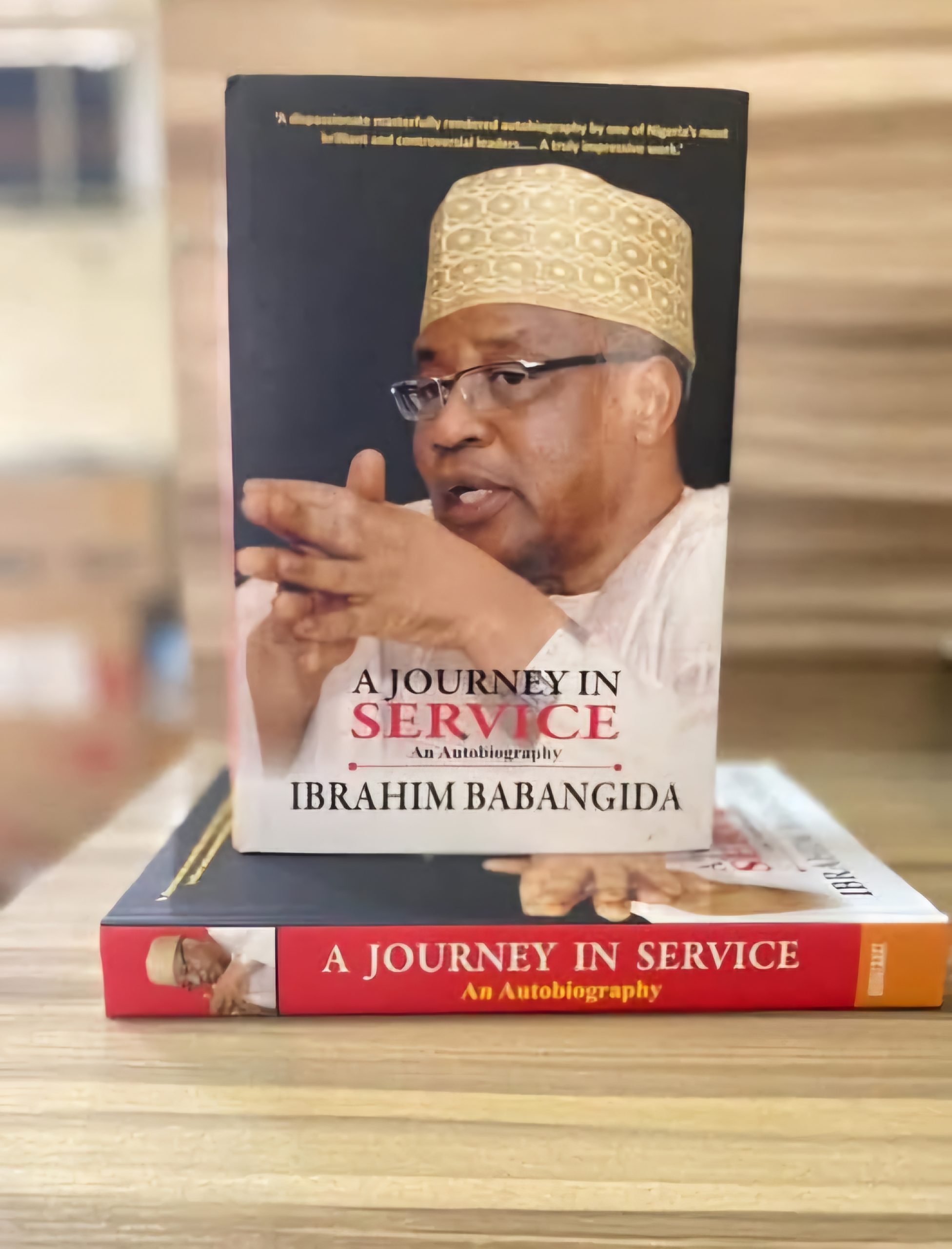
Babangida Babangida's book General Babangida Vatsa
Share. Facebook Twitter Pinterest LinkedIn WhatsApp Reddit Tumblr Email
Editor
  • Website

Related Posts

|FULL STORY] From Oruru to Walida: Exposing selective outrage in child sexual exploitation cases, By Yushau A. Shuaib

January 17, 2026

Analysis: Nigeria’s health sector in 2026: A crossroad of promise and peril

January 17, 2026

Climate risks Nigeria ignored in 2025

January 16, 2026

Leave A Reply Cancel Reply

US-Nigeria working group concludes strategic security session in Abuja

January 24, 2026

Lagos begins statewide measles-rubella, immunization drive

January 24, 2026

Doctor links diabetes surge to fake drugs, self-medication

January 24, 2026

Tachi mobilises APC members for mass e-registration in Niger

January 24, 2026
About Us
About Us

ASHENEWS (AsheNewsDaily.com), published by PenPlus Online Media Publishers, is an independent online newspaper. We report development news, especially on Agriculture, Science, Health and Environment as they affect the under-reported rural and urban poor.

We also conduct investigations, especially in the areas of ASHE, as well as other general interests, including corruption, human rights, illicit financial flows, and politics.

Contact Info:
  • 1st floor, Dogon Daji House, No. 5, Maiduguri Road, Sokoto
  • +234(0)7031140009
  • ashenewsdaily@gmail.com
Facebook Twitter Instagram Pinterest
© 2026 All Rights Reserved. ASHENEWS Daily Designed & Managed By DeedsTech

Type above and press Enter to search. Press Esc to cancel.