

• Home
  • Agric
  • Sci & Tech
  • Health
  • Environment
  • Hausa News
  • More
    • Business/Banking & Finance
    • POLITICS
    • Entertainments & Sports
    • International
    • Investigation
    • Law & Human Rights
    • Africa
    • ACCOUNTABILITY/CORRUPTION
    • Hassan Gimba
    • Column
    • Prof. Jibrin Ibrahim
    • Prof. M.K. Othman
    • Defense/Security
    • Education
    • Energy/Electricity
    • Entertainment/Arts & Sports
    • Society and Lifestyle
    • Food & Agriculture
    • Health & Healthy Living
    • International News
    • Interviews
    • Investigation/Fact-Check
    • LAW & HUMAN RIGHTS
    • Oil & Gas/Mineral Resources
    • PRESS FREEDOM/JOURNALISM/PR
    • General News
    • Presidency
  • About Us
    • Contact Us
    • Board Of Advisory
    • Privacy Policy
    • Ethics Policy
    • Teamwork And Collaboration Policy
    • Fact-Checking Policy
    • Advertising
  • Media OutReach Newswire
    • Wire News
  • The Stories
Facebook Twitter Instagram
Trending
  • Nigeria’s neem advantage: Unlocking a strategic bioeconomy industry for climate, agriculture and industrial growth, Dr Fakunle Aremu
  • NAFDAC holds workshop on medicine safety in Karu
  • AFAN predicts drop in food prices after fertiliser distribution
  • IBB university secures ABU approval for medical students clinical training
  • Edo state reaffirms commitment to fight drug abuse
  • PAAU student arrested for alleged forced cult initiation
  • Africa’s first social justice improv festival opens in Abuja
  • Umahi orders temporary halt on Ibadan-Ife-Ilesa road work
Facebook Twitter Instagram YouTube
AsheNewsAsheNews
  • Home
  • Agric

    Nigeria’s neem advantage: Unlocking a strategic bioeconomy industry for climate, agriculture and industrial growth, Dr Fakunle Aremu

    June 22, 2026

    AFAN predicts drop in food prices after fertiliser distribution

    June 22, 2026

    Northern Nigeria’s poultry economy: Unlocking a multi-billion dollar investment opportunity across the value chain, By Dr. Fakunle Aremu

    June 19, 2026

    Association trains farmers on agroforestry, carbon opportunities

    June 18, 2026

    IWMI, IFPRI link Kano farmers to solar irrigation support

    June 17, 2026
  • Sci & Tech

    ALTON supports CBN’s local data hosting mandate

    June 20, 2026

    NDPC seeks INEC data records over breach allegations

    June 20, 2026

    SGF urges Galaxy Backbone to boost cybersecurity, broadband

    June 20, 2026

    Experts urge AI, satellite data to build safer, more sustainable cities at FUTA symposium

    June 19, 2026

    Anambra disburses N80m to 80 startups for tech growth

    June 19, 2026
  • Health

    NAFDAC holds workshop on medicine safety in Karu

    June 22, 2026

    Expert urges focused use of N10bn for Ebola preparedness

    June 22, 2026

    From Sokoto to Bulgaria: Dr. Dange’s mission to transform pediatric care

    June 21, 2026

    Nigeria’s Fathers face silent mental health crisis

    June 21, 2026

    NGO promotes menstrual hygiene in Benue schools

    June 20, 2026
  • Environment

    Floods, Windstorm devastate Ebonyi farmlands, shops

    June 22, 2026

    Progress on Lagos-Calabar road celebrated

    June 22, 2026

    Sanitation concerns at Lagos market

    June 21, 2026

    Lagos envoy defends waste enforcement efforts

    June 20, 2026

    Tinubu: Abuja crime hideouts disappearing

    June 20, 2026
  • Hausa News

    UNA signs MoU to launch air Bissau in Guinea-Bissau

    June 15, 2026

    Otti plans 250-room 5-star hotel in Umuahia

    April 11, 2026

    Anti-quackery task force seals 4 fake hospitals in Rivers

    August 29, 2025

    [BIDIYO] Yadda na lashe gasa ta duniya a fannin Ingilishi – Rukayya ‘yar shekara 17

    August 6, 2025

    A Saka Baki, A Sasanta Saɓani Tsakanin ‘Yanjarida Da Liman, Daga Muhammad Sajo

    May 21, 2025
  • More
    1. Business/Banking & Finance
    2. POLITICS
    3. Entertainments & Sports
    4. International
    5. Investigation
    6. Law & Human Rights
    7. Africa
    8. ACCOUNTABILITY/CORRUPTION
    9. Hassan Gimba
    10. Column
    11. Prof. Jibrin Ibrahim
    12. Prof. M.K. Othman
    13. Defense/Security
    14. Education
    15. Energy/Electricity
    16. Entertainment/Arts & Sports
    17. Society and Lifestyle
    18. Food & Agriculture
    19. Health & Healthy Living
    20. International News
    21. Interviews
    22. Investigation/Fact-Check
    23. LAW & HUMAN RIGHTS
    24. Oil & Gas/Mineral Resources
    25. PRESS FREEDOM/JOURNALISM/PR
    26. General News
    27. Presidency
    Featured
    Recent

    Nigeria’s neem advantage: Unlocking a strategic bioeconomy industry for climate, agriculture and industrial growth, Dr Fakunle Aremu

    June 22, 2026

    NAFDAC holds workshop on medicine safety in Karu

    June 22, 2026

    AFAN predicts drop in food prices after fertiliser distribution

    June 22, 2026
  • About Us
    1. Contact Us
    2. Board Of Advisory
    3. Privacy Policy
    4. Ethics Policy
    5. Teamwork And Collaboration Policy
    6. Fact-Checking Policy
    7. Advertising
    Featured
    Recent

    Nigeria’s neem advantage: Unlocking a strategic bioeconomy industry for climate, agriculture and industrial growth, Dr Fakunle Aremu

    June 22, 2026

    NAFDAC holds workshop on medicine safety in Karu

    June 22, 2026

    AFAN predicts drop in food prices after fertiliser distribution

    June 22, 2026
  • Media OutReach Newswire
    • Wire News
  • The Stories
AsheNewsAsheNews
Home»Viewpoint»Mike Arnold’s post: Sensationalism over substance, by Bodise Wilson
Viewpoint

Mike Arnold’s post: Sensationalism over substance, by Bodise Wilson

EditorBy EditorMay 25, 2026Updated:May 25, 2026No Comments5 Mins Read
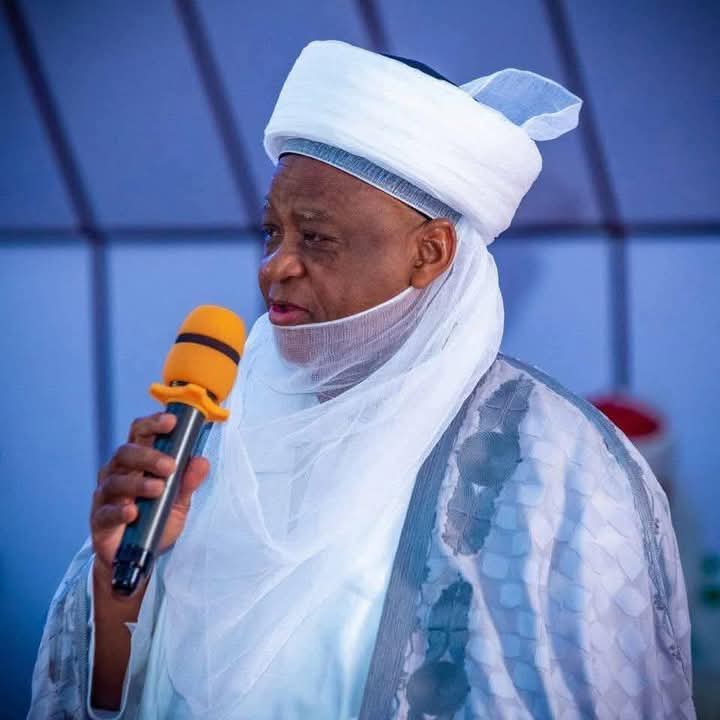
Sultan Abubakar
Share
Facebook Twitter LinkedIn Pinterest Email

Mike Arnold’s post relies on classic alarmist rhetoric, blending partial historical facts with exaggerated conspiracy theories to reframe Nigeria’s intricate security crisis as a coordinated “Sultan’s Master Plan” for global Islamic conquest rooted in Mahdi prophecy.

While Nigeria undeniably faces severe challenges from Islamist terrorism, farmer-herder conflicts, and targeted violence that disproportionately affects Christians in specific regions, Arnold’s framing damages the discourse.

Instead of illuminating root causes, it stokes ethnic and religious friction. Furthermore, while some Igbo or southern audiences might latch onto this narrative to validate separatist ambitions (such as a Biafra revival), doing so is deeply misguided—it oversimplifies a systemic national failure that impacts Nigerians of all backgrounds.

Historical & Theological Claims: Partial Truths, Wild Overreach
Arnold weaves historical milestones into a misleading contemporary narrative. Stripping away the sensationalism reveals a massive gap between his claims and reality:

  • The Sokoto Caliphate vs. Modern Governance: Usman dan Fodio founded the Sokoto Caliphate in 1804 through a Fulani jihad aimed at Islamic reform. The current Sultan of Sokoto, Sa’adu Abubakar IV, is indeed a direct descendant of that lineage. However, the British militarily defeated the Caliphate in 1903.

Modern Nigeria is a constitutionally secular federal republic, not an active caliphate launchpad. Linking a symbolic, traditional religious title to top-down control of the modern state, military, and education system completely ignores decades of military coups, multi-ethnic institutions, and the terms of southern, Christian presidents like Olusegun Obasanjo and Goodluck Jonathan.

  • The Mahdi Prophecy Hyperbole: While eschatological (end-times) beliefs regarding the Mahdi are prominent in Islamic tradition, Arnold’s claim that the global population of 1.9 billion Muslims views Nigeria or Sokoto as the exclusive epicenter for a final global jihad is entirely unsubstantiated.

There is absolutely no mainstream Islamic consensus supporting this. Fringe terrorist groups like Boko Haram and ISWAP frequently deploy apocalyptic rhetoric, but this reflects the delusions of violent extremists, not a grand strategy dictated by the Sultan

  • A “Two-Century” Conspiracy: Equating the 1804 jihad directly with modern Boko Haram insurgencies, Fulani militancy, and northwestern banditry as a single, continuous 220-year-old genocidal blueprint stretches history to the breaking point. Today’s violence is driven by a toxic mix of climate change, desertification, explosive population growth, severe economic inequality, and total state governance failure. Resource competition over land and grazing routes predates and cuts across religious lines—meaning countless victims (and perpetrators) of this instability are themselves Muslim.

Casualty Figures and the “Genocide” Label
The violence targeting Christian communities in Nigeria’s Middle Belt and Northern regions is a horrific reality. Data from international advocacy and watchdog groups like Open Doors, Intersociety, and the Armed Conflict Location & Event Data Project (ACLED) document a devastating toll:

Since roughly 2009, tens of thousands of Christians have been killed by Boko Haram, ISWAP, and radicalized herdsmen, accompanied by widespread church burnings and mass displacement.

However, Arnold’s presentation of these tragedies lacks analytical rigor:

  • Inflated Statistics: The “six million” killed figure cited in his post is wildly inflated and entirely unsupported by credible, mainstream tracking organizations monitoring political and terror-related violence.
  • Complex Drivers of Violence: Labeling all violence in Nigeria as a singular, religiously motivated “genocide” ignores the massive economies of banditry, kidnapping-for-ransom, and localized ethnic tit-for-tat wars.
  • State Failure vs. Top-Down
    Orchestration: Consecutive Nigerian governments have rightfully faced fierce criticism for corruption, military incompetence, and a culture of impunity that borders on complicity.

However, attributing this to a centralized conspiracy managed by the Sultan completely misses the broader picture of state decay. It also ignores security crises initiated by southern actors, including violent excesses by factions of IPOB/ESN and lingering oil-related militancy in the Niger Delta.

Fanning the Flames of Disunity
peppered with sensational headlines like “EarthShaker Exclusive,” excessive emojis, and combative calls to action (“stop it there or fight in our backyard”), Arnold’s style is tailor-made for Western engagement loops and diaspora echo chambers rather than nuanced local problem-solving.

This approach inflicts real-world harm:

  • Erases Muslim Victims: It completely whites out the thousands of northern Muslims routinely slaughtered, kidnapped, or displaced by Boko Haram and bandit groups.
  • Promotes Monolithic Xenophobia: It flattens the diverse populations of Northern Nigeria, treating all northern Muslims as an active, malicious monolith and entrenching prejudices that paralyze national cohesion.
  • Encourages Destructive
    Secessionist Logic: For southern audiences, particularly some pro-Biafran factions, viewing the crisis strictly through Arnold’s lens offers false validation. Secession would not miraculously erase deep-seated governance failures, border security vulnerabilities, or the regional threat of radical extremism.

The Bottom Line
Nigeria’s security crisis is fueled by weak public institutions, elite predation, radicalization, demographic friction in a country of over 220 million people, and systemic poverty.

Evoking an apocalyptic, end-times plot orchestrated by a symbolic monarch is a dangerous distraction from the actual work required: building transparent justice systems, reforming the police, tackling military corruption, and fostering economic development.

Honest, productive critique must balance two truths: it must acknowledge the severe, disproportionate suffering of Christian communities in volatile zones without descending into the dark, polarizing conspiracism that makes national reconciliation impossible.

Both denialism (“nothing is wrong”) and apocalyptic exaggeration (“it’s a total caliphate plot”) actively prevent Nigeria from solving its deep-seated structural issues.

Mike Arnold
Share. Facebook Twitter Pinterest LinkedIn WhatsApp Reddit Tumblr Email
Editor
  • Website

Related Posts

Who controls the rhythm of this war? By Lanre Ogundipe

June 15, 2026

At 91, Uncle Sam remains a masterpiece in motion, by

June 12, 2026

The expertise we cannot afford to waste, by Lanre Ogundipe

June 11, 2026

Leave A Reply Cancel Reply

Nigeria’s neem advantage: Unlocking a strategic bioeconomy industry for climate, agriculture and industrial growth, Dr Fakunle Aremu

June 22, 2026

NAFDAC holds workshop on medicine safety in Karu

June 22, 2026

AFAN predicts drop in food prices after fertiliser distribution

June 22, 2026

IBB university secures ABU approval for medical students clinical training

June 22, 2026
About Us
About Us

ASHENEWS (AsheNewsDaily.com), published by PenPlus Online Media Publishers, is an independent online newspaper. We report development news, especially on Agriculture, Science, Health and Environment as they affect the under-reported rural and urban poor.

We also conduct investigations, especially in the areas of ASHE, as well as other general interests, including corruption, human rights, illicit financial flows, and politics.

Contact Info:
  • 1st floor, Dogon Daji House, No. 5, Maiduguri Road, Sokoto
  • +234(0)7031140009
  • ashenewsdaily@gmail.com
Facebook Twitter Instagram Pinterest
© 2026 All Rights Reserved. ASHENEWS Daily Designed & Managed By DeedsTech

Type above and press Enter to search. Press Esc to cancel.