


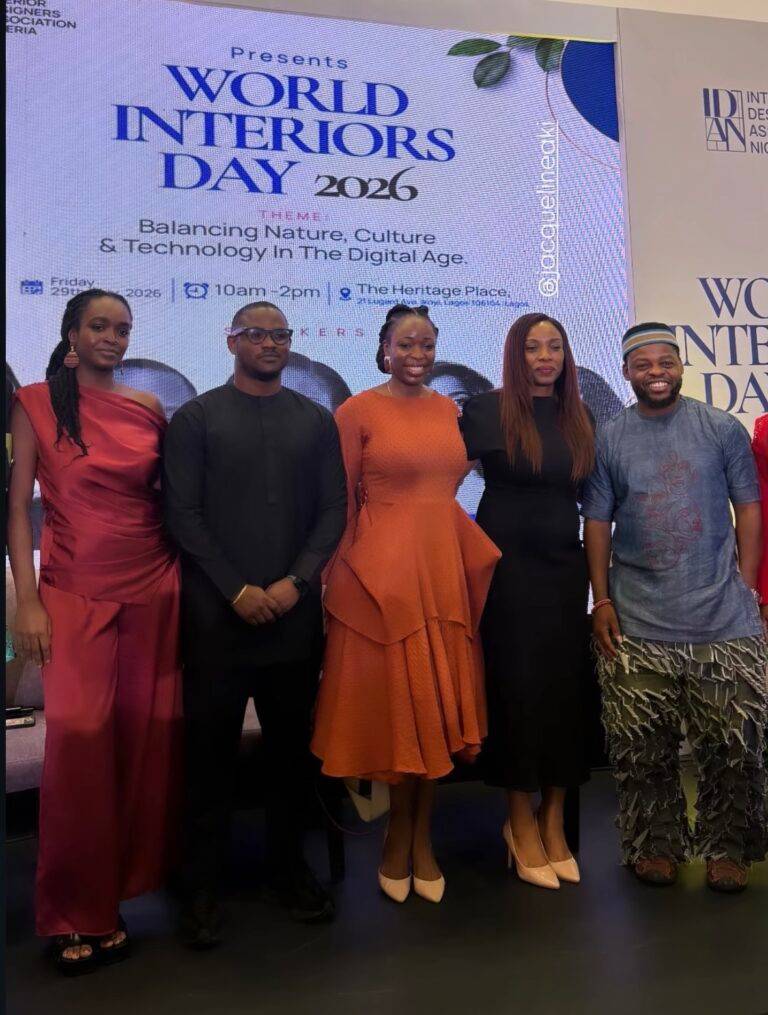
Technology, wellness, and human-centered design took center stage at the 2026 World Interiors Day celebration organized by the Interior Designers Association of Nigeria (IDAN) on Friday night in Lagos.
It was reported that World Interiors Day is observed globally on May 30 to highlight the role of design in creating healthier and more sustainable environments.
The event, organized by IDAN, was held under the theme: “Balancing Nature, Culture, and Technology in the Digital Age.”
It attracted interior designers, architects, developers, manufacturers, students, and other stakeholders from across the built environment sector.
The event emphasized the importance of collaboration among designers, architects, and technology professionals.
A major highlight was a presentation by smart living specialist Kehinde Awoyinfa, co-founder of Triangle Nigeria and Meetbox Africa.
Awoyinfa delivered an engaging session on the intersection of technology, wellness, and human experience within the built environment.
His presentation sparked significant interest and discussions on the evolving role of design in enhancing quality of life.
During the session, he challenged traditional notions of luxury and modern living.
“For many years, luxury was defined by what people could see—expensive finishes and grand spaces. Today, true luxury is defined by how people feel, including clean air, comfort, security, and emotional well-being,” he said.
Awoyinfa explained how emerging technologies are transforming homes and workplaces into healthier, more responsive environments.
He highlighted intelligent lighting, indoor air quality systems, automated climate control, and acoustic design as key elements of modern spaces.
According to him, these technologies can improve productivity, mental health, sleep quality, and overall well-being.
He emphasized that technology should enhance human experience, not dominate it.
“Technology should not make spaces feel more digital; it should make spaces feel more human,” he stated.
Industry professionals acknowledged the increasing relevance of such discussions as cities urbanize and technology becomes more integrated into daily life.
Awoyinfa also stressed the importance of preserving cultural identity amid rapid technological advancement.
He noted that African designers have a unique opportunity to blend innovation with local culture, climate, and community values.
He pointed out that technology should adapt to African lifestyles, not replace them.
He added that traditional principles like natural ventilation and indoor-outdoor living remain highly relevant.
“These principles can work alongside modern technologies to create healthier, more sustainable environments,” he said.
The presentation aligned with the theme of World Interiors Day 2026, emphasizing balance among nature, culture, and technology.
Awoyinfa concluded that the future of design depends on understanding people.
“The most successful spaces will not necessarily be those with the most technology. They will be the spaces that understand human beings best,” he said.
