


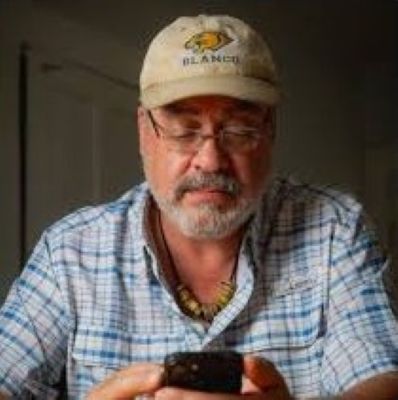
Mike Arnold’s claim that Nigeria is in the grip of a “Christian genocide” orchestrated by a “Sultan’s Master Plan” and driven by Muhammad’s end‑times prophecy is deeply inflammatory and not backed by credible evidence from mainstream human‑rights or conflict‑monitoring groups.
Even researchers who document severe attacks on Christians in Nigeria stress that the violence follows a broader pattern of terrorism, banditry, and intercommunal conflict, not a centrally coordinated religious extermination campaign directed from the Sultanate of Sokoto.
Only recently, Bishop Hassan Matthew Kukah appealed to the United States for Nigeria not to be designated as a Country of Particular Concern (CPC) over alleged violations of Christian religious freedom.
“Designating my country, Nigeria, a Country of Concern will only make our work in the area of dialogue among religious leaders in our country and elsewhere with the Nigerian state even harder. It will only increase tensions, sow doubt, open windows of suspicion and fear, and simply allow the criminals and perpetrators of violence to exploit,” he argued.
Christian communities in parts of northern and central Nigeria have suffered shocking attacks, including killings, abductions, and the burning of churches. But the same security crisis has also devastated Muslim communities, with mosques blown up, largely Muslim villages overrun, and politicians gunned down.
Studies that try to separate the data by religion show that extremist groups often choose victims based on accessibility and local grievances, not a neat religious divide. When outside commentators reach so quickly for the word “genocide,” they risk politicising victims on both sides and losing sight of the real, messy drivers of conflict.
ALSO READ FFK: Terrorists target all Nigerians — Christians and Muslims are dying
Arnold paints the Sultan of Sokoto as the hidden architect of a “jihad genocide,” implying that a top‑down religious conspiracy is unfolding across Nigeria. Nigerian authorities, Muslim leaders, and civil‑society organisations have dismissed these claims as baseless and harmful to national unity.
No credible investigative body—local, African, or international—has produced operational documents, court‑tested evidence, or even a coherent chain of command linking the Sultan to a systematic extermination of Christians. Without such proof, the narrative sounds more like a political thriller than a grounded analysis of the country’s security crisis.
The article also frames Nigeria’s violence as the fulfilment of Muhammad’s apocalyptic prophecy, suggesting that “1.9 billion Muslims” are waiting for a Mahdi‑led campaign to erase Christians. This kind of sweeping claim essentialises Islam and Muslims as uniformly violent and expansionist, ignoring the diversity of Muslim beliefs and the fact that Nigerian Muslims are among the main victims of the very groups Arnold claims are executing a “divine” plan. Such rhetoric feeds Islamophobia, hardens religious identities, and can embolden extremist narratives on all sides, instead of helping to build peace or accountability.
If the real concern is to protect Nigerian Christians, the focus should be on concrete issues:
- Reforming and strengthening security forces so they can actually protect communities.
- Ending the culture of impunity that allows attacks on churches and mosques to go unpunished.
- Encouraging genuine interfaith dialogue and community‑based peace initiatives, especially in the volatile Middle Belt.
Turning Nigeria’s complex, multi‑layered crisis into a “Sultan’s Master Plan” divinely scripted apocalypse does not clarify the way forward; it simplifies a tangled reality into a religious conspiracy. For journalists and readers, the more responsible approach is to demand evidence, cite independent research, and challenge narratives that weaponise theology for political sensationalism.
ELKUREBE is the founder and publisher of ASHENEWS
