


The United Nations has called on the international community to urgently scale up support for both the Ebola response and the broader humanitarian efforts in the Democratic Republic of the Congo (DRC).
UN Spokesperson Stephane Dujarric made the call on Monday in New York while giving an update on the Ebola outbreak in the DRC and Uganda.
According to Dujarric, the World Health Organisation (WHO) has declared the Ebola outbreak in the DRC and Uganda a public health emergency of international concern.
He added that the declaration highlights the high risk of further spread and the likelihood that the outbreak may be larger than currently detected.
“Without immediate action, life-saving assistance will not reach those most in need and critical humanitarian gains risk being reversed.
“The 1.4 billion dollar Humanitarian Needs and Response Plan for the DRC is currently only 34 per cent funded, with 478 million dollars received,” he said.
Dujarric said UN peacekeeping colleagues on the ground have reaffirmed their support to the DRC authorities, WHO and all partners involved in the Ebola response.
The UN Mission in the DRC (MONUSCO) is closely following the guidance of the Ministry of Health and WHO, while adapting its prevention measures accordingly.
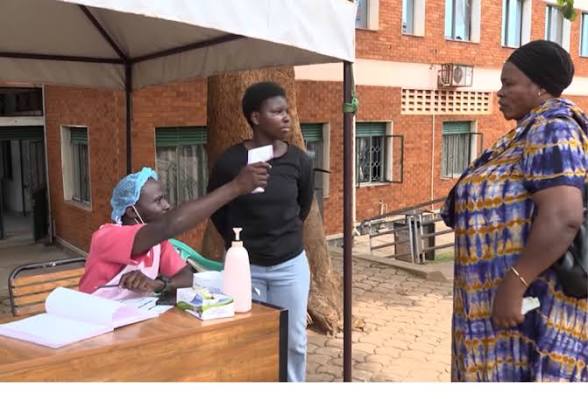
MONUSCO Medical Services have reinforced screening procedures at the entrance to mission clinics and mandated the systematic use of personal protective equipment for medical personnel.
The mission also emphasised the importance of reliable and verified information, urging everyone to rely on official communications from competent health authorities.
Dujarric further disclosed that the outbreak involves the Bundibugyo strain of the Ebola virus, for which there are currently no licensed vaccines or specific therapeutics.
“The outbreak is centred in Ituri Province, where more than 482 suspected cases have been reported since April, including eight confirmed cases and around 116 deaths among suspected cases.
“Testing of suspected cases is ongoing. A case was also confirmed on Sunday in Goma, North Kivu Province, raising concerns about potential spread in a densely populated urban area.
“We, alongside humanitarian partners, are supporting the Government-led Ebola response,” he said.
WHO is supporting national efforts through the deployment of technical expertise and rapid response teams.
“More than five tons of WHO medical supplies, along with experts, were airlifted to Ituri by the World Food Programme on Sunday to reinforce response efforts.
“Needless to say, additional resources and sustained humanitarian access will be critical to contain the outbreak and prevent further spread,” he added.
Dujarric warned that insecurity, population movements and displacement are significantly complicating surveillance, contact tracing and response efforts in a region already affected by violence, food insecurity and severe humanitarian needs.
“Nearly 9 million people across the eastern provinces of Ituri, North Kivu and South Kivu are facing crisis or worse levels of hunger, further straining fragile health systems, while only 30 per cent of required health funding has been mobilised,” he said.
