


Food industry stakeholders have called on Nigeria to accelerate the local production of food ingredients, warning that the country is losing significant economic value through unnecessary imports.
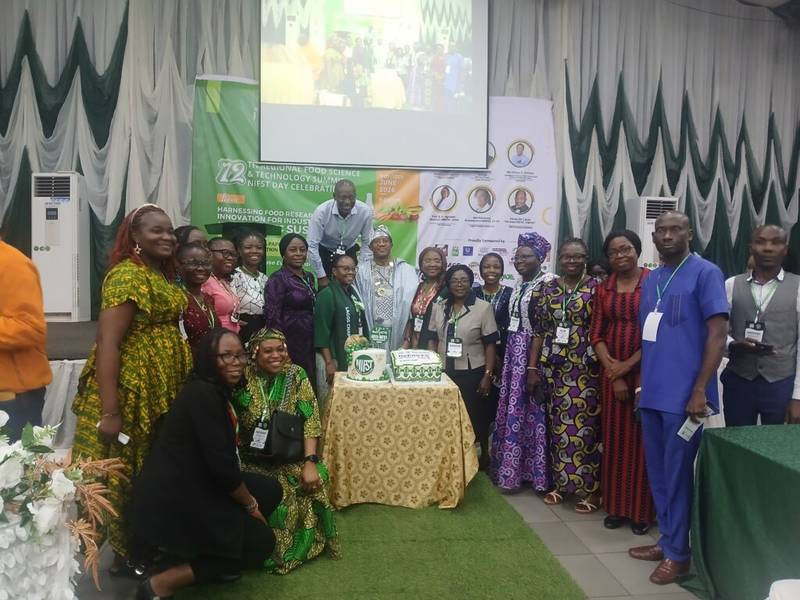
The stakeholders spoke at the 12th Regional Food Science and Technology Summit organized by the Lagos Chapter of the Nigerian Institute of Food Science and Technology (NIFST) in Lagos on Wednesday.
The summit’s theme was “Harnessing Food Research Innovation for Industrialization and Economic Sustainability.”
The Managing Director of Spectra Industries Ltd., Mr. Duro Kuteyi, stated that local manufacturers have the capacity to replace many imported food ingredients.
Kuteyi cited the company’s production of soy flour, which replaced imports from South Africa for a major customer after meeting quality standards.
“This development shows that Nigerian firms can successfully compete with foreign suppliers when given the necessary support.
“Increased patronage of locally manufactured food ingredients will conserve foreign exchange and strengthen domestic industrial capacity,” he said.
Kuteyi emphasized that strategic investments in food science and technology could improve food security, boost exports, and create new business opportunities.
He called for greater investment in agro-processing, stressing that value addition is critical to unlocking agriculture’s economic potential.
According to him, Nigeria continues to lose value by exporting raw agricultural commodities instead of processing them locally.
The food industry expert added that stronger links between research institutions and manufacturers would help accelerate the development of import-substituting products.
Earlier, Mrs. Kikelomo Amoreoluwa, Chair of NIFST Lagos Chapter, said food research must translate into products capable of driving industrialization and economic sustainability.
“Food science and technology play a vital role in addressing unemployment, food insecurity, and economic challenges,” she said.
Amoreoluwa called for increased collaboration among researchers, processors, investors, and entrepreneurs to scale innovations into commercially successful products.
Also speaking, NIFST National President, Dr. Bola Osinowo, noted that Africa has abundant agricultural resources but faces challenges in commercializing innovations.
He emphasized that value addition and local processing are essential for creating jobs, increasing incomes, and enhancing food security.
According to Osinowo, scientific breakthroughs only deliver economic benefits when transformed into products and services that reach consumers.
In his remarks, Mr. Cletus Chibuko, Managing Director of Edcel Ltd., identified weak innovation infrastructure as a major challenge facing the food sector.
He stressed that Nigeria must invest in facilities that support product development and industrial-scale testing to strengthen local manufacturing.
Chibuko added that the country has the talent and research capacity needed to build globally competitive food businesses.
The summit also featured a debate among selected secondary school students and a quiz among participating higher institutions.
Participating institutions in the quiz included Mountain Top University, Yaba College of Technology (YABATECH), Obafemi Awolowo University (OAU), Ile-Ife, and the Federal University of Technology, Akure (FUTA).
FUTA took first place, OAU, Ile-Ife was second, YABATECH third, and Mountain Top University fourth.
In the secondary school debate, the schools were Oriwu Senior Model College, Ikorodu; Oshodi Comprehensive Senior College; Supreme Touch International School, Agbara; Wisdomland Model School, Otta; and Brainfield School, Salolo, Ikeja.
Oriwu Senior Model College won first place, Wisdomland Model School was second, and Brainfield School placed third.
Additionally, 107 new members were inducted into NIFST nationwide.
