


The World Health Organisation (WHO) on Friday said the risk posed to the general public by the deadly hantavirus outbreak linked to a cruise ship remains “extremely low,” stressing that the disease spreads only through very close contact.
“This is a dangerous virus, but only to the person who’s really infected, and the risk to the general population remains absolutely low,” WHO spokesman Christian Lindmeier told journalists in Geneva.
He noted that even passengers who shared cabins aboard the affected MV Hondius cruise ship were not always infected, underscoring the virus’s limited transmissibility.
ALSO READ WHO confirms 2 hantavirus cases, 5 suspected on cruise ship
The WHO had earlier warned that additional cases could emerge after three passengers died from the rare Andes strain of hantavirus, which can spread between humans. However, the agency maintained that the outbreak would likely remain contained if public health precautions were followed.
Another infected passenger from the MV Hondius arrived in Europe on Friday as the vessel continued toward Spain’s Canary Islands. Health authorities across several countries are tracing passengers and contacts linked to the outbreak.
The situation triggered international concern after three passengers died aboard the ship, though health officials insist the rodent-borne virus is far less contagious than COVID-19.
US President Donald Trump said he had been briefed on the incident, expressing optimism that the outbreak was under control.
“It should be fine, we hope,” Trump told reporters.
A Dutch couple who toured parts of South America before boarding the ship in Ushuaia, Argentina, on April 1 were the first confirmed fatalities. Argentine authorities said investigations were ongoing to determine the origin of the outbreak.
WHO Director-General Tedros Adhanom Ghebreyesus disclosed that five confirmed and three suspected cases had so far been recorded, including the three deaths.
“Given the incubation period of the Andes virus, which can be up to six weeks, more cases may be reported,” Tedros said.
The Leiden University Medical Centre later confirmed another positive case in the Netherlands.
WHO emergency response director Abdi Rahman Mahamud said the outbreak could remain limited if countries implemented coordinated public health measures.
People suspected or confirmed to have contracted the virus are currently receiving treatment or isolating in Britain, Germany, the Netherlands, Switzerland and South Africa.
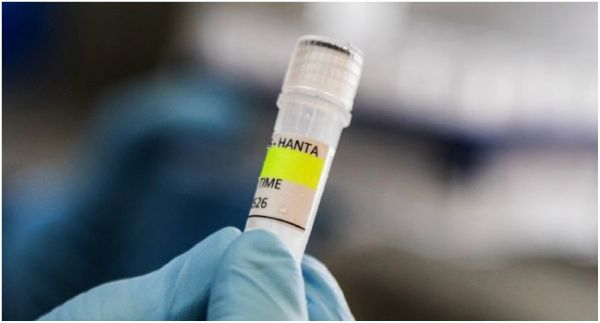
Hantavirus is a rare disease typically spread through infected rodents. It can cause severe respiratory illness, cardiac complications and haemorrhagic fever. There is currently no vaccine or known cure.
Authorities believe one passenger contracted the virus before boarding the ship in Argentina and later infected others during the Atlantic voyage.
Argentina has announced plans to test rodents in Ushuaia, where the cruise departed on April 1.
The Netherlands-based cruise operator, Oceanwide Expeditions, said no passengers currently showed symptoms as the ship sailed toward Tenerife, where it is expected to arrive on Sunday.
YouTuber Kasem Ibn Hattuta, who is aboard the ship, said most passengers remained calm despite widespread media coverage of the outbreak.
“Most people on board are reacting very calmly to the situation, unlike what is being reported in the media,” he said in a video update.
Health officials are also tracing passengers who may have had contact with infected travellers, including those on a commercial flight from Saint Helena to Johannesburg taken by one of the deceased passengers while symptomatic.
The WHO said 12 countries had been alerted after passengers disembarked from the cruise ship at Saint Helena during the voyage.
