


The National Hajj Commission of Nigeria (NAHCON) says no fewer than 9,000 Nigerian pilgrims have arrived in Madinah for the 2026 Hajj operations.
According to NAHCON officials in Saudi Arabia, the pilgrims were transported since the commencement of the Hajj airlift on Sunday.
It was earlier reported that Saudi authorities approved 50,000 Nigerian pilgrims for the 2026 Hajj.
The pilgrims are expected to spend four days in Madinah before moving onward to Makkah.
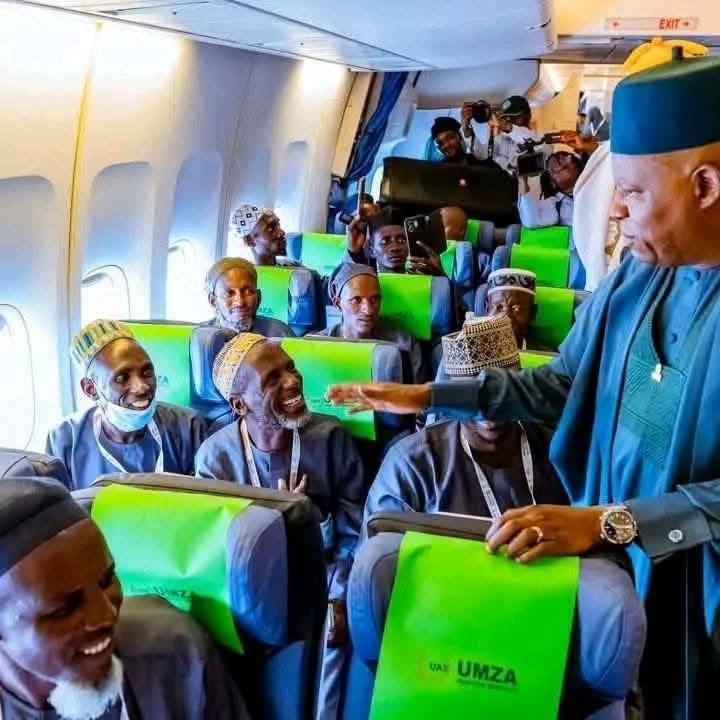
The inaugural flight, UMZA flight UMZ3501, departed on Sunday with 473 pilgrims from Kogi State (296 males and 177 females).
This was followed by a Flynas flight that conveyed 418 pilgrims from Kebbi State (259 males and 159 females).
A MaxAir flight also transported 560 pilgrims from Nasarawa State (381 males and 179 females).
On Monday, an Airpeace flight departed Lagos for Madinah with 315 pilgrims from Oyo State (155 males and 160 females).
A Flynas flight from Kebbi conveyed 427 pilgrims (283 males and 144 females, including two officials).
An UMZA flight from Dutse, Jigawa State, carried 480 pilgrims (306 males and 174 females), while a MaxAir flight from Gombe transported 411 pilgrims (238 males and 173 females).
NAHCON has also airlifted additional pilgrims from several states, including 557 and 424 from Nasarawa, 394 from Jigawa, 343 from Osun, and 550 from Gombe. Pilgrims from Kebbi, Kwara, and Plateau states have also been transported to Madinah.
Meanwhile, NAHCON Chairman, Amb. Ismail Yusuf, assured stakeholders of the Commission’s commitment to the welfare of Nigerian pilgrims. He urged them to conduct themselves with humility while in the Holy Land.
Vice President Sen. Kashim Shettima charged the pilgrims to uphold Nigeria’s national values and act as worthy ambassadors of the country.
“You are ambassadors of Nigeria. You carry with you the image of our nation and the dignity of our people. Let your conduct reflect discipline, humility, patience, and integrity,” he said.
Shettima described the pilgrimage as a binding covenant between Nigeria and its citizens, adding that the government would uphold its duty of care while pilgrims uphold the values of the nation.
He emphasised that the Hajj exercise places a direct responsibility on public institutions to guarantee the dignity, safety, and seamless movement of all pilgrims.
“Our duty is to ensure that every pilgrim undertakes this journey without avoidable hardship, needless anxiety, or preventable setback,” he said.
