


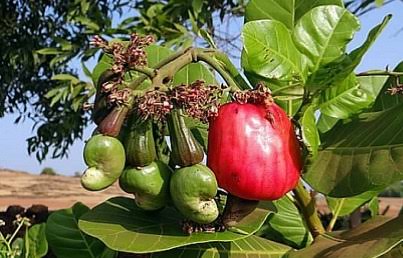
The President of the National Cashew Association of Nigeria (NCAN), Dr Ojo Ajanaku, has said Africa remains the world’s largest producer of cashew nuts, despite Nigeria’s decline from the top position due to policy instability and prolonged neglect of the sector.
Ajanaku stated this in Abuja during the 4th National Cashew Day/Conference, which brought together key stakeholders across the cashew value chain to deliberate on challenges and opportunities in Nigeria’s cashew industry.
He recalled that Nigeria produced over 800,000 metric tonnes of cashew nuts in 2010, making the country the world’s leading producer at the time.
However, he said Nigeria has since dropped to sixth place globally, attributing the decline to inadequate government support, inconsistent policies and sectoral neglect.
“As an association, we are working diligently to correct the wrongs of the past and reposition the Nigerian cashew industry for greater economic impact,” Ajanaku said.
He stressed the need for a unified platform that would allow farmers, processors, exporters and policymakers to engage regularly in addressing industry challenges and promoting sustainable growth.
“When I assumed office, it became clear that we needed a forum where stakeholders with shared interests could come together to tackle the issues affecting the industry,” he said.
“This conference is designed to rotate across different states to deepen its impact at the grassroots. We were in Enugu in 2024, we will be in Lagos in 2025, and today, we are here in Abuja.”
Tracing the history of the sector, Ajanaku noted that cashew was introduced to Nigeria during the tenure of the former Premier of the Eastern Region, Dr Michael Okpara, primarily as a soil erosion control crop.
“What began as an erosion-control initiative has evolved into a major export commodity capable of earning Nigeria significant foreign exchange,” he said.
He emphasized that Africa’s dominance in global cashew production was deliberate, adding that Nigeria stands out on the continent in terms of production capacity and untapped potential.
The NCAN president urged the Federal Government to ensure policy consistency, promote value addition and improve coordination within the sector to enable cashew production to contribute more meaningfully to the national economy.
In her address, the Minister of Industry, Trade and Investment (FMITI), Dr Jumoke Oduwole, commended NCAN for its sustained efforts in advancing the cashew industry.
Oduwole said the celebration of National Cashew Day, themed “Transforming the Nigerian Cashew Industry through Investment, Innovation and Trade,” provided an opportunity to reflect on past achievements and reaffirm commitment to transforming the sector.
Speaking on behalf of the minister, Mrs Hajara Usman noted that the Nigerian cashew industry remains a key economic player with deep agricultural roots spanning several decades.
She said Nigeria ranks among the world’s leading producers of raw cashew nuts, with significant annual output, highlighting the sector’s potential to drive economic growth, create jobs and boost non-oil exports.
Also speaking, President of the Federation of Commodity Associations of Nigeria (FACAN), Mr Sherif Balogun, stressed the need for value addition in cashew production and processing.
“Adding value will position Nigeria’s cashew industry on the global stage and make it one of the biggest economic drivers for the country,” he said.
Similarly, President of the Africa Cashew Alliance (ACA), Mr Ibrahim Sanfo, expressed the alliance’s commitment to collaborating with NCAN to strengthen the sector.
“Africa is the world’s top producer of cashew, yet consumption remains very low—less than one kilogramme per person.
“We are a huge market, like India, and we need to process and consume more of our own produce,” he said.
Sanfo called for supportive policies to boost processing capacity, noting that Africa currently processes less than 10 per cent of its cashew output while exporting between 80 and 90 per cent.
“If we process more for local consumption, we need strong government support to make that a reality,” he added.
