


Grow Further has announced a Phase II grant to scale an artificial intelligence-driven crop disease detection project in Tanzania, targeting improved productivity among smallholder farmers.
The initiative supports the continued development and expansion of kilimoAI, a smartphone application designed to help farmers identify and manage crop pests and diseases in real time. The tool was developed by researchers from the Nelson Mandela African Institution of Science and Technology and the Tanzania Agricultural Research Institute, under the leadership of Neema Mduma.
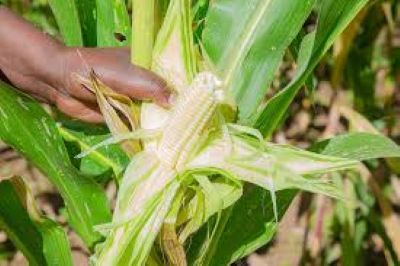
The application allows farmers to take photos of affected crops, such as maize and beans and receive rapid diagnoses powered by machine learning trained on a large database of crop images. It also provides practical guidance to help farmers mitigate losses and protect yields.
The new funding builds on the project’s initial success during its first phase, where it recorded significant adoption among farmers in the Arusha region.
Dr. Mduma welcomed the additional support, noting that it would enable the team to extend the application’s reach to more regions and farmers across Tanzania.
“This support will help us expand deployment and deliver timely crop disease detection to more smallholder farmers,” she said.
Smallholder agriculture accounts for about 65 per cent of employment in Tanzania and remains central to the country’s food security. However, farmers continue to face growing challenges from climate change, which is accelerating the spread and severity of crop diseases.
Under Phase II, the project will broaden kilimoAI’s diagnostic capabilities beyond its initial focus on four diseases to include other major threats identified by farmers, including leaf spots, blights and angular leaf spot. It will also expand into additional farming communities.
Grow Further’s Founder and Chief Executive Officer, Peter Kelly, emphasised the importance of farmer participation in shaping the technology.
He said the project’s success reflects a model where farmers are directly involved in testing, providing data and guiding innovation, ensuring that the solution remains practical and scalable.
Beyond Tanzania, the developers say the platform’s underlying data and research framework are accessible to scientists globally, with the potential for adoption across East Africa and other regions facing similar agricultural challenges.
