


The Deputy Secretary-General of the United Nations, Amina Mohammed, has commended Dangote Industries Limited—particularly its fertiliser arm—for its growing role in addressing Africa’s deepening food security challenges.
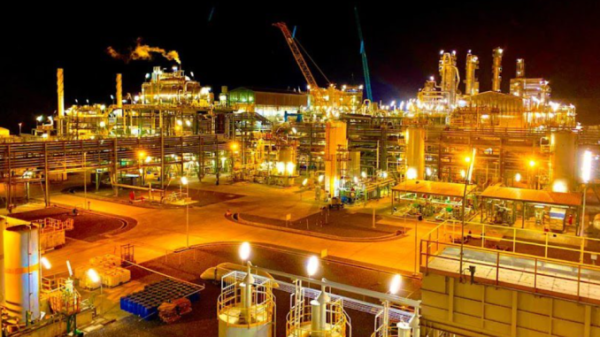
Mohammed made the remarks during a visit to the company’s industrial complex in Ibeju-Lekki, where she highlighted the importance of scaling practical, home-grown solutions through stronger global partnerships.
She reaffirmed the UN’s commitment to promoting scalable interventions capable of mitigating food shortages across the continent, while urging greater international collaboration to support ongoing industrial initiatives.
“The UN’s job here is to amplify and bring visibility to solutions that can mitigate a food security crisis—and this is clearly one of them,” she said. “We hope to continue engaging partners and countries that can collaborate with Dangote Industries.”
Her remarks come amid rising concerns over food shortages and supply chain disruptions across Africa, driven by global economic headwinds, climate shocks, and geopolitical tensions, particularly in parts of the Middle East.
The continent’s food security situation has been further strained by fertiliser shortages, rising input costs, and energy supply challenges, all of which have constrained agricultural productivity.
Against this backdrop, Dangote Industries has expanded its footprint, leveraging its industrial capacity to supply critical inputs for agriculture and energy markets.
President and Chief Executive of the group, Aliko Dangote, said the company has ramped up exports of urea fertiliser and Premium Motor Spirit (PMS) to African countries facing supply gaps.
He disclosed that the refinery has shipped about 17 cargoes of petrol across the continent, utilising its 650,000 barrels-per-day capacity to help stabilise fuel supply.
Dangote also noted that feedstock deliveries from the Nigerian National Petroleum Company Limited rose to 10 cargoes in March—six supplied in naira and four in dollars—but remain below the 19 cargoes required for optimal operations.
To bridge the shortfall, the company continues to import crude from the United States and other African producers.
Data from the World Bank indicate that Africa’s food-insecure population has surged by about 60 per cent over the past decade, underscoring the scale of the crisis.
In Nigeria, the Federal Government recently warned that approximately 161 million people are food insecure, prompting intensified efforts to avert a looming food and nutrition emergency.
As part of its response, the government is advancing a new strategy under the Accelerating Nutrition Results in Nigeria programme—a state-led, World Bank-supported initiative aimed at expanding access to affordable, quality nutrition services for vulnerable populations.
