

• Home
  • Agric
  • Sci & Tech
  • Health
  • Environment
  • Hausa News
  • More
    • Business/Banking & Finance
    • POLITICS
    • Entertainments & Sports
    • International
    • Investigation
    • Law & Human Rights
    • Africa
    • ACCOUNTABILITY/CORRUPTION
    • Hassan Gimba
    • Column
    • Prof. Jibrin Ibrahim
    • Prof. M.K. Othman
    • Defense/Security
    • Education
    • Energy/Electricity
    • Entertainment/Arts & Sports
    • Society and Lifestyle
    • Food & Agriculture
    • Health & Healthy Living
    • International News
    • Interviews
    • Investigation/Fact-Check
    • LAW & HUMAN RIGHTS
    • Oil & Gas/Mineral Resources
    • PRESS FREEDOM/JOURNALISM/PR
    • General News
    • Presidency
  • About Us
    • Contact Us
    • Board Of Advisory
    • Privacy Policy
    • Ethics Policy
    • Teamwork And Collaboration Policy
    • Fact-Checking Policy
    • Advertising
  • Media OutReach Newswire
    • Wire News
  • The Stories
Facebook Twitter Instagram
Trending
  • Meta: Platforms contribute $820m annually to Nigeria’s economy
  • Wamakko hails Aliyu’s performance, backs APC’s 2027 governorship ticket
  • Hyperscalers bypassing Nigeria over high costs, outdated rules
  • Shettima reaffirms stronger Nigeria-Poland partnership
  • NERC: DisCos meter 241,590 customers in January–February
  • ALGON Kaduna dismisses LG allocation hijack claims
  • Sokoto APC affirms Aliyu as sole candidate for 2027 governorship election
  • FG, NDDC distribute support to 630 beneficiaries in Cross River
Facebook Twitter Instagram YouTube
AsheNewsAsheNews
  • Home
  • Agric

    FG, NDDC distribute support to 630 beneficiaries in Cross River

    May 21, 2026

    Olam Agri unveils Mama’s choice wheat flour, Mama’s pride semolina

    May 20, 2026

    Association secures N1.6bn support for onion farmers

    May 20, 2026

    IFAD trains 697 young farmers in Ondo

    May 20, 2026

    Experts advocate biotech solutions to cut Nigeria’s post-harvest losses

    May 20, 2026
  • Sci & Tech

    Meta: Platforms contribute $820m annually to Nigeria’s economy

    May 21, 2026

    Hyperscalers bypassing Nigeria over high costs, outdated rules

    May 21, 2026

    Africa faces “year of reckoning” in 2026 as climate, food and health pressures converge — Report

    May 21, 2026

    Sokoto upgrades, renames College after Wamakko, expands programmes to HND level

    May 20, 2026

    Kaduna state trains 4,000 students in vocational skills

    May 18, 2026
  • Health

    Association celebrates 80 years with new projects, exhibits

    May 21, 2026

    Anambra offers free blood pressure checks

    May 21, 2026

    NYSC DG urges corps members to save, build multiple income streams

    May 21, 2026

    NYSC partners with NIMC to simplify biometric verification

    May 21, 2026

    Oramali foundation advocates mentorship for the boy-child

    May 21, 2026
  • Environment

    Shettima reaffirms stronger Nigeria-Poland partnership

    May 21, 2026

    Lagos spends N3.99m on healthcare support for vulnerable residents

    May 21, 2026

    Lagos strengthens justice system with major infrastructure Investments

    May 21, 2026

    Nigeria achieves fully paperless Federal civil service

    May 20, 2026

    Sanwo-Olu: Lagos strengthens Africa’s digital economy hub status

    May 20, 2026
  • Hausa News

    Otti plans 250-room 5-star hotel in Umuahia

    April 11, 2026

    Anti-quackery task force seals 4 fake hospitals in Rivers

    August 29, 2025

    [BIDIYO] Yadda na lashe gasa ta duniya a fannin Ingilishi – Rukayya ‘yar shekara 17

    August 6, 2025

    A Saka Baki, A Sasanta Saɓani Tsakanin ‘Yanjarida Da Liman, Daga Muhammad Sajo

    May 21, 2025

    Dan majalisa ya raba kayan miliyoyi a Funtuwa da Dandume

    March 18, 2025
  • More
    1. Business/Banking & Finance
    2. POLITICS
    3. Entertainments & Sports
    4. International
    5. Investigation
    6. Law & Human Rights
    7. Africa
    8. ACCOUNTABILITY/CORRUPTION
    9. Hassan Gimba
    10. Column
    11. Prof. Jibrin Ibrahim
    12. Prof. M.K. Othman
    13. Defense/Security
    14. Education
    15. Energy/Electricity
    16. Entertainment/Arts & Sports
    17. Society and Lifestyle
    18. Food & Agriculture
    19. Health & Healthy Living
    20. International News
    21. Interviews
    22. Investigation/Fact-Check
    23. LAW & HUMAN RIGHTS
    24. Oil & Gas/Mineral Resources
    25. PRESS FREEDOM/JOURNALISM/PR
    26. General News
    27. Presidency
    Featured
    Recent

    Meta: Platforms contribute $820m annually to Nigeria’s economy

    May 21, 2026

    Wamakko hails Aliyu’s performance, backs APC’s 2027 governorship ticket

    May 21, 2026

    Hyperscalers bypassing Nigeria over high costs, outdated rules

    May 21, 2026
  • About Us
    1. Contact Us
    2. Board Of Advisory
    3. Privacy Policy
    4. Ethics Policy
    5. Teamwork And Collaboration Policy
    6. Fact-Checking Policy
    7. Advertising
    Featured
    Recent

    Meta: Platforms contribute $820m annually to Nigeria’s economy

    May 21, 2026

    Wamakko hails Aliyu’s performance, backs APC’s 2027 governorship ticket

    May 21, 2026

    Hyperscalers bypassing Nigeria over high costs, outdated rules

    May 21, 2026
  • Media OutReach Newswire
    • Wire News
  • The Stories
AsheNewsAsheNews
Home»ECONOMY»CBN’s directive on the restriction of banking services to non-performing obligors: A Review
ECONOMY

CBN’s directive on the restriction of banking services to non-performing obligors: A Review

Abdoulaye KayBy Abdoulaye KayApril 23, 2026Updated:April 27, 2026No Comments5 Mins Read
CBN
Share
Facebook Twitter LinkedIn Pinterest Email

Introduction: Historical context of the restriction on banking services

The financial strength of Nigerian banks, including their average capital adequacy ratios and credit discipline, is critical to the country’s financial stability.   In recent years, notable events such as the COVID-19 pandemic and the naira devaluation have occasioned major credit risks, necessitating both strict and flexible regulations, as the occasion demands, to manage these risks and ensure restored or continued financial stability.

In particular, in the wake of the COVID-19 pandemic, the Central Bank of Nigeria (CBN), initiated a regulatory forbearance period to provide relief to obligors to deal with the attendant financial crises.  Specifically, the forbearance involved the reclassification of loan facilities—such as restructuring payment terms or granting payment moratoriums—in ways that prevented their classification as non-performing loans (NPLs) for the relevant period.

However, the regulatory forbearance period ended in June 2025, after which the sector saw a rise in NPLs, with the NPL ratio reaching 7%, well above the prudential ceiling of 5%.  This arose because the payment obligations under the restructured loans had become due, and the loans could no longer qualify for special consideration as the forbearance period had ended.

ALSO READ [EXPLAINER] 5 banking services now free under new CBN guide

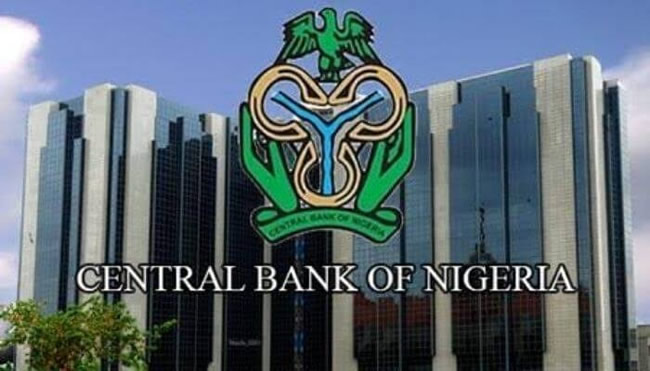
In response to this, in a letter dated March 12, 2026, the CBN directed all Nigerian banks to restrict access to certain banking services to large-ticket obligors with NPLs (CBN’s directive). The directive aims to strengthen the sufficiency of the credit framework, improve credit discipline, protect capital buffers, and thereby enhance the overall financial stability of the banking ecosystem.

This article will review the CBN’s directive. As a prelude to examining the restrictions above in detail, as well as our reflections on them, this article will first briefly consider the meaning of NPLs and their impact on financial stability.

Understanding non-performing loans

An NPL represents a sum of borrowed money for which the debtor has been unable to make scheduled payments for at least 90 days.  NPLs serve as an indicator of a country’s financial development, as they reveal the credit quality of banks’ loan portfolios, which in turn determines the overall credit quality of the banking sector. 

Low NPLs, indicating high credit quality of the banking sector, signify increased capital buffers and robust profitability, enabling the economy to absorb losses and safeguard it from shocks, whereas the reverse is true for a banking sector with high NPLs, indicating low credit quality. This suggests the credit quality of a country’s banking sector—measured by metrics such as the prevalence of NPLs—directly affects the country’s financial stability. 

In addition, research shows that a 1% increase in bank stability leads to a 3.895% increase in economic growth. Stability in a country’s banking sector is thus critical to the country’s overall financial stability.  Given that one of CBN’s key objective is to promote a sound financial system in Nigeria, it is no surprise that the CBN has issued the directive to banks to reposition the credit quality of Nigeria’s banking system and thus improve the country’s financial stability.

Key features of the CBN’s directive

Restriction on direct credit access: The directive restricts banks from granting any further direct credit facilities to large-ticket obligors with NPLs recorded in the credit risk management system and/or any licensed private credit bureau.

Restriction on indirect credit access: The directive also prevents banks from granting any form of indirect credit or contingent liabilities in banking, such as letters of credit, performance bonds, bankers’ confirmations, and advance payment guarantees to the above-mentioned obligors.

Scope of application: The restrictions highlighted above apply solely to obligors whose credit exposure meets the criteria for designation as a large-ticket obligor as outlined in the Prudential Guidelines for Deposit Money Banks.  The Guidelines state that a large exposure is any credit to a customer or a group of related borrowers that is at least 10% of a bank’s shareholders’ fund unimpaired by losses.

From the above, it is apparent that the CBN’s directive seeks to restrict banking services, particularly credit services to banking customers with substantial outstanding credit obligations, in line with the Prudential Guidelines for Deposit Money Banks to minimise the banking sector’s risk exposure.

Our reflections

The Banks and Other Financial Institutions Act (BOFIA) (2021) caps the credit and single-obligor limits at 20% of shareholders’ funds, unimpaired by losses, for commercial banks and 50% of shareholders’ funds, unimpaired by losses, for merchant banks.  Consequently, the BOFIA has increased the exposure limit for merchant banks by 30%, potentially facilitating greater ease of doing business, while simultaneously increasing risk.

Meanwhile, as highlighted above, CBN’s directive applies to obligors with credit exposures of at least 10% of a bank’s unimpaired shareholders’ funds. By adopting a threshold significantly lower than the statutory cap for credit exposure, it establishes an early benchmark for determining when its provisions become applicable, marking a proactive approach. 

Accordingly, the directive does not merely apply to obligors who have attained or nearly attained the respective exposure limits identified in the preceding paragraph; rather, it also outlines a comprehensive mechanism that regulates risks once they become substantial, rather than waiting until they escalate into systemic threats to financial stability. 

Conclusion

Under the CBN Act, CBN’s objective is to promote a sound financial system in Nigeria. As noted above, NPLs serve as an indicator of the credit quality of the banking sector, and in turn may potentially impact a country’s financial stability. The CBN’s directive, which takes a more conservative stance by capping credit exposure limits at 10% (less than the statutory cap), is not only a welcome development but is also proactive, because it aims to promote Nigeria’s financial system.

Jude Nnodum, Jnr., Ph.D, Banking and Finance; Faithful Ayo-Salako, Banking and Finance

KENNA is a full-service law firm with a client-first approach, delivering bespoke legal solutions across diverse sectors, both locally and internationally.

Source: BusinessDay

CBN Restriction of banking services
Share. Facebook Twitter Pinterest LinkedIn WhatsApp Reddit Tumblr Email
Abdoulaye Kay
  • Website

Related Posts

NERC: DisCos meter 241,590 customers in January–February

May 21, 2026

Naira strengthens against Euro as CBN retains interest rate at 26.5%

May 21, 2026

Experts, SMEs welcome CBN’s decision to hold interest rate at 26.5%, call for gradual easing

May 21, 2026

Leave A Reply Cancel Reply

Meta: Platforms contribute $820m annually to Nigeria’s economy

May 21, 2026

Wamakko hails Aliyu’s performance, backs APC’s 2027 governorship ticket

May 21, 2026

Hyperscalers bypassing Nigeria over high costs, outdated rules

May 21, 2026

Shettima reaffirms stronger Nigeria-Poland partnership

May 21, 2026
About Us
About Us

ASHENEWS (AsheNewsDaily.com), published by PenPlus Online Media Publishers, is an independent online newspaper. We report development news, especially on Agriculture, Science, Health and Environment as they affect the under-reported rural and urban poor.

We also conduct investigations, especially in the areas of ASHE, as well as other general interests, including corruption, human rights, illicit financial flows, and politics.

Contact Info:
  • 1st floor, Dogon Daji House, No. 5, Maiduguri Road, Sokoto
  • +234(0)7031140009
  • ashenewsdaily@gmail.com
Facebook Twitter Instagram Pinterest
© 2026 All Rights Reserved. ASHENEWS Daily Designed & Managed By DeedsTech

Type above and press Enter to search. Press Esc to cancel.