


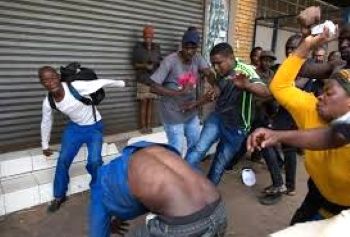
I have observed with deep concern the ferocious manner in which black South Africans continue to mistreat fellow Africans in recurring waves of xenophobic violence. South Africa, often regarded as more developed and better organized than many other African countries, has repeatedly witnessed attacks targeting African migrants, who are accused of taking jobs that locals believe should belong to them.
The perpetrators of these xenophobic attacks are mainly frustrated youths who cite unemployment, poverty, and inequality as justification for targeting fellow Africans. Yet, the irony is impossible to ignore: many of the countries from which these victims come were among the strongest supporters of South Africa’s liberation struggle against apartheid and white minority rule.
South Africa is home to many black ethnic groups, each with its own language, culture, and traditions. Among the major groups are the Zulus, Xhosas, Pedis, Tswanas, Sothos, Tsongas, Swatis, Vendas, and Ndebeles. Broadly, these tribes are categorized into two main ethnic groupings: the Nguni and the Sotho-Tswana. The Nguni group includes the Zulu, Xhosa, Swati, and Ndebele peoples, while the Sotho-Tswana group comprises the Sotho, Pedi, and Tswana.
ALSO READ Xenophobia: ‘There’s an agenda to divide us,’ Thembekwayo warns
ALSO READ Malema denounces xenophobia, hails Nigeria’s contributions to S/Africa’s freedom
Ironically, many of these South African ethnic groups are culturally and ethnically related to communities across the African continent from which their victims originate. Yet, despite these historical and cultural connections, some attackers show little remorse, mercy, or shame while brutalizing innocent Africans seeking survival and opportunity.
During the dark and oppressive apartheid era, many sub-Saharan African countries provided immense support to South Africa’s liberation movements. They sheltered refugees, financed anti-apartheid guerrilla campaigns, provided military training to ANC (MK) and PAC fighters, supplied food and arms, and mobilized international diplomatic pressure against the white minority regime in Pretoria.
One of the foremost champions of this solidarity was the late Tanzanian leader, Julius Nyerere, who, as Chair of the Frontline States, rallied African nations behind the anti-apartheid struggle. The sacrifices and contributions of poor African countries and their citizens played a major role in achieving majority black rule in 1994 under the leadership of the globally respected Nelson Mandela.
It is therefore astonishing and painful that some liberated South Africans, despite their genuine frustrations over unemployment, have turned their anger toward poorly paid African migrants instead of confronting the structural inequalities that continue to plague their society.
Most African migrants in South Africa are economic refugees escaping hardship, instability, and limited opportunities in their home countries. They travel to South Africa for the same reason many South Africans themselves migrate abroad in search of better lives and economic opportunities.
Would South Africans welcome the harassment, torture, or killing of their own citizens living and working in foreign countries? If the answer is no, then why should other Africans be subjected to violence simply because they live and work in South Africa?
These recurring attacks rank among the gravest betrayals of African solidarity. They also dangerously reinforce racist stereotypes historically promoted by white supremacists who once sought to dehumanize black South Africans during apartheid.
South Africa remains Africa’s economic powerhouse, attracting migrants from across the continent. If some employers — many of whom benefited from apartheid-era privilege — prefer hiring foreign Africans because they are cheaper labor, more desperate for work, or less protected by labor laws, then the problem lies not with vulnerable migrants but with exploitative economic structures and failed governance.
African migrants are not enemies. They are human beings pursuing dignity and survival, much like millions of South Africans scattered across Africa and the wider world in search of opportunities.
South Africans must remember that their citizens also live and work in other African countries. The spirit of Pan-African solidarity that once helped liberate South Africa should not be discarded in moments of economic hardship and frustration.
A word to the wise is enough.
Wamboga-Mugirya is a Ugandan-based journalist
