

• Home
  • Agric
  • Sci & Tech
  • Health
  • Environment
  • Hausa News
  • More
    • Business/Banking & Finance
    • POLITICS
    • Entertainments & Sports
    • International
    • Investigation
    • Law & Human Rights
    • Africa
    • ACCOUNTABILITY/CORRUPTION
    • Hassan Gimba
    • Column
    • Prof. Jibrin Ibrahim
    • Prof. M.K. Othman
    • Defense/Security
    • Education
    • Energy/Electricity
    • Entertainment/Arts & Sports
    • Society and Lifestyle
    • Food & Agriculture
    • Health & Healthy Living
    • International News
    • Interviews
    • Investigation/Fact-Check
    • LAW & HUMAN RIGHTS
    • Oil & Gas/Mineral Resources
    • PRESS FREEDOM/JOURNALISM/PR
    • General News
    • Presidency
  • About Us
    • Contact Us
    • Board Of Advisory
    • Privacy Policy
    • Ethics Policy
    • Teamwork And Collaboration Policy
    • Fact-Checking Policy
    • Advertising
  • Media OutReach Newswire
    • Wire News
  • The Stories
Facebook Twitter Instagram
Trending
  • Abdul Samad Rabiu Customs Hospital, Bauchi wins patients trust with affordable healthcare
  • How Sultan Bello industrial and skills hubs shone at the 3rd SSASASNET conference
  • FEC approves national research and innovation development fund
  • Olanrewaju says southwest kidnapping driven by profit, not religion or territorial ambition
  • RMAFC begins Southeast data verification for revenue allocation formula review
  • CBN raises N1.46trn at June NTB auction as yields climb across tenors
  • FIDA Kogi hosts spelling bee for children’s day
  • Unsafe food causes millions of illnesses, deaths worldwide
Facebook Twitter Instagram YouTube
AsheNewsAsheNews
  • Home
  • Agric

    Niger Assembly approves $14.4m loan to finance Niger Foods

    June 3, 2026

    Expert: Nigerian food products face export challenges

    June 3, 2026

    Agrify, TCF launch AI farming tool in Zuma

    June 3, 2026

    Niger State and AGAN launch private extension initiative to tackle agricultural crisis

    June 2, 2026

    FCT farmers face rainfall, input cost challenges

    June 2, 2026
  • Sci & Tech

    FEC approves national research and innovation development fund

    June 4, 2026

    Africa’s key challenge Is market access, not talent

    June 3, 2026

    Association urges proper metrics to boost Africa’s innovation

    June 2, 2026

    Airtel Africa tops NGX gains

    June 2, 2026

    FG trains MDA IT administrators on data protection

    June 2, 2026
  • Health

    Abdul Samad Rabiu Customs Hospital, Bauchi wins patients trust with affordable healthcare

    June 4, 2026

    WHO reports Ebola cases rise to 344 in DRC

    June 4, 2026

    Kano upgrades 320 PHCs, adds 8 new secondary facilities

    June 4, 2026

    Female lab scientists urged to turn research into patient care

    June 3, 2026

    FCTA distributes 48 vein-finding devices to hospitals

    June 3, 2026
  • Environment

    Jawura to train 150 youths for world environment day

    June 4, 2026

    Oresanya highlights youth preparation for AI era at Abuja debate

    June 3, 2026

    Nasarawa, DPI boost youth engagement on plastic waste

    June 2, 2026

    NEMA flags 178 communities at risk of flooding in Kano

    June 2, 2026

    NUT demands immediate release of abducted teachers, students

    June 2, 2026
  • Hausa News

    Otti plans 250-room 5-star hotel in Umuahia

    April 11, 2026

    Anti-quackery task force seals 4 fake hospitals in Rivers

    August 29, 2025

    [BIDIYO] Yadda na lashe gasa ta duniya a fannin Ingilishi – Rukayya ‘yar shekara 17

    August 6, 2025

    A Saka Baki, A Sasanta Saɓani Tsakanin ‘Yanjarida Da Liman, Daga Muhammad Sajo

    May 21, 2025

    Dan majalisa ya raba kayan miliyoyi a Funtuwa da Dandume

    March 18, 2025
  • More
    1. Business/Banking & Finance
    2. POLITICS
    3. Entertainments & Sports
    4. International
    5. Investigation
    6. Law & Human Rights
    7. Africa
    8. ACCOUNTABILITY/CORRUPTION
    9. Hassan Gimba
    10. Column
    11. Prof. Jibrin Ibrahim
    12. Prof. M.K. Othman
    13. Defense/Security
    14. Education
    15. Energy/Electricity
    16. Entertainment/Arts & Sports
    17. Society and Lifestyle
    18. Food & Agriculture
    19. Health & Healthy Living
    20. International News
    21. Interviews
    22. Investigation/Fact-Check
    23. LAW & HUMAN RIGHTS
    24. Oil & Gas/Mineral Resources
    25. PRESS FREEDOM/JOURNALISM/PR
    26. General News
    27. Presidency
    Featured
    Recent

    Abdul Samad Rabiu Customs Hospital, Bauchi wins patients trust with affordable healthcare

    June 4, 2026

    How Sultan Bello industrial and skills hubs shone at the 3rd SSASASNET conference

    June 4, 2026

    FEC approves national research and innovation development fund

    June 4, 2026
  • About Us
    1. Contact Us
    2. Board Of Advisory
    3. Privacy Policy
    4. Ethics Policy
    5. Teamwork And Collaboration Policy
    6. Fact-Checking Policy
    7. Advertising
    Featured
    Recent

    Abdul Samad Rabiu Customs Hospital, Bauchi wins patients trust with affordable healthcare

    June 4, 2026

    How Sultan Bello industrial and skills hubs shone at the 3rd SSASASNET conference

    June 4, 2026

    FEC approves national research and innovation development fund

    June 4, 2026
  • Media OutReach Newswire
    • Wire News
  • The Stories
AsheNewsAsheNews
Home»Viewpoint»How Sultan Bello industrial and skills hubs shone at the 3rd SSASASNET conference
Viewpoint

How Sultan Bello industrial and skills hubs shone at the 3rd SSASASNET conference

Abdallah el-KurebeBy Abdallah el-KurebeJune 4, 2026Updated:June 4, 2026No Comments5 Mins Read
Share
Facebook Twitter LinkedIn Pinterest Email

At the 3rd Annual International Conference of the Sub-Saharan Africa Skills and Apprenticeship Stakeholders Network (SSASASNET) in Abuja, Sokoto’s historic industrial heritage was presented not as a relic of the past, but as a living blueprint for Africa’s skills future. The presentation by SokotoDNA and 21st Century Entrepreneurs Hub placed Sultan Muhammadu Bello’s legacy at the center of a wider conversation on apprenticeship, decent work, and economic transformation.

The CEO of the SokotoDNA Project, Dr. Balarabe Shehu Kakale, led to the conference, a powerful delegation of the Sokoto state’s master craftsmen, artisans, apprentices, technicians, innovators, and entrepreneurs to present the Sultan Muhammadu Bello Skills and Industrial Hubs of M11 + T3 + Z+ S + G (MATUZSGI) – Madunka 2. Makera 3. Majema 4. Marina 5. Masaka 6. Masassaka 7. Mahauta 8. Magina 9. Marusa 10. Masunta 11. Mallamawa 12. Takardawa 13. Tukanawa 14. Takalmawa 15. Sirridawa 16. Zoramawa 17. Gobirawa, which forms the Sokoto Heritage Industries and Skills to Africa, and, by extension, to the world.

The conference, held from Tuesday, June 2 to Thursday, June 4, 2026, brought together participants from 44 African countries, alongside development partners such as the ILO, AfDB, AUC, the World Bank, and Nigeria’s NBTE. With the theme “Scaling Apprenticeship and Decent Work in Quest for Quality Skills Development in the Informal Economy,” the gathering created a fitting platform to revisit African models of indigenous enterprise and work-based learning.

What made Sokoto’s intervention stand out was its argument that the city’s growth was not built on administration alone, but on a deliberate industrial development plan conceived over 200 years ago by Sultan Muhammadu Bello. The presentation framed the Sokoto Caliphate as a civilization that linked knowledge with production and scholarship with productive labor. In that sense, the message was simple but powerful: Africa already has homegrown models of industrialization rooted in skills, craft, and apprenticeship.
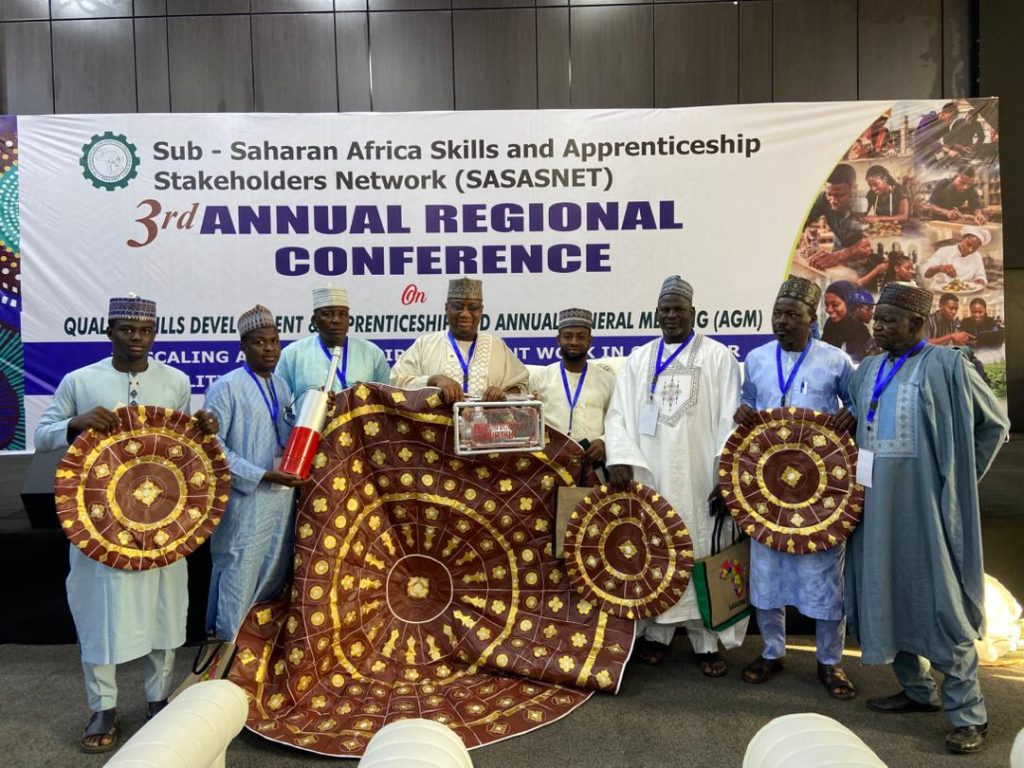
The Sokoto delegation displaying one of their crafts at the conference

There were a total of 15 Plenary Sessions, and Dr Kakale, who is also a Special Assistant to Nigeria’s Minister of Education, moderated the seventh Plenary Session with the topic, “Youth Entrepreneurship and Apprenticeships: Linking Apprenticeships with Wage Employment, Self-employment, Enterprise upgrading, and Business Incubation”. The panelists at the session included Ms. Christine Hofmann, Head of the African Skills Hub, ILO Regional Office, Abidjan, Republique du Cote d’Ivoire; Mr Ikenna Jude Thaddeus, (MSC) Executive Director, Wecanassess Africa, London, LTD; Hon. Emmanuel Barnes, Assistant Minister of Labour, Republic of Liberia; Irunna Ejibe, Chief Executive Officer (CEO) & Founder, Ethnocentrique Limited, Federal Republic of Nigeria.

A historic industrial map

Central to the presentation was the MATUZSGI framework, a grouping of 17 industrial, skills, and entrepreneurship zones attributed to Sultan Muhammadu Bello. These included Madunka for leather craft, Makera for metalwork, Majema for tanning, Masaka for textiles, Marina for dyeing and fashion, and Mahauta for livestock and meat processing. Others covered pottery, fishing, paper production, tourism, food processing, and environmental planning, showing the breadth of the old Sokoto productive economy.

The document presented these zones as early cottage industries designed to advance science, technology, research, industrialization, dignity of labor, wealth creation, and poverty reduction. It also argued that some of them still survive in marginal form and continue to support livelihoods in Sokoto metropolis and beyond. In today’s language, the message is that these were not just craft clusters, but an indigenous ecosystem of economic specialization.

A few examples show how wide-ranging the system was. Madunka was tied to leather products such as bags, shoes, prayer mats, and casings, while Makera covered a range of iron and metal goods, including keys, gates, tools, shields, and horse gear. Takardawa was associated with paper production, publishing, media, and communication, while Zoramawa linked horse rearing and racing with tourism and veterinary medicine. Together, they formed a surprisingly modern-sounding industrial map.

Why it matters now

The strongest part of the presentation was its development argument. It did not stop at heritage; it connected heritage to jobs, youth empowerment, and economic renewal. The document states that when fully revitalized, these industries could provide hundreds of thousands of jobs, generate wealth, and reduce poverty in Sokoto State and Nigeria.

That argument fits neatly with the SSASASNET conference theme, especially because informal economies across Africa still depend heavily on apprenticeship and small-scale production. By showing that Sokoto once organized production around specialized skills hubs, the presentation offered a historical example of structured vocational development. It also suggested that African policy conversations should look beyond imported models and recover local systems that already proved productive.

There was also a broader cultural message. The paper reminded participants that while Sokoto is widely known for scholarship and Islamic learning, its history also includes manufacturing, trade, and technical skill. That balance between intellect and industry gave the presentation its force, especially in a forum focused on employability and decent work.
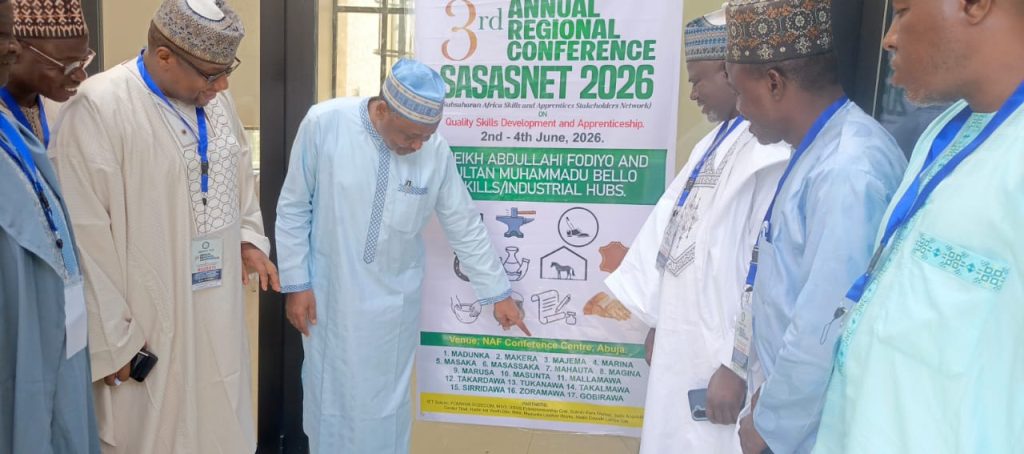
Prof Idris Bugaje Executive Secretary NBTE, leader of TVET in Africa and the Continental Chair of SASASNET appreciating the SULTAN MUHAMMAD BELLO INDUSTRIAL/SKILLS HUBS.

Heritage as policy

The inclusion of Sheikh Abdullahi Fodiyo’s similar cottage industries in Gwandu and Birnin Kebbi widened the story beyond Sokoto alone. It suggested that the region had a wider tradition of organized production and specialized labor, not merely isolated craft activity. This makes the heritage argument stronger because it points to a regional economic philosophy rather than a single historical example.

For contemporary policymakers, the lesson is clear. Heritage industries can be studied not only as cultural assets, but as templates for skills development, enterprise policy, and industrial clustering. In a period when youth unemployment and informal sector fragility remain urgent challenges, such historical models can enrich current debates with practical inspiration.

The Abuja presentation, therefore, shone because it did more than celebrate the past. It translated history into a development conversation and invited Africa to see Sokoto’s industrial memory as part of a wider future of work. That is what made the moment memorable at SSASASNET.

MATUZSGI SokotoDNA SSASASNET
Share. Facebook Twitter Pinterest LinkedIn WhatsApp Reddit Tumblr Email
Abdallah el-Kurebe
  • Website
  • Facebook
  • Twitter
  • LinkedIn

Related Posts

For how long will threats of Northerners, Muslims’ eviction from Yoruba land continue?

June 3, 2026

All the Mike Arnold sensational falsehoods and his goofs about Sultan

May 26, 2026

Beyond the ‘Sultan’s Master Plan’ myth: Why Nigeria’s real security crisis needs better analysis

May 25, 2026

Leave A Reply Cancel Reply

Abdul Samad Rabiu Customs Hospital, Bauchi wins patients trust with affordable healthcare

June 4, 2026

How Sultan Bello industrial and skills hubs shone at the 3rd SSASASNET conference

June 4, 2026

FEC approves national research and innovation development fund

June 4, 2026

Olanrewaju says southwest kidnapping driven by profit, not religion or territorial ambition

June 4, 2026
About Us
About Us

ASHENEWS (AsheNewsDaily.com), published by PenPlus Online Media Publishers, is an independent online newspaper. We report development news, especially on Agriculture, Science, Health and Environment as they affect the under-reported rural and urban poor.

We also conduct investigations, especially in the areas of ASHE, as well as other general interests, including corruption, human rights, illicit financial flows, and politics.

Contact Info:
  • 1st floor, Dogon Daji House, No. 5, Maiduguri Road, Sokoto
  • +234(0)7031140009
  • ashenewsdaily@gmail.com
Facebook Twitter Instagram Pinterest
© 2026 All Rights Reserved. ASHENEWS Daily Designed & Managed By DeedsTech

Type above and press Enter to search. Press Esc to cancel.