


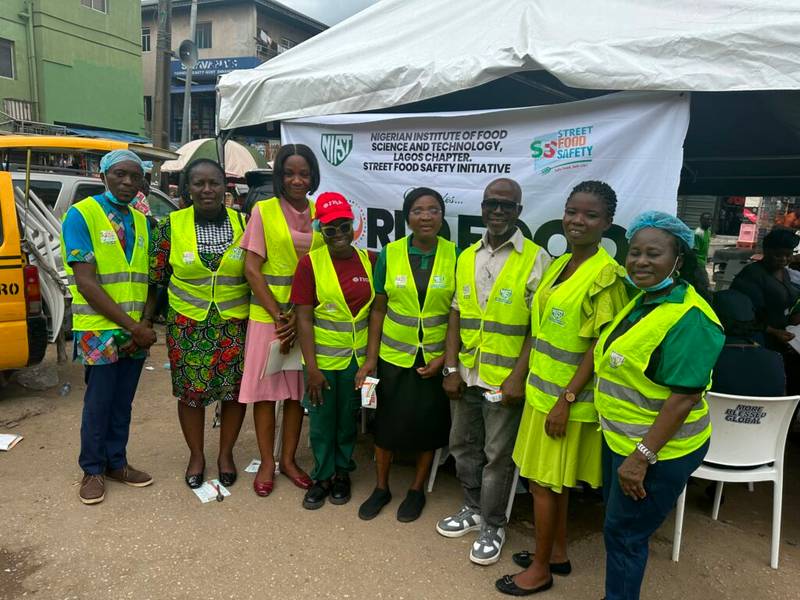
The Nigerian Institute of Food Science and Technology (NIFST) has called on the government to introduce regulatory sanctions against unsafe food practices in markets to protect public health.
Kikelomo Amoreoluwa, Chairman of NIFST’s Lagos Chapter, made the appeal during the Institute’s Street Food Safety Initiative advocacy campaign at Ipodo Market, Ikeja, on Thursday.
The campaign is part of activities marking this year’s World Food Safety Day, celebrated annually on June 7. This year’s theme is “Burden to Solution: Safe Food Everywhere,” aiming to raise awareness and inspire action to prevent, detect, and manage foodborne risks.
Speaking on food safety challenges in Lagos, Amoreoluwa noted that thousands of residents and visitors rely daily on food sold through informal channels, many operated by vendors without food safety training.
She explained that this knowledge gap significantly increases the risk of food contamination, exposing consumers to preventable illnesses caused by poor hygiene and unsafe handling.
Highlighting common violations, she said traders often expose processed foods like bread, garri, roasted plantain, meat, and other ready-to-eat items to dust, flies, and contaminants.
Some vendors unknowingly contaminate their products during handling, while others source ingredients from unverified suppliers or indulge in adulteration practices that endanger consumers.
The NIFST chairperson also raised concerns about chemical misuse and poor preservation methods, noting some contaminants remain harmful even after cooking.
“For example, aflatoxins can persist in food even after heat treatment,” she warned.
Amoreoluwa emphasized that the lack of specific sanctions allows many unsafe practices to continue unchecked in informal markets.
“Without laws, enforcement is impossible. The government must legislate and establish sanctions that discourage these practices,” she urged.
She called for stronger regulatory structures and a dedicated food safety framework involving food scientists within government agencies.
NIFST is ready to partner with ministries, local governments, and public health agencies to enhance food safety monitoring and education.
“We are available to collaborate with government at all levels. Together, we can develop programs, policies, and campaigns that promote safe food everywhere,” she said.
Amoreoluwa advised consumers to buy from trusted vendors and avoid products displayed openly in unhygienic environments, especially ready-to-eat foods requiring no further processing.
On ongoing efforts, Onyinyechi Nwaokoro, Chair of NIFST’s Street Food Safety Initiative, said the institute has intensified market sensitization programs across Lagos.
Visits to markets have revealed persistent issues such as food adulteration, improper storage, and the use of harmful preservatives.
Nwaokoro explained that NIFST’s approach includes regular market visits, training sessions, and distribution of protective materials.
So far, the institute has visited five major Lagos markets and plans to conduct monthly follow-up visits to ensure compliance with food safety standards.
Ogunji Akinyele, a NIFST member, said the campaign aims to educate traders and consumers on the importance of safe food handling.
He commended the support of the Iyaloja of Ipodo Market and urged everyone to see food safety as a shared responsibility.
Mrs. Oriyomi Balogun, a market woman at Ipodo, shared her experience:
“I have learned that cleanliness greatly reduces the risk of disease. Our children will suffer less from food poisoning, and we won’t have to rush them to the hospital. Keeping the environment clean benefits both traders and customers by ensuring food safety. This program has taught us many things, including proper handwashing, covering food, and maintaining good hygiene.”
Similarly, Mama Joy, a rice seller at Ipodo Market, said the initiative was an opportunity to learn about safe food hygiene practices.
She praised NIFST for the training and protective materials provided.
It was reported that representatives from the Lagos State Safety Commission, Lagos State Ministry of Health, Directorate of Occupational Health and Safety, LAWMA, and others attended the NIFST Lagos Chapter Food Safety Initiative at Ipodo Market.
