


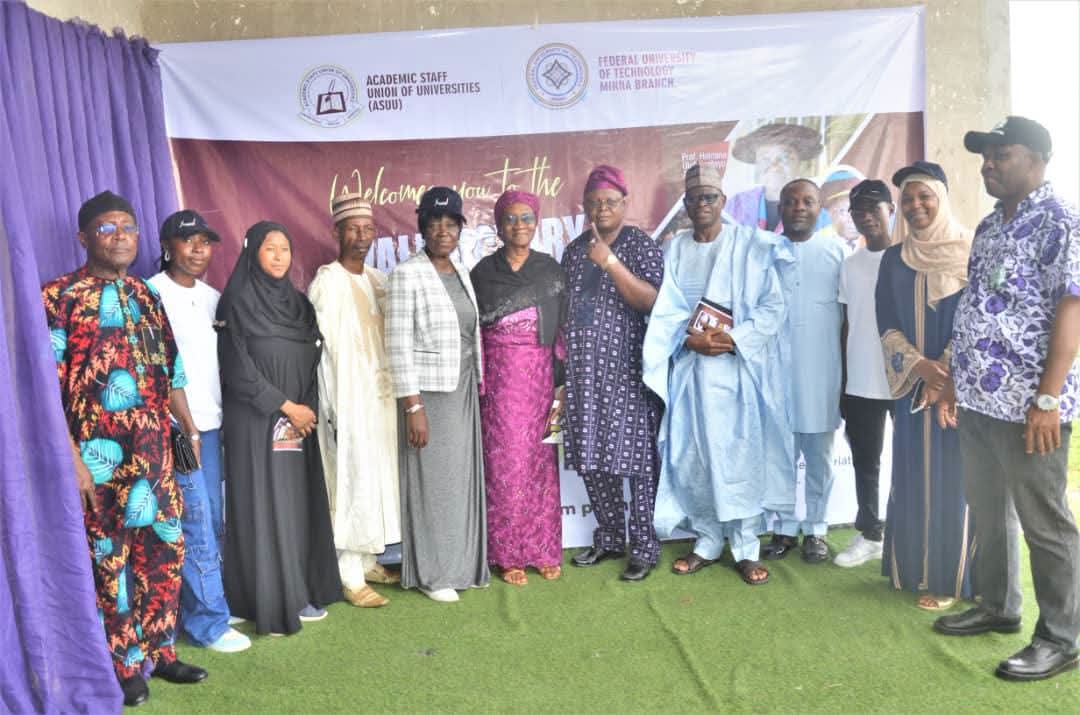
The Academic Staff Union of Universities (ASUU) at the Federal University of Technology, Minna, has held a pioneering Valedictory Congress to honour five retiring professors who have each served the institution for over three decades.
The event, described as an institutional act of memory, aimed to celebrate their contributions while warning against the decline of academic traditions and institutional amnesia.
A first of its kind celebration
The Chairman of the Organizing Committee, Professor Ambali Saka Abdulkareem noted that the congress was organized to ensure the legacies of the professors live on and to prevent them from retiring into oblivion unappreciated.
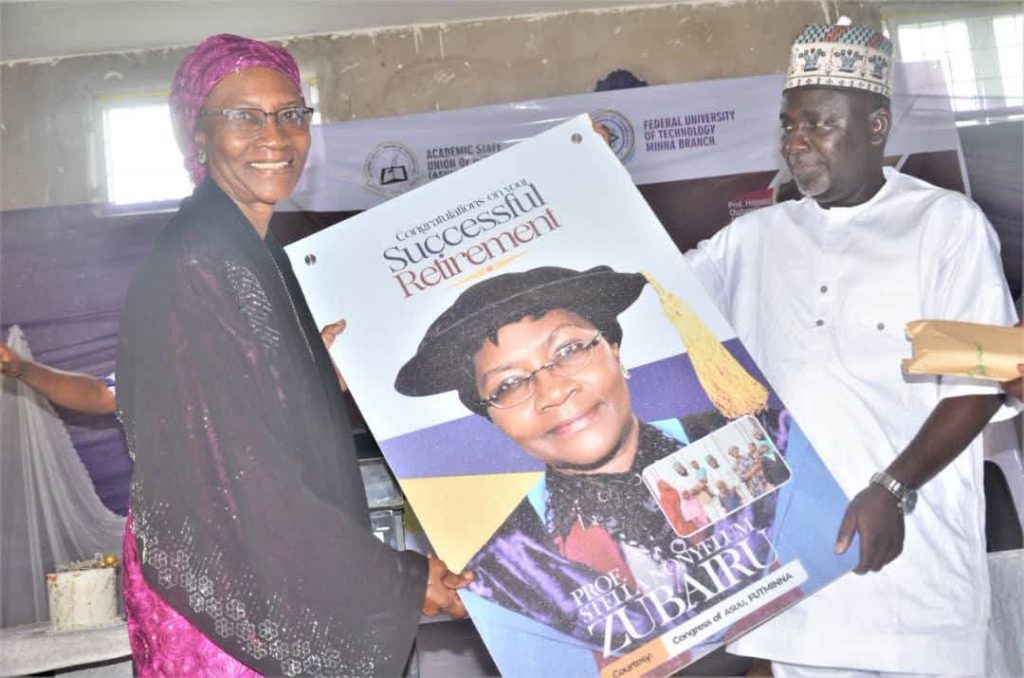
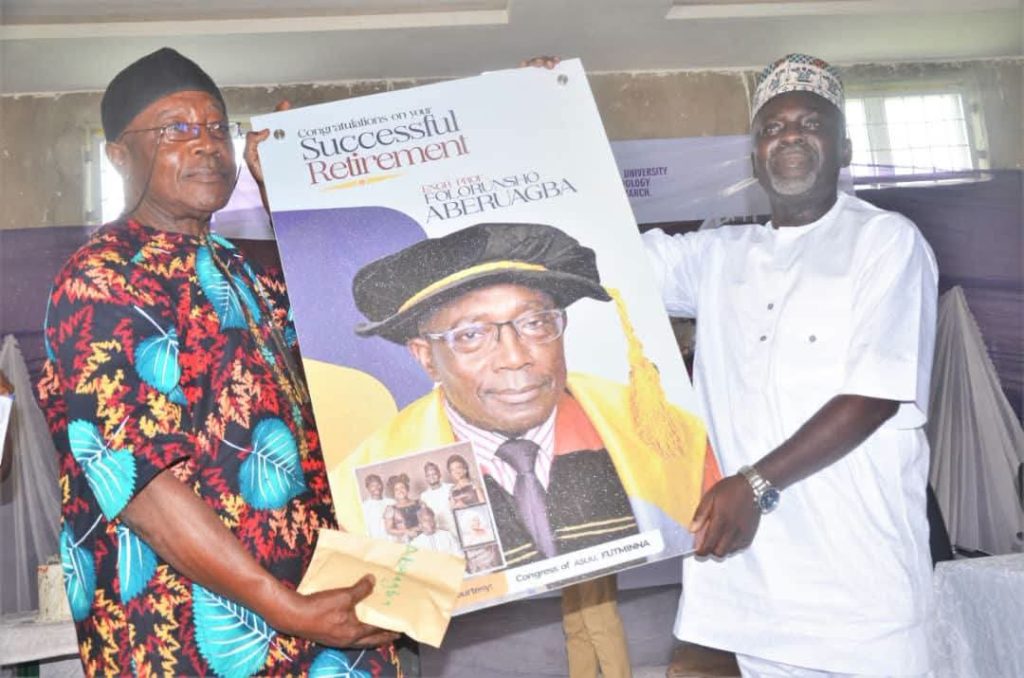
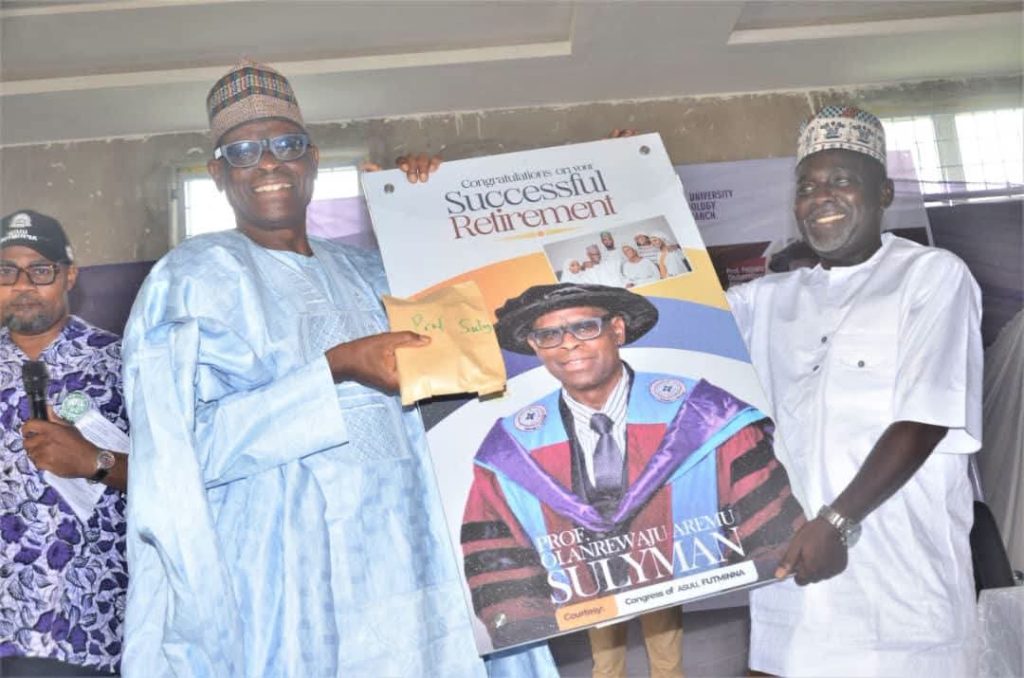
The honoured academics include Professor Helmina Olufunmilayo Akanya, Professor Stella Nonyelum Zubairu, Professor Musa Gimba Matthew Kolo, Professor Folorunsho Aberuagba, and Professor Sulyman Aremu Olanrewaju.
The Chairman emphasized the need to institutionalize this tradition to assure retiring academics that their years of labour are valued and will not pass unacknowledged.
In his address, the Vice Chancellor of FUT Minna, Professor Faruk Adamu Kuta commended the retiring professors for their immense contributions to the university’s stability and for mentoring the current administrators running the system.
Warnings against academic decline
Delivering the farewell lecture titled “A Nation’s University Without Professors: A Flock of Sheep Without a Shepherd,” the FUT Minna ASUU Chairman, Professor Luqman Kunle Oyewobi cautioned that a university without experienced academics loses its organizational memory.
He likened retiring professors to shepherds and warned of three metaphorical wolves threatening the academic system pointing that these threats include the misconception that technology and artificial intelligence can replace human educators, the commercialization of universities into degree factories, and the growth of administrative bloat that distracts from core teaching and research.
Oyewobi urged younger academics to earn the mantle of leadership through resilience and integrity rather than acting as mere replacements.
Reflections and future outlook
Speaking on her experience, Professor Akanya, who has been lecturing since 1978, described her journey as intriguing and driven by determination.
She stated that improving the Nigerian educational system requires a combined effort from lecturers, students, families, and the government, particularly in providing infrastructure.
Despite her retirement, she remains on contract, noting her continued passion for teaching.
Addressing concerns about filling the manpower gap left by the retirees, the Vice Chancellor revealed that the federal government granted a waiver last year to recruit nearly 200 academic staff.
He added that the university has received an authorized establishment act to make further provisions for 2026 to ensure a steady supply of competent personnel.
Meanwhile, the ASUU Chairman urged the government to allow universities to conduct seamless recruitment of capable professionals who view teaching as a calling, rather than imposing candidates for political compensation.
