


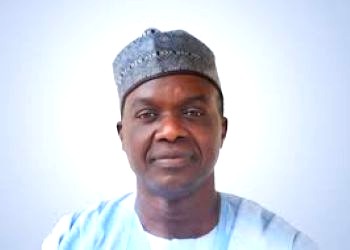
A social investment and entrepreneurship expert, Dr. Umar Buba Bindir, has attributed Nigeria’s slow pace of industrialisation and institutional growth to the absence of a coherent industrial policy framework, warning that the country risks repeating development cycles without achieving lasting economic transformation.
Bindir stated this while delivering the Founder’s Day lecture at the 8th Combined Convocation Ceremony of Sokoto State University (SSU) on Thursday in Sokoto.
Speaking on the theme, “Science, Technology, Entrepreneurship and Investment for Sustainable Development,” he argued that Nigeria’s numerous development programmes over the decades had yielded limited results because they were not anchored on a clear industrialisation strategy.
Reflecting on the country’s development trajectory, Bindir recalled initiatives such as Operation Feed the Nation (OFN), the Indigenisation Policy, the Green Revolution, Vision 2020, the Transformation Agenda, the Change Mantra, the Next Level Agenda and the current Renewed Hope Agenda.
ALSO READ Kebbi governor inaugurates 14.5km, N4.53bn road projects in Sokoto
“Despite these successive initiatives, Nigeria has yet to establish a realistic industrial policy framework capable of driving productivity, strengthening institutions and sustaining national development,” he said.
The former public administrator maintained that science, technology, innovation and entrepreneurship remain the most effective tools for accelerating economic growth and repositioning universities as drivers of industrial development.
According to him, tertiary institutions should become centres for technological advancement, research commercialisation and enterprise development rather than relying almost entirely on government subventions.
He urged governments and university authorities to invest more in technology acquisition, research and innovation, saying such investments would stimulate creativity, improve productivity and support a results-oriented industrialisation agenda.
Bindir specifically challenged Sokoto State University to modernise its laboratories, strengthen its research and development ecosystem and create income-generating ventures that would reduce dependence on public funding.
He said universities must evolve into innovation hubs capable of producing solutions that address national development challenges while contributing meaningfully to economic growth.
The event also featured the conferment of awards on individuals recognised for their outstanding contributions to education, leadership and national development.
Among the recipients were the Chancellor of Sokoto State University and Emir of Dutse, Hameem Nuhu Sanusi; the university’s founder, Senator Aliyu Magatakarda Wamakko; Sokoto State Governor Ahmed Aliyu; the Pro-Chancellor and Makaman Sokoto, Abubakar Muhammad Sani; and Dr. Bindir, who was honoured for his contributions to innovation and entrepreneurship.
Earlier, the Vice-Chancellor of SSU, Prof. Muhammad Bello Yerima, reaffirmed the institution’s commitment to producing graduates equipped with entrepreneurial skills and capable of creating employment opportunities.
He said the university was expanding its academic programmes while strengthening innovation, research and practical learning to meet the demands of a rapidly changing economy.
Yerima also acknowledged the support of Governor Ahmed Aliyu and Senator Wamakko, describing their contributions as critical to the university’s steady growth and development.
In his remarks, the Chancellor, Emir Hameem Nuhu Sanusi, praised Senator Wamakko’s vision in establishing the university and pledged to work with the management and stakeholders to position the institution among Nigeria’s leading centres of learning.
Representing Senator Wamakko, the Commissioner for Local Government and Chieftaincy Affairs, Ibrahim Dadi Adare, said the university was established to expand access to quality higher education and produce the skilled manpower required for the development of Sokoto State and Nigeria.
He added that the state government would continue to invest in education alongside agriculture, healthcare, security and infrastructure to improve the well-being of the people.
