

• Home
  • Agric
  • Sci & Tech
  • Health
  • Environment
  • Hausa News
  • More
    • Business/Banking & Finance
    • Politics/Elections
    • Entertainments & Sports
    • International
    • Investigation
    • Law & Human Rights
    • Africa
    • ACCOUNTABILITY/CORRUPTION
    • Hassan Gimba
    • Column
    • Prof. Jibrin Ibrahim
    • Prof. M.K. Othman
    • Defense/Security
    • Education
    • Energy/Electricity
    • Entertainment/Arts & Sports
    • Society and Lifestyle
    • Food & Agriculture
    • Health & Healthy Living
    • International News
    • Interviews
    • Investigation/Fact-Check
    • Judiciary/Legislature/Law & Human Rights
    • Oil & Gas/Mineral Resources
    • Press Freedom/Media/PR/Journalism
    • General News
    • Presidency
  • About Us
    • Contact Us
    • Board Of Advisory
    • Privacy Policy
    • Ethics Policy
    • Teamwork And Collaboration Policy
    • Fact-Checking Policy
    • Advertising
  • Media OutReach Newswire
    • Wire News
  • The Stories
Facebook Twitter Instagram
Trending
  • FG pledges support for IOM climate migration investment initiative
  • Lagos onboards 19 accelerators for N10bn LASMECO micro enterprise scheme
  • Lagos pushes mandatory health insurance, PPPs to close N100bn healthcare gap
  • The Muslim 500 ranks Sultan Abubakar 17th World’s Most Influential for 2026
  • Ododo charges NYSC members on discipline, unity
  • Only 30% of Nigerian farmers use mechanisation – AFAN
  • Trump says Iran ceasefire on life support
  • WHO: Countries must not strand people at sea
Facebook Twitter Instagram YouTube
AsheNewsAsheNews
  • Home
  • Agric

    Only 30% of Nigerian farmers use mechanisation – AFAN

    May 12, 2026

    Ebonyi lecturer calls for massive palm tree plantations

    May 12, 2026

    How strategic partnerships will sustain blue economy in West Africa, by Abdallah el-Kurebe

    May 11, 2026

    Association trains maize, soybean farmers on financial, digital literacy

    May 10, 2026

    Uganda’s new anti-tick vaccine a revolution for African agriculture — Scientists

    May 9, 2026
  • Sci & Tech

    Moniepoint deepens investment in women’s tech talent development

    May 11, 2026

    Bauchi intensifies science school enrolment to boost health workforce

    May 11, 2026

    Association calls for stronger penalties to protect telecom infrastructure

    May 8, 2026

    Hemingway’s Safaris Africa, LCCI host AI robotics bootcamp

    May 8, 2026

    Nigeria ranks among top AI-adopting nations

    May 7, 2026
  • Health

    Lagos pushes mandatory health insurance, PPPs to close N100bn healthcare gap

    May 12, 2026

    WHO: Countries must not strand people at sea

    May 12, 2026

    WHO releases names of 6 countries with 8 cases of hantavirus [FULL LIST]

    May 12, 2026

    Malaria prevalence in Lagos drops to 2% from 15%

    May 12, 2026

    Japa syndrome worsens Nigeria’s healthcare crisis

    May 11, 2026
  • Environment

    FG pledges support for IOM climate migration investment initiative

    May 12, 2026

    NEMA receives 170 stranded Nigerians repatriated from Libya

    May 11, 2026

    NIESV Lagos urges infrastructure upgrade to curb rising rents

    May 11, 2026

    Oborevwori pledges more jobs through infrastructure projects

    May 11, 2026

    EU-backed WASOP launches new blue economy initiatives at Africa forward summit

    May 11, 2026
  • Hausa News

    Otti plans 250-room 5-star hotel in Umuahia

    April 11, 2026

    Anti-quackery task force seals 4 fake hospitals in Rivers

    August 29, 2025

    [BIDIYO] Yadda na lashe gasa ta duniya a fannin Ingilishi – Rukayya ‘yar shekara 17

    August 6, 2025

    A Saka Baki, A Sasanta Saɓani Tsakanin ‘Yanjarida Da Liman, Daga Muhammad Sajo

    May 21, 2025

    Dan majalisa ya raba kayan miliyoyi a Funtuwa da Dandume

    March 18, 2025
  • More
    1. Business/Banking & Finance
    2. Politics/Elections
    3. Entertainments & Sports
    4. International
    5. Investigation
    6. Law & Human Rights
    7. Africa
    8. ACCOUNTABILITY/CORRUPTION
    9. Hassan Gimba
    10. Column
    11. Prof. Jibrin Ibrahim
    12. Prof. M.K. Othman
    13. Defense/Security
    14. Education
    15. Energy/Electricity
    16. Entertainment/Arts & Sports
    17. Society and Lifestyle
    18. Food & Agriculture
    19. Health & Healthy Living
    20. International News
    21. Interviews
    22. Investigation/Fact-Check
    23. Judiciary/Legislature/Law & Human Rights
    24. Oil & Gas/Mineral Resources
    25. Press Freedom/Media/PR/Journalism
    26. General News
    27. Presidency
    Featured
    Recent

    FG pledges support for IOM climate migration investment initiative

    May 12, 2026

    Lagos onboards 19 accelerators for N10bn LASMECO micro enterprise scheme

    May 12, 2026

    Lagos pushes mandatory health insurance, PPPs to close N100bn healthcare gap

    May 12, 2026
  • About Us
    1. Contact Us
    2. Board Of Advisory
    3. Privacy Policy
    4. Ethics Policy
    5. Teamwork And Collaboration Policy
    6. Fact-Checking Policy
    7. Advertising
    Featured
    Recent

    FG pledges support for IOM climate migration investment initiative

    May 12, 2026

    Lagos onboards 19 accelerators for N10bn LASMECO micro enterprise scheme

    May 12, 2026

    Lagos pushes mandatory health insurance, PPPs to close N100bn healthcare gap

    May 12, 2026
  • Media OutReach Newswire
    • Wire News
  • The Stories
AsheNewsAsheNews
Home»Africa»Africa’s new cold war: Multipolar rivalries, resource battles, and fluid alliances, by Fidel Amakye Owusu
Africa

Africa’s new cold war: Multipolar rivalries, resource battles, and fluid alliances, by Fidel Amakye Owusu

EditorBy EditorFebruary 14, 2026Updated:February 14, 2026No Comments4 Mins Read
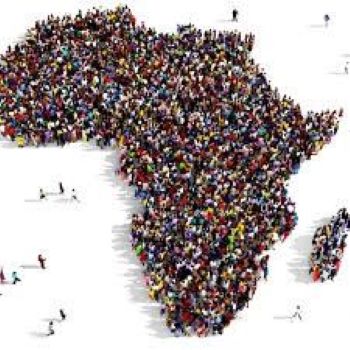
African population
Share
Facebook Twitter LinkedIn Pinterest Email

A new phase of geopolitical contestation is unfolding across Africa — one that bears resemblance to the Cold War rivalry of the twentieth century, yet differs in structure, motivation, and complexity. This emerging contest is less defined by ideological polarization and more by strategic competition over resources, markets, and influence. Its multiplicity of actors and fluid alliances make it potentially more volatile than the bipolar standoff that shaped global politics in the latter half of the last century.

Unlike the earlier era dominated by two superpowers, today’s environment reflects a crowded and overlapping field of state and non-state competitors. The United States and China are locked in competition for strategic access and economic leverage, while Russia and France — with Ukraine entangled through its wider geopolitical alignments — vie for influence in security and political domains. Regional actors such as Saudi Arabia and the United Arab Emirates compete for economic and diplomatic footholds, and Turkey’s expanding presence intersects with Israel’s own strategic engagements. Beyond these visible rivalries lie shifting, pragmatic partnerships that defy fixed alignment and complicate the continent’s geopolitical landscape.

At the core of this contest is the pursuit of advantage across multiple domains. Critical minerals essential for modern industrial and digital economies have become central targets, alongside agricultural land and other natural resources. Diplomatic influence in multilateral forums, access to Africa’s expanding consumer markets, and the projection of strategic power — often framed in zero-sum terms — further drive the competition. The continent’s demographic growth and resource wealth have made it a central arena for global positioning.
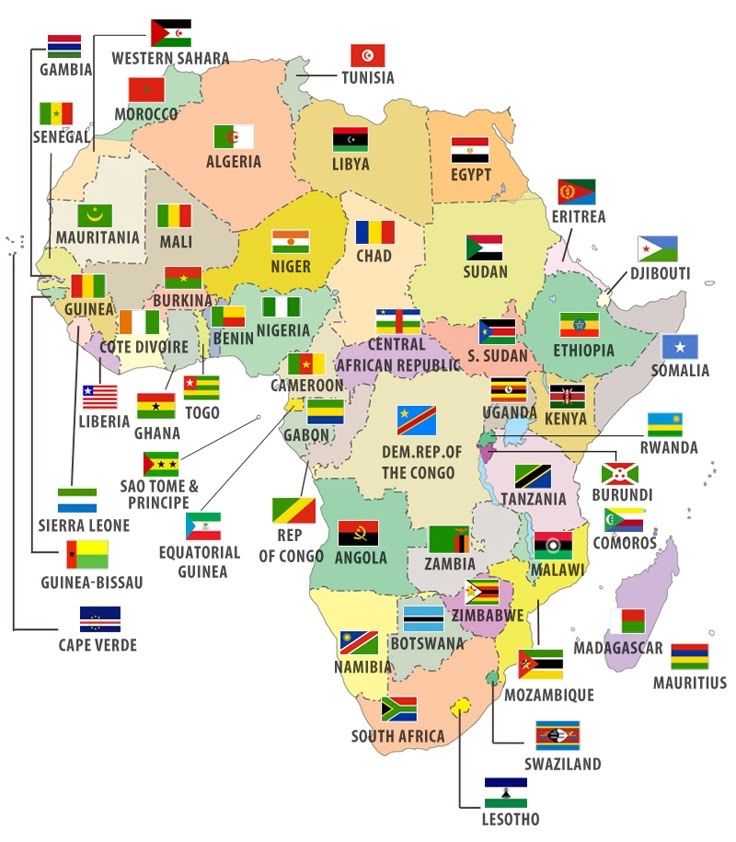
The rivalry manifests across several geographic theatres. Sudan and the wider Horn of Africa represent one of the most visible arenas, alongside the Democratic Republic of Congo and the broader Great Lakes region. The Sahel remains a focal point of security and influence struggles, while Libya continues to reflect overlapping external interests. Strategic mineral zones such as the Copperbelt in south-central Africa and the littoral states along the Gulf of Guinea — vital for maritime access and energy flows — also feature prominently in this evolving geopolitical contest.

The instruments employed are diverse and often hybrid in nature. Security cooperation agreements and military training initiatives coexist with resource-linked commercial arrangements and counter-deals. Private security actors increasingly operate alongside state forces, while diplomatic incentives — ranging from infrastructure commitments to political support — shape alignment decisions. These tools blur traditional boundaries between economic engagement, diplomacy, and security strategy.

Certain patterns signal the entrenchment of this competitive dynamic. Protracted civil conflicts in places such as Sudan and the Democratic Republic of Congo demonstrate how local crises intersect with external interests. The arming of state and non-state actors, persistent diplomatic frictions across subregions, and intensifying humanitarian emergencies point to systemic strain. Interstate tensions across the Horn of Africa, the Great Lakes region, and parts of West Africa underscore the wider implications of competing external engagements.

This new geopolitical environment differs fundamentally from the Cold War that preceded it. The absence of a clear ideological divide removes the binary clarity that once structured alliances. Instead, a multiplicity of actors operate simultaneously, alliances shift according to immediate strategic calculations, and advanced autonomous or semi-autonomous weapons technologies — particularly drone systems — introduce new operational risks. The contest is driven less by ideology than by material interests and strategic positioning. Moreover, African states now operate in a context of long-established sovereignty, leaving them with agency and responsibility in navigating external engagement.

Africa’s emerging Cold War is therefore not merely a replay of history but a transformation of it — multipolar, transactional, and resource-centered. Its trajectory will depend not only on the ambitions of external powers but also on the strategic coherence, governance choices, and diplomatic agency of African states themselves. Whether the continent becomes a battleground for competing interests or a negotiating space where partnerships are leveraged for development remains a defining question of the coming decades.

Owusu wrote this in synopsis format on his LinkedIn page

Africa's new cold war Fluid alliances Multipolar rivalries
Share. Facebook Twitter Pinterest LinkedIn WhatsApp Reddit Tumblr Email
Editor
  • Website

Related Posts

Museveni’s 7th swearing-in turns Kampala into regional diplomatic hub

May 12, 2026

When democracy must defend itself: Karl Popper’s paradoxes, the Open Society and Nigeria’s democratic question

May 3, 2026

To our beloved brothers in South Africa, By Femi Fani-Kayode

May 3, 2026

Leave A Reply Cancel Reply

FG pledges support for IOM climate migration investment initiative

May 12, 2026

Lagos onboards 19 accelerators for N10bn LASMECO micro enterprise scheme

May 12, 2026

Lagos pushes mandatory health insurance, PPPs to close N100bn healthcare gap

May 12, 2026

The Muslim 500 ranks Sultan Abubakar 17th World’s Most Influential for 2026

May 12, 2026
About Us
About Us

ASHENEWS (AsheNewsDaily.com), published by PenPlus Online Media Publishers, is an independent online newspaper. We report development news, especially on Agriculture, Science, Health and Environment as they affect the under-reported rural and urban poor.

We also conduct investigations, especially in the areas of ASHE, as well as other general interests, including corruption, human rights, illicit financial flows, and politics.

Contact Info:
  • 1st floor, Dogon Daji House, No. 5, Maiduguri Road, Sokoto
  • +234(0)7031140009
  • ashenewsdaily@gmail.com
Facebook Twitter Instagram Pinterest
© 2026 All Rights Reserved. ASHENEWS Daily Designed & Managed By DeedsTech

Type above and press Enter to search. Press Esc to cancel.