

• Home
  • Agric
  • Sci & Tech
  • Health
  • Environment
  • Hausa News
  • More
    • Business/Banking & Finance
    • Politics/Elections
    • Entertainments & Sports
    • International
    • Investigation
    • Law & Human Rights
    • Africa
    • ACCOUNTABILITY/CORRUPTION
    • Hassan Gimba
    • Column
    • Prof. Jibrin Ibrahim
    • Prof. M.K. Othman
    • Defense/Security
    • Education
    • Energy/Electricity
    • Entertainment/Arts & Sports
    • Society and Lifestyle
    • Food & Agriculture
    • Health & Healthy Living
    • International News
    • Interviews
    • Investigation/Fact-Check
    • Judiciary/Legislature/Law & Human Rights
    • Oil & Gas/Mineral Resources
    • Press Freedom/Media/PR/Journalism
    • General News
    • Presidency
  • About Us
    • Contact Us
    • Board Of Advisory
    • Privacy Policy
    • Ethics Policy
    • Teamwork And Collaboration Policy
    • Fact-Checking Policy
    • Advertising
  • Media OutReach Newswire
    • Wire News
  • The Stories
Facebook Twitter Instagram
Trending
  • NITDA, CAC strengthen cybersecurity measures
  • Naira ends week slightly lower
  • YABATECH boosts skills in stop-motion animation
  • Abia gov mourns US-based doctor’s death
  • NGX urges collaboration for digital asset growth
  • New science labs onated to Oshodi school
  • Nigerian freelancers face rising financial pressure
  • Airtime borrowing myths debunked by FCCPC
Facebook Twitter Instagram YouTube
AsheNewsAsheNews
  • Home
  • Agric

    Association urges members to boost catfish value

    April 17, 2026

    WFP spends $5M on shock response in Nigeria

    April 17, 2026

    Stakeholders push investment in Nigeria’s agribusiness

    April 16, 2026

    Nigeria faces 1m tonne palm oil deficit

    April 16, 2026

    WFP spends $5m on social protection in Nigeria

    April 16, 2026
  • Sci & Tech

    NITDA, CAC strengthen cybersecurity measures

    April 18, 2026

    New science labs onated to Oshodi school

    April 18, 2026

    Nigerian freelancers face rising financial pressure

    April 17, 2026

    NDPC probes alleged CAC data breach

    April 17, 2026

    Airtel temporarily suspends credit services

    April 17, 2026
  • Health

    Abia gov mourns US-based doctor’s death

    April 18, 2026

    Family planning lowers maternal mortality by 30%

    April 17, 2026

    PCN seals 598 drug outlets in Kaduna

    April 17, 2026

    Foundation deploys health officers in Abia

    April 17, 2026

    UNILAG medicine faculty targets clinical innovation

    April 16, 2026
  • Environment

    NSIB introduces new conditions of service

    April 17, 2026

    LAWMA cracks down on environmental violations in Alimosho

    April 17, 2026

    FG hands over 132 housing units to Kwara

    April 17, 2026

    SON hosts workshop on motor energy standards

    April 16, 2026

    Nigeria pushes for better water, sanitation

    April 15, 2026
  • Hausa News

    Otti plans 250-room 5-star hotel in Umuahia

    April 11, 2026

    Anti-quackery task force seals 4 fake hospitals in Rivers

    August 29, 2025

    [BIDIYO] Yadda na lashe gasa ta duniya a fannin Ingilishi – Rukayya ‘yar shekara 17

    August 6, 2025

    A Saka Baki, A Sasanta Saɓani Tsakanin ‘Yanjarida Da Liman, Daga Muhammad Sajo

    May 21, 2025

    Dan majalisa ya raba kayan miliyoyi a Funtuwa da Dandume

    March 18, 2025
  • More
    1. Business/Banking & Finance
    2. Politics/Elections
    3. Entertainments & Sports
    4. International
    5. Investigation
    6. Law & Human Rights
    7. Africa
    8. ACCOUNTABILITY/CORRUPTION
    9. Hassan Gimba
    10. Column
    11. Prof. Jibrin Ibrahim
    12. Prof. M.K. Othman
    13. Defense/Security
    14. Education
    15. Energy/Electricity
    16. Entertainment/Arts & Sports
    17. Society and Lifestyle
    18. Food & Agriculture
    19. Health & Healthy Living
    20. International News
    21. Interviews
    22. Investigation/Fact-Check
    23. Judiciary/Legislature/Law & Human Rights
    24. Oil & Gas/Mineral Resources
    25. Press Freedom/Media/PR/Journalism
    26. General News
    27. Presidency
    Featured
    Recent

    NITDA, CAC strengthen cybersecurity measures

    April 18, 2026

    Naira ends week slightly lower

    April 18, 2026

    YABATECH boosts skills in stop-motion animation

    April 18, 2026
  • About Us
    1. Contact Us
    2. Board Of Advisory
    3. Privacy Policy
    4. Ethics Policy
    5. Teamwork And Collaboration Policy
    6. Fact-Checking Policy
    7. Advertising
    Featured
    Recent

    NITDA, CAC strengthen cybersecurity measures

    April 18, 2026

    Naira ends week slightly lower

    April 18, 2026

    YABATECH boosts skills in stop-motion animation

    April 18, 2026
  • Media OutReach Newswire
    • Wire News
  • The Stories
AsheNewsAsheNews
Home»Science/Tech & Innovation/R&D»Octopuses can ‘see’ with their skin
Science/Tech & Innovation/R&D

Octopuses can ‘see’ with their skin

Abdallah el-KurebeBy Abdallah el-KurebeJune 24, 2018No Comments3 Mins Read
Share
Facebook Twitter LinkedIn Pinterest Email

Detecting light away from eyes can trigger animals’ color changes

By SUSAN MILIUS
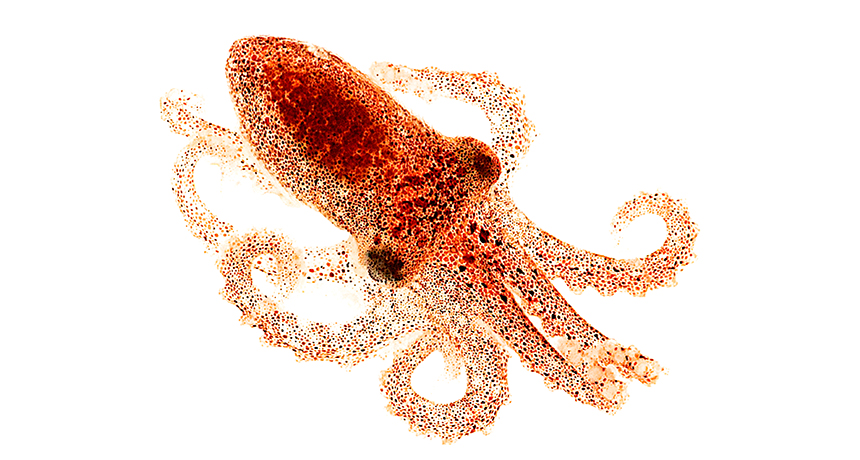
Octopus skin can detect light and respond to it — no eyes or brain required.

Tests of fresh skin samples from California two-spot octopuses (Octopus bimaculoides) show this ability clearly for the first time in any cephalopod, says Todd Oakley of the University of California, Santa Barbara. White or blue light prompts the pale skin’s tiny quick-change color organs, or chromatophores, to expand, creating waves of yellows and browns.

The octopus tests, along with another research team’s new studies of two kinds of cuttlefishes and a squid, feed discussion about whether light detection in places other than eyes plays some role in cephalopods’ changing color displays. All four species studied have light-sensing compounds in tissues beyond their eyes, the two teams report May 15 in the Journal of Experimental Biology.

Biologists have known that eyes and the central nervous system have a major influence on prompting color displays that camouflage octopuses or let them communicate. A paper in 1993 foreshadowed this, reporting that octopus skin itself also seemed to respond to light, Oakley says. His coauthor and UCSB colleague Desmond Ramirez worked for months determining that light triggers a color-change display in detached octopus skin samples. The eyes’ main light-sensing protein, one of many forms of opsin, may have gained another function in skin as a sensor for light, the researchers speculate.

That idea fits with Ramirez’s discovery that blue-green light prompts the quickest start for the skin samples’ color changes. The light isn’t very different, just 10 nanometers longer in wavelength, from the blue light (470 nanometers) that most strongly stimulates the eyes’ opsin. Genes known to encode compounds that work with opsin also turn on in the octopus skin, the experiments show.

Opsins operating beyond the eyes might offer local refinements to camouflage or even help the animals sense other environmental cues such as pressure. Intriguing ideas, but “it’s early days,” Oakley cautions.

Opsins and compounds that work with the proteins also show up in skin from the common and broadclub cuttlefishes (Sepia officinalis and S. latimanus) and the longfin inshore squid (Doryteuthis pealeii), Thomas Cronin of the University of Maryland, Baltimore County and his colleagues report. The combination of compounds represents the first molecular evidence that opsins are functioning in the skin of these species. Also, molecular evidence suggests a location in the skin: the chromatophores.

So far, though, there’s no evidence in squids and cuttlefishes that light striking skin is enough to make chromatophores blush. Cronin isn’t completely ruling out the idea yet and speculates about more subtle roles. “Maybe they don’t respond directly, but they may alter a signal sent from the central nervous system,” he says.

Research on light detection beyond eyes and brains “has been neglected for some time,” says developmental biologist Florian Raible of the University of Vienna. Yet non-eye light sensing structures or compounds show up in the tube feet of sea urchins and the body walls of fruit fly larvae. And in Raible’s lab, a polychaete worm flees light — even after beheading.

CHANGING ITS SPOTS Seen through a microscope (first at natural speed, then at half speed), a bit of skin removed from an octopus does not react to red light. But when white light shines on it, dotlike color-change organs expand, turning yellow or brown. Researchers call this process LACE for light-activated chromatophore expansion. Courtesy of Robyn Crook. ScienceNews

Octopus Santa Barbara University of California
Share. Facebook Twitter Pinterest LinkedIn WhatsApp Reddit Tumblr Email
Abdallah el-Kurebe
  • Website
  • Facebook
  • Twitter
  • LinkedIn

Related Posts

NITDA, CAC strengthen cybersecurity measures

April 18, 2026

New science labs onated to Oshodi school

April 18, 2026

Nigerian freelancers face rising financial pressure

April 17, 2026

Leave A Reply Cancel Reply

NITDA, CAC strengthen cybersecurity measures

April 18, 2026

Naira ends week slightly lower

April 18, 2026

YABATECH boosts skills in stop-motion animation

April 18, 2026

Abia gov mourns US-based doctor’s death

April 18, 2026
About Us
About Us

ASHENEWS (AsheNewsDaily.com), published by PenPlus Online Media Publishers, is an independent online newspaper. We report development news, especially on Agriculture, Science, Health and Environment as they affect the under-reported rural and urban poor.

We also conduct investigations, especially in the areas of ASHE, as well as other general interests, including corruption, human rights, illicit financial flows, and politics.

Contact Info:
  • 1st floor, Dogon Daji House, No. 5, Maiduguri Road, Sokoto
  • +234(0)7031140009
  • ashenewsdaily@gmail.com
Facebook Twitter Instagram Pinterest
© 2026 All Rights Reserved. ASHENEWS Daily Designed & Managed By DeedsTech

Type above and press Enter to search. Press Esc to cancel.