


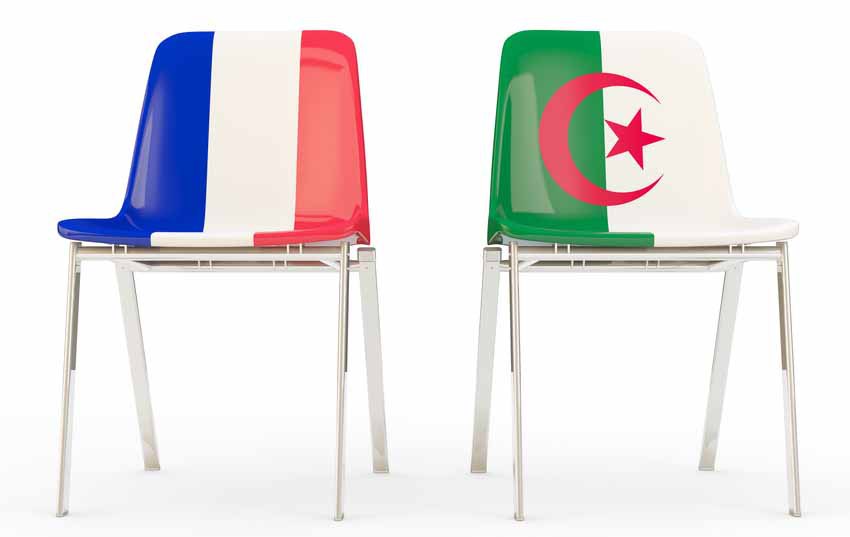
The Algerian Ministry of Higher Education and Scientific Research has decided to replace French with English at universities, starting in September when the new academic year begins.
The ministry’s move was outlined in a directive at the beginning of April, instructing all public universities to begin transitioning first-year medical and scientific courses entirely to English, starting from the next academic year (September 2025).
The move is part of a broader strategy to introduce English as the primary language of instruction across the country’s educational institutions – a shift framed as a step towards enhancing the internationalisation of the Algerian higher education sector, according to a 2025 study titled, ‘EMI In Algeria: Theorizing as a vehicle for the internationalization Of local knowledge in the social and human sciences’.
In the Maghreb, Algeria is North Africa’s third-highest user of French (33%), after Tunisia (52%) and Morocco (35%), according to a 2018 report by the French Language Observatory.
What is driving the change?
Asked whether the Algerian move towards English is a political or educational move, Professor Bouraoui Seyfallah from the University of Sciences and Technology in Houari Boumediene, Algeria, told University World News: “Honestly, it’s hard to separate politics from education in a context like this, especially when the two countries share such a deep and complex history.“
In my opinion, this move is both political and educational, but the political dimension is likely to be the stronger driving force behind it right now,” said Seyfallah.
Political tension between France and Algeria, its former North African colony, emerged in July 2024. The trigger was France’s support for Morocco’s claims of sovereignty over Western Sahara – a resource-rich territory, considered by the United Nations as ‘non-autonomous’. It is controlled, for the most part, by Morocco but claimed by the Polisario Front, a Sahrawi independence movement supported by Algeria. The move infuriated Algiers, which announced the “withdrawal with immediate effect” of its ambassador to France.
On 19 March Niger, Burkina Faso, and Mali decided to leave the international Organisation of La Francophonie (OIF), an organisation established by countries united by the French language, alleging that the OIF has become France’s “remote-controlled political instrument” operated from Paris to suit its “geopolitical considerations”.
Asked whether other African countries might follow Algeria in replacing the French language with English at its universities, Rosemary Salomone, a professor of law at the United States-based John’s University, said: “The situation in Niger, Burkina Faso, and Mali is somewhat unique in that these are all countries that have been taken over by military juntas who are now buttressed by Russian mercenaries.”
Salomone, author of the book, “The Rise of English: Global politics and the power of language”, added: “They not only have left the OIF, they have all demoted French from an official to a working language, demanded that all French troops leave their respective countries, and begun dismantling traces of colonialism, including street names and monuments.“
These countries are now thrown into chaos so the possibility of their resetting language policy in higher education is highly unlikely. That said, France is clearly losing its foothold in its former French colonies in Africa,” Salomone pointed out.
According to her, Senegal and Côte d’Ivoire have also terminated France’s military presence amid popular cries for sovereignty and decolonisation. This could lead to their eventually moving toward English in their universities for both anti-French and pragmatic reasons.
French a ‘lost language’?
Algerian Professor Sadallah Boubaker-Khaled from the École Normale Supérieure in Algiers, Algeria, told University World News: “French has become a lost language” that is not used in many French educational institutions in former colonies where French was the first language, including in universities. “How can we use French in our universities at this time when even its speakers have become alienated from it?”
He said young people had come to prefer studying in English because it “solves their educational and employment problems” to a greater extent than does French.“
English is now the dominant language in science, technology, economics and diplomacy. By integrating English into universities, Algeria is likely seeking to further open its students to the world and promote their competitiveness in the international job market and academic research,” Seyfallah said.
Echoing Seyfallah’s view, Salomone said changing to an English-based higher educational system would ease the way for Algeria to create the human capital for attracting multinational corporations, prepare students for the global economy where English is the dominant lingua franca, put Algeria in tune with technological advances internationally, and give the work of researchers greater visibility.
But Seyfallah pointed out that, while English was gaining ground among the youth, especially online, the overall level of English proficiency among university students and professors was not high enough to switch entirely from French to English – especially in technical and scientific fields where precise terminology was key.
According to the 2024 Education First English Proficiency Index, Algeria is ranked 78 out of 116 countries worldwide and is classified as having “low English proficiency”.
“The main challenges Algerian universities will face are low English proficiency, the lack of English educational resources, teacher resistance or unpreparedness and inequalities between institutions and cultural and identity resistance,” Seyfallah said.“
Honestly, there’s a lot that Algerian universities need to do to successfully prepare for such a major transition. If I had to sum it up, I’d say they need to take a gradual, well-supported and inclusive approach,” Seyfallah suggested.
Salomone added that, while the Algerian government had now mandated English language classes beginning in the primary grades, the question remains as to whether students entering university have gained the necessary skills in academic English.“
Just as concerning is whether Algeria has a sufficient number of faculty members prepared to teach in English. Building that level of linguistic infrastructure takes years of intensive language training.“
One way to address the problem is to test all students entering the university and provide intense English language classes (perhaps over the summer and continuing into the academic year) for those who do not meet a threshold of competence across language skills, including reading, writing and listening comprehension.”
According to Salomone, the same could be done for faculty members and administrators.“
Universities might also consider, at least initially, hiring visiting faculty from anglophone countries or initiating faculty exchange programmes with anglophone countries,” she said.
University World News
