

• Home
  • Agric
  • Sci & Tech
  • Health
  • Environment
  • Hausa News
  • More
    • Business/Banking & Finance
    • POLITICS
    • Entertainments & Sports
    • International
    • Investigation
    • Law & Human Rights
    • Africa
    • ACCOUNTABILITY/CORRUPTION
    • Hassan Gimba
    • Column
    • Prof. Jibrin Ibrahim
    • Prof. M.K. Othman
    • Defense/Security
    • Education
    • Energy/Electricity
    • Entertainment/Arts & Sports
    • Society and Lifestyle
    • Food & Agriculture
    • Health & Healthy Living
    • International News
    • Interviews
    • Investigation/Fact-Check
    • LAW & HUMAN RIGHTS
    • Oil & Gas/Mineral Resources
    • PRESS FREEDOM/JOURNALISM/PR
    • General News
    • Presidency
  • About Us
    • Contact Us
    • Board Of Advisory
    • Privacy Policy
    • Ethics Policy
    • Teamwork And Collaboration Policy
    • Fact-Checking Policy
    • Advertising
  • Media OutReach Newswire
    • Wire News
  • The Stories
Facebook Twitter Instagram
Trending
  • Nigeria’s insecurity will be defeated in the 774 LGAs, not Abuja alone, by DIG M. U. Gumel (Rtd.)
  • CSOs launch forest, climate journalism fellowship to deepen environmental reporting in Nigeria
  • TikTok removes 4.8m videos in Nigeria in Q1 2026
  • ALTON: Nigeria’s digital economy ambition unattainable without protected telecom infrastructure
  • Nokia reports strong Q2 2026 results on AI demand
  • NDE launches online registration for phase III of renewed hope employment initiative
  • WaterAid, Ikorodu north LCDA boost WASH investment to ₦100m
  • Nigeria, ITU urge African unity on global digital governance
Facebook Twitter Instagram YouTube
AsheNewsAsheNews
  • Home
  • Agric

    JAMB announces alternative admission process for NCE, agric courses

    July 23, 2026

    Edo farmers benefit as Tinubu’s fertilizer programme launches

    July 23, 2026

    Nigeria unveils digital platform to boost plant disease surveillance in West, Central Africa

    July 23, 2026

    Sebastian joins SDP for 2027 Benue governorship race

    July 23, 2026

    High costs keep food prices elevated in Nigeria

    July 22, 2026
  • Sci & Tech

    TikTok removes 4.8m videos in Nigeria in Q1 2026

    July 23, 2026

    ALTON: Nigeria’s digital economy ambition unattainable without protected telecom infrastructure

    July 23, 2026

    Nokia reports strong Q2 2026 results on AI demand

    July 23, 2026

    Nigeria, ITU urge African unity on global digital governance

    July 23, 2026

    Inflation pushes Nigerians toward gadget repairs

    July 22, 2026
  • Health

    NAFDAC launches nationwide crackdown on sachet, small-bottle alcohol

    July 23, 2026

    Neurologist warns: Pollution threatens brain health

    July 23, 2026

    Anti-ritual killing advocate expands nationwide campaign

    July 23, 2026

    Claudia Sanso-Olu, Oshodi-Isolo chairman flag off 2026 MNCAH+N week

    July 23, 2026

    Nigeria turns to fortified bouillon cubes to fight hidden hunger

    July 23, 2026
  • Environment

    CSOs launch forest, climate journalism fellowship to deepen environmental reporting in Nigeria

    July 23, 2026

    NDE launches online registration for phase III of renewed hope employment initiative

    July 23, 2026

    WaterAid, Ikorodu north LCDA boost WASH investment to ₦100m

    July 23, 2026

    FRSC RS2 zonal command records 2,944 traffic offences in 3 day patrol

    July 23, 2026

    JAMB commences registration for NCE, Non-tech agricultural programmes

    July 23, 2026
  • Hausa News

    UNA signs MoU to launch air Bissau in Guinea-Bissau

    June 15, 2026

    Otti plans 250-room 5-star hotel in Umuahia

    April 11, 2026

    Anti-quackery task force seals 4 fake hospitals in Rivers

    August 29, 2025

    [BIDIYO] Yadda na lashe gasa ta duniya a fannin Ingilishi – Rukayya ‘yar shekara 17

    August 6, 2025

    A Saka Baki, A Sasanta Saɓani Tsakanin ‘Yanjarida Da Liman, Daga Muhammad Sajo

    May 21, 2025
  • More
    1. Business/Banking & Finance
    2. POLITICS
    3. Entertainments & Sports
    4. International
    5. Investigation
    6. Law & Human Rights
    7. Africa
    8. ACCOUNTABILITY/CORRUPTION
    9. Hassan Gimba
    10. Column
    11. Prof. Jibrin Ibrahim
    12. Prof. M.K. Othman
    13. Defense/Security
    14. Education
    15. Energy/Electricity
    16. Entertainment/Arts & Sports
    17. Society and Lifestyle
    18. Food & Agriculture
    19. Health & Healthy Living
    20. International News
    21. Interviews
    22. Investigation/Fact-Check
    23. LAW & HUMAN RIGHTS
    24. Oil & Gas/Mineral Resources
    25. PRESS FREEDOM/JOURNALISM/PR
    26. General News
    27. Presidency
    Featured
    Recent

    Nigeria’s insecurity will be defeated in the 774 LGAs, not Abuja alone, by DIG M. U. Gumel (Rtd.)

    July 23, 2026

    CSOs launch forest, climate journalism fellowship to deepen environmental reporting in Nigeria

    July 23, 2026

    TikTok removes 4.8m videos in Nigeria in Q1 2026

    July 23, 2026
  • About Us
    1. Contact Us
    2. Board Of Advisory
    3. Privacy Policy
    4. Ethics Policy
    5. Teamwork And Collaboration Policy
    6. Fact-Checking Policy
    7. Advertising
    Featured
    Recent

    Nigeria’s insecurity will be defeated in the 774 LGAs, not Abuja alone, by DIG M. U. Gumel (Rtd.)

    July 23, 2026

    CSOs launch forest, climate journalism fellowship to deepen environmental reporting in Nigeria

    July 23, 2026

    TikTok removes 4.8m videos in Nigeria in Q1 2026

    July 23, 2026
  • Media OutReach Newswire
    • Wire News
  • The Stories
AsheNewsAsheNews
Home»Health & Healthy Living»How rains turn deadly, driving disease, food insecurity, and mortality in Northern Nigeria
Health & Healthy Living

How rains turn deadly, driving disease, food insecurity, and mortality in Northern Nigeria

Abdallah el-KurebeBy Abdallah el-KurebeMay 25, 2026Updated:May 25, 2026No Comments4 Mins Read
Heavy rains, lightning kill 50 people across Pakistan
Share
Facebook Twitter LinkedIn Pinterest Email

In northwestern Nigeria, particularly in Zamfara State, the rainy season brings more than relief from the heat. It brings distress, disease, and preventable deaths.

Between May and September, daily survival becomes a struggle as flooding, outbreaks of infectious diseases, and worsening food insecurity converge. For communities already affected by years of insecurity, the consequences are devastating.

Years of armed violence in Zamfara State—marked by kidnappings, village raids, cattle rustling, and ambushes—have uprooted tens of thousands of people, shattered livelihoods, and severely restricted access to essential services. Communities face overwhelming barriers to healthcare due to poverty, insecurity, long distances, and weak health infrastructure. When the rain arrives, their already fragile health situation worsens.

A season of disease

“The rainy season affects the way we see patients,” explains Sani Adamu, Nursing Activity Manager at Médecins Sans Frontières (MSF) hospital in Zamfara. “It increases the risks and transmission of many diseases, like malaria, cholera, and other acute watery diarrheal diseases.”

As rainwater collects in stagnant pools, it creates ideal breeding grounds for mosquitoes. Malaria cases surge, cholera outbreaks erupt, and other waterborne illnesses like typhoid fever take hold rapidly, particularly among vulnerable groups such as pregnant women and children.

In 2025, MSF treated 136,778 patients for malaria and 13,877 for cholera in Zamfara.

“In places where sanitation is poor, and water sources are unsafe, any contamination can spread quickly,” Adamu adds. “Flooding washes waste, garbage, and faecal matter into water sources, spreading waterborne diseases. Children play in this water, households use it, and people fall sick. Poor sanitation and overcrowded living conditions further exacerbate this spread.”

When illness becomes life-threatening

For families like that of Rakiya Usman, who lives in Shinkafi Local Government Area (LGA), these risks are part of daily reality. Her grandson, Auwalu Biliya, fell seriously ill with typhoid fever after developing symptoms in February 2026.

“We took him to the hospital in Shinkafi. We were told his intestines had been affected,” she says. “They explained that unclean water and contaminated food can cause this.”

Auwalu Biliya developed severe complications and was referred to the MSF-supported General Hospital in Zurmi LGA for life-saving surgery.

“Typhoid perforation is caused by bacteria transmitted through contaminated water or food,” explains Adamu. “Early treatment is crucial. When treatment is delayed, the intestine can perforate—a severe condition in which the intestine ruptures. At that stage, complications can be fatal, and surgery is the only option.”

Auwalu Biliya reached care in time, but many others arrive too late—or not at all—with often deadly consequences.

Malnutrition and disease: a dangerous cycle

As the rains drive a rise in disease, they also coincide with the lean season, when household food stocks are exhausted, and new harvests are still months away. Undernutrition weakens the immune system, making even common illnesses deadly, particularly among children.

In Zamfara State, MSF treated 60,566 children for malnutrition in 2025.

“All groups are affected,” says Adamu, “but children under 15 and pregnant women are most vulnerable.”

For many households already displaced by violence, this combination of hunger and illness has severe, life-threatening consequences.

Barriers to healthcare

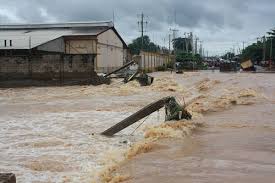
In this context, with rising malnutrition and exposure to disease, timely access to healthcare is critical, yet for many it remains out of reach. Insecurity restricts movement, leaving some areas completely cut off. Health facilities are too far away, understaffed, or under-equipped. Flooded roads and damaged bridges further isolate communities, while the cost of transport and care forces many families to delay seeking treatment or rely on informal care.

Saratu, whose daughter Jamila fell ill after repeated displacement, watches the distance stretch between her and survival. The simple act of seeking care has become an ordeal. From Tudubali to Shinkafi, the journey costs ten thousand naira—money she barely managed to raise. Without it, she knows treatment would remain out of reach.

“We live close to the river and sleep in the bush. We don’t have mosquito nets,” she says. “During the rainy season, many children get malaria. One child recovers, and another falls sick. Sometimes three of your children are ill at the same time, and you don’t know what to do.”

MSF’s response during the rainy season

Across northern Nigeria, the organization directly runs or supports four healthcare facilities to treat diseases caused by the rainy season and the seasonal peak of malnutrition.

Most illnesses and deaths during the rainy season are preventable.

“Preventive action before and during the rainy season is critical. Strengthening community awareness, improving access to safe water and sanitation, and ensuring timely vaccination campaigns can all reduce the impact of diseases,” Adamu says. “Health facilities must also be properly equipped and supported to diagnose and treat patients quickly and effectively.”

MSF Nothern Nigeria RAINS
Share. Facebook Twitter Pinterest LinkedIn WhatsApp Reddit Tumblr Email
Abdallah el-Kurebe
  • Website
  • Facebook
  • Twitter
  • LinkedIn

Related Posts

NAFDAC launches nationwide crackdown on sachet, small-bottle alcohol

July 23, 2026

Neurologist warns: Pollution threatens brain health

July 23, 2026

Anti-ritual killing advocate expands nationwide campaign

July 23, 2026

Leave A Reply Cancel Reply

Nigeria’s insecurity will be defeated in the 774 LGAs, not Abuja alone, by DIG M. U. Gumel (Rtd.)

July 23, 2026

CSOs launch forest, climate journalism fellowship to deepen environmental reporting in Nigeria

July 23, 2026

TikTok removes 4.8m videos in Nigeria in Q1 2026

July 23, 2026

ALTON: Nigeria’s digital economy ambition unattainable without protected telecom infrastructure

July 23, 2026
About Us
About Us

ASHENEWS (AsheNewsDaily.com), published by PenPlus Online Media Publishers, is an independent online newspaper. We report development news, especially on Agriculture, Science, Health and Environment as they affect the under-reported rural and urban poor.

We also conduct investigations, especially in the areas of ASHE, as well as other general interests, including corruption, human rights, illicit financial flows, and politics.

Contact Info:
  • 1st floor, Dogon Daji House, No. 5, Maiduguri Road, Sokoto
  • +234(0)7031140009
  • ashenewsdaily@gmail.com
Facebook Twitter Instagram Pinterest
© 2026 All Rights Reserved. ASHENEWS Daily Designed & Managed By DeedsTech

Type above and press Enter to search. Press Esc to cancel.