


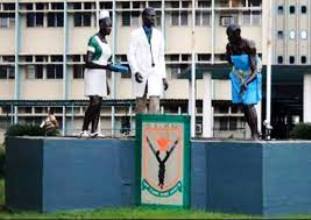
The Lagos University Teaching Hospital (LUTH), Idi-Araba, on Friday disclosed that the Federal Government has provided free drugs for indigent patients at the hospital.
The Chief Medical Director of the hospital, Prof. Wasiu Adeyemo, made this known at a news conference in Lagos.
Adeyemo said the drugs were mainly for the treatment of hypertension, diabetes, and infections.
He explained that the drugs, which have an expiry date of 2028, were specifically intended for Nigerians who cannot readily afford their medications.
According to him, the objective is to enhance access to equitable healthcare.
He emphasized that the drugs were strictly for in-patients and out-patients, including adults and children registered with the hospital.
“The Federal Government, through the Federal Ministry of Health and Social Welfare under the leadership of Prof. Muhammad Ali Pate, has supplied us with free drugs specifically for registered indigent patients of the hospital.
“The drugs are for the treatment of common diseases such as hypertension, diabetes, and various forms of infections.
“And based on the quantity supplied, I believe it will cover about 5,000 indigent patients of the hospital.
“This provision is not limited to LUTH alone; I believe all 84 federal tertiary hospitals in Nigeria were included, though I’m not sure if they have all received theirs,” the CMD said.
Adeyemo said the hospital has set up a committee responsible for implementing the initiative, including establishing criteria for identifying indigent patients.
“Similarly, we have devised a means of making it work by setting up a small committee that will determine the criteria for identifying indigent patients.
“The relevant members include doctors who prescribe the drugs, nurses who are always with the patients, the pharmacy department, and the department of medical social services,” he added.
Also speaking, the Director of Medical and Social Services at LUTH, Ms. Titi Tade, described the initiative as “a strategic commitment to equitable healthcare.”
Tade said the hospital has clear criteria for identifying an indigent patient.
According to her, many factors are considered, including family background, educational history, employment history, psychiatric history, and legal issues, among others.
“So, there are a lot of criteria involved. We will assess how they interact to determine whether a patient is indigent or able to pay for medication.
“For instance, if a person has a mental health condition that prevents them from working despite having high qualifications, that may qualify them as indigent.
“However, there are people who are totally indigent, and others who are situationally indigent because they have spent so much money on treatment at that point in time,” Tade said.
She noted that about 30 to 40 per cent of the hospital’s patients are indigent and cannot afford their medication.
The Director of Nursing Services, Mrs. Fasilat Akinola, affirmed that a good number of patients in the wards are indigent and even struggle to feed themselves.
According to her, the gesture will bring huge relief to many helpless patients in the wards who have no means to pay for their medication.
