

• Home
  • Agric
  • Sci & Tech
  • Health
  • Environment
  • Hausa News
  • More
    • Business/Banking & Finance
    • Politics/Elections
    • Entertainments & Sports
    • International
    • Investigation
    • Law & Human Rights
    • Africa
    • ACCOUNTABILITY/CORRUPTION
    • Hassan Gimba
    • Column
    • Prof. Jibrin Ibrahim
    • Prof. M.K. Othman
    • Defense/Security
    • Education
    • Energy/Electricity
    • Entertainment/Arts & Sports
    • Society and Lifestyle
    • Food & Agriculture
    • Health & Healthy Living
    • International News
    • Interviews
    • Investigation/Fact-Check
    • Judiciary/Legislature/Law & Human Rights
    • Oil & Gas/Mineral Resources
    • Press Freedom/Media/PR/Journalism
    • General News
    • Presidency
  • About Us
    • Contact Us
    • Board Of Advisory
    • Privacy Policy
    • Ethics Policy
    • Teamwork And Collaboration Policy
    • Fact-Checking Policy
    • Advertising
  • Media OutReach Newswire
    • Wire News
  • The Stories
Facebook Twitter Instagram
Trending
  • Cocoa farmers push for local processing factories
  • Faith leaders call for just energy transition in Nigeria
  • Drunken passenger forces plane to land in Germany
  • Association endorses federal govt support programme for cancer patients
  • Kebbi vulcanisers chairman trains 48 apprentices, earns Up to ₦30,000 daily
  • Sightsavers mobilises 87 district heads to administer Azithromycin to 1.2m children in Sokoto
  • AFAN blames middlemen, high transport costs for rising food prices
  • Court convicts ex-Power Minister Mamman over N33bn fraud
Facebook Twitter Instagram YouTube
AsheNewsAsheNews
  • Home
  • Agric

    Cocoa farmers push for local processing factories

    May 7, 2026

    AFAN blames middlemen, high transport costs for rising food prices

    May 7, 2026

    Lagos resident lament soaring tomato prices

    May 6, 2026

    FG unveils 2025–2030 revised national gender policy on agrifood systems

    May 6, 2026

    High fertiliser prices threaten 2026 farming season in Bauchi

    May 5, 2026
  • Sci & Tech

    Nigeria ranks among top AI-adopting nations

    May 7, 2026

    UBA, MTN MoMo, RedTech unveil cardless payment solution

    May 6, 2026

    Uganda unveils first homegrown biotech livestock vaccine, targets regional leadership

    May 3, 2026

    Samsung revenue jumps 43% in Q1

    May 1, 2026

    AfricaX summit to support commercialisation of innovations

    April 30, 2026
  • Health

    Association endorses federal govt support programme for cancer patients

    May 7, 2026

    Sightsavers mobilises 87 district heads to administer Azithromycin to 1.2m children in Sokoto

    May 7, 2026

    Lagos signs 10-year primary health care compact

    May 7, 2026

    Benue children stunted as malnutrition worsens — Nutrition officer

    May 7, 2026

    Lagos faces 500-year doctor shortage without urgent action — Commissioner warns

    May 7, 2026
  • Environment

    Faith leaders call for just energy transition in Nigeria

    May 7, 2026

    FG to close 1 carriageway of Eko bridge for repairs

    May 7, 2026

    Oyo introduces daily environmental sanitation enforcement

    May 6, 2026

    Shettima reaffirms FG commitment to humanitarian response

    May 6, 2026

    Lagos bridge crash kills 1, injures 4

    May 5, 2026
  • Hausa News

    Otti plans 250-room 5-star hotel in Umuahia

    April 11, 2026

    Anti-quackery task force seals 4 fake hospitals in Rivers

    August 29, 2025

    [BIDIYO] Yadda na lashe gasa ta duniya a fannin Ingilishi – Rukayya ‘yar shekara 17

    August 6, 2025

    A Saka Baki, A Sasanta Saɓani Tsakanin ‘Yanjarida Da Liman, Daga Muhammad Sajo

    May 21, 2025

    Dan majalisa ya raba kayan miliyoyi a Funtuwa da Dandume

    March 18, 2025
  • More
    1. Business/Banking & Finance
    2. Politics/Elections
    3. Entertainments & Sports
    4. International
    5. Investigation
    6. Law & Human Rights
    7. Africa
    8. ACCOUNTABILITY/CORRUPTION
    9. Hassan Gimba
    10. Column
    11. Prof. Jibrin Ibrahim
    12. Prof. M.K. Othman
    13. Defense/Security
    14. Education
    15. Energy/Electricity
    16. Entertainment/Arts & Sports
    17. Society and Lifestyle
    18. Food & Agriculture
    19. Health & Healthy Living
    20. International News
    21. Interviews
    22. Investigation/Fact-Check
    23. Judiciary/Legislature/Law & Human Rights
    24. Oil & Gas/Mineral Resources
    25. Press Freedom/Media/PR/Journalism
    26. General News
    27. Presidency
    Featured
    Recent

    Cocoa farmers push for local processing factories

    May 7, 2026

    Faith leaders call for just energy transition in Nigeria

    May 7, 2026

    Drunken passenger forces plane to land in Germany

    May 7, 2026
  • About Us
    1. Contact Us
    2. Board Of Advisory
    3. Privacy Policy
    4. Ethics Policy
    5. Teamwork And Collaboration Policy
    6. Fact-Checking Policy
    7. Advertising
    Featured
    Recent

    Cocoa farmers push for local processing factories

    May 7, 2026

    Faith leaders call for just energy transition in Nigeria

    May 7, 2026

    Drunken passenger forces plane to land in Germany

    May 7, 2026
  • Media OutReach Newswire
    • Wire News
  • The Stories
AsheNewsAsheNews
Home»Health & Healthy Living»[EXPLAINER] What’s the Chikungunya virus and how’re countries battling it?
Health & Healthy Living

[EXPLAINER] What’s the Chikungunya virus and how’re countries battling it?

Abdallah el-KurebeBy Abdallah el-KurebeAugust 6, 2025Updated:August 6, 2025No Comments4 Mins Read
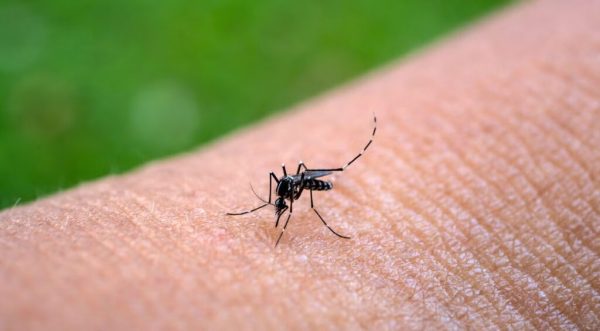
The Aedes mosquito, which transmits chikungunya virus. Photo Credit PAHO
The Aedes mosquito, which transmits chikungunya virus. (Photo Credit PAHO)
Share
Facebook Twitter LinkedIn Pinterest Email

What is chikungunya? Chikungunya is a viral infection caused by the chikungunya virus (CHIKV), primarily transmitted to humans through the bites of infected Aedes mosquitoes. These mosquitoes, known for their aggressive daytime biting behavior, also spread other illnesses like dengue and Zika.

The disease is characterized by sudden high fever, intense joint pain, rash, headache, muscle aches, nausea, and fatigue. While deaths are rare, the joint pain can become chronic, lasting for weeks or even months, especially in older adults or those with underlying health conditions. Newborns and people with weakened immune systems are particularly vulnerable.

The transmission cycle involves mosquitoes biting infected individuals, then spreading the virus by biting others — creating a vicious human–mosquito–human loop that drives outbreaks.

Global spread and impact

A significant surge in chikungunya cases began in early 2025, particularly in island territories in the Indian Ocean — including Réunion, Mayotte, and Mauritius. In Réunion alone, health authorities recorded over 54,000 cases by August, including 12 fatalities. This marks the worst outbreak there since 2005–2006, when an estimated 300,000 people were infected.

Elsewhere, the virus has been actively circulating in parts of East Africa (including Kenya and Somalia), South Asia, and Southeast Asia. Mumbai recently reported a worrying rise in cases. In South America, Brazil leads with over 185,000 cases reported by July, while Bolivia, Argentina, and Peru have also documented smaller but notable outbreaks.

Europe has not been spared — particularly France, which has seen about 800 imported cases since May 1, mostly from travelers returning from Réunion and other endemic regions.

China’s worst outbreak on record

China is grappling with its most serious chikungunya outbreak to date, concentrated in Guangdong Province, particularly in the city of Foshan. What started as an imported case quickly escalated, with at least 12 cities reporting local transmissions.

In one week, the number of cases in Foshan alone surged from 478 to nearly 3,000, and the total across the province has crossed 8,000. All reported cases have so far been mild, with no fatalities.

Health officials have been quick to respond with a combination of traditional and modern public health tools.

How is China responding?

Chinese authorities have implemented a wide-ranging emergency response involving:

  • Biological control: Releasing Toxorhynchites splendens mosquitoes, whose larvae prey on Aedes mosquito larvae, and stocking fish in ponds and drainage systems to eat mosquito eggs and larvae.
  • Chemical control: Conducting large-scale spraying of larvicides and insecticides in residential and public spaces, including apartment complexes and rural areas.
  • Physical control: Launching a week-long mosquito eradication campaign using drones, door-to-door inspections, and elimination of standing water. Violators faced fines or even disconnection of water and power services.
  • Medical interventions: Rapid isolation of confirmed patients under mosquito nets to prevent further spread, and provision of hospital care for symptomatic individuals.
  • Central coordination: China’s Vice Premier chaired an emergency meeting, calling for tighter border screening, enhanced surveillance, and sustained community-level engagement.

Why is it spreading so rapidly?

The current explosion of cases is attributed to unusually heavy monsoon rains, particularly in southern China. These rains, among the heaviest in over a century, caused widespread flooding and landslides, creating vast breeding grounds for mosquitoes.

Additionally, climate change is believed to be expanding the geographical range and breeding seasons of disease-carrying mosquitoes, making outbreaks more frequent in both tropical and temperate regions.

Are there treatments or vaccines?

There is currently no specific antiviral treatment for chikungunya. Care is supportive — resting, taking fever reducers like paracetamol, and drinking plenty of fluids. Most people recover within a week, though joint pain can linger.

Two vaccines have been licensed in the U.S. and Europe:

  1. Ixchiq – a live-attenuated vaccine
  2. Vimkunya – a virus-like particle vaccine

However, these are not yet widely available, and China has not approved either for use. They are also currently restricted in some regions for people over 60 due to ongoing safety reviews.

How to protect yourself

  • Wear long-sleeved clothing and use insect repellents with DEET or picaridin.
  • Sleep under mosquito nets or in air-conditioned rooms.
  • Empty stagnant water in and around your home, including flower pots, buckets, and clogged drains.
  • Avoid outdoor activities during peak mosquito hours, particularly early morning and late afternoon.

Conclusion

The chikungunya outbreak in China is a stark reminder of how environmental factors, global travel, and climate change can converge to fuel the resurgence of old diseases. As health authorities race to contain the spread, the rest of the world watches closely — both for lessons and warnings.

China’s aggressive response could prove a model for outbreak containment. But longer-term solutions may lie in greater international coordination, accelerated vaccine distribution, and more climate-resilient public health systems.

— Story adapted and rewritten from original reporting by Al‑Jazeera News

Aedes mosquito Chikungunya China
Share. Facebook Twitter Pinterest LinkedIn WhatsApp Reddit Tumblr Email
Abdallah el-Kurebe
  • Website
  • Facebook
  • Twitter
  • LinkedIn

Related Posts

Association endorses federal govt support programme for cancer patients

May 7, 2026

Sightsavers mobilises 87 district heads to administer Azithromycin to 1.2m children in Sokoto

May 7, 2026

Lagos signs 10-year primary health care compact

May 7, 2026

Leave A Reply Cancel Reply

Cocoa farmers push for local processing factories

May 7, 2026

Faith leaders call for just energy transition in Nigeria

May 7, 2026

Drunken passenger forces plane to land in Germany

May 7, 2026

Association endorses federal govt support programme for cancer patients

May 7, 2026
About Us
About Us

ASHENEWS (AsheNewsDaily.com), published by PenPlus Online Media Publishers, is an independent online newspaper. We report development news, especially on Agriculture, Science, Health and Environment as they affect the under-reported rural and urban poor.

We also conduct investigations, especially in the areas of ASHE, as well as other general interests, including corruption, human rights, illicit financial flows, and politics.

Contact Info:
  • 1st floor, Dogon Daji House, No. 5, Maiduguri Road, Sokoto
  • +234(0)7031140009
  • ashenewsdaily@gmail.com
Facebook Twitter Instagram Pinterest
© 2026 All Rights Reserved. ASHENEWS Daily Designed & Managed By DeedsTech

Type above and press Enter to search. Press Esc to cancel.