


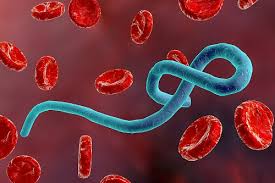
Following news of a new Ebola outbreak in the Democratic Republic of Congo (DRC), some health experts are calling for Nigeria to strengthen and reactivate its public health monitoring systems.
These experts shared their concerns in separate interviews with journalists on Tuesday in Lagos.
Nigeria experienced its only Ebola outbreak in 2014, when an infected traveler from Liberia brought the virus. That outbreak led to 20 cases and eight deaths before it was successfully contained.
The DRC’s Ministry of Health recently confirmed 63 suspected Ebola cases and 16 deaths in Kasai Province, including four health workers. The outbreak has been linked to the Ebola Zaire strain.
This marks the 16th Ebola outbreak in the DRC since the virus was first discovered there in 1976.
The disease has now spread to Bulape and Mweka health zones and has a high fatality rate of 57%. Experts are worried about how deadly and easily spread the virus can be.
Virologist Professor Oyewale Tomori warned that Nigeria must stay alert. He urged better monitoring at border points, health facilities, and stronger engagement with local communities.
Tomori, who is also the Chairman of Biovaccines Nigeria Ltd., said Nigeria must prepare its health facilities to detect and treat any possible cases.
He also raised concerns about Nigeria’s porous borders and called on border officials to be more vigilant in identifying travelers who may carry the virus.
He added that after past outbreaks are contained, health systems often relax or stop working. He stressed the need to restart and maintain labs and detection tools to quickly identify and treat any new cases.
Tomori specifically mentioned that travelers arriving from Addis Ababa and Lome should be carefully screened, as these are major travel routes from the DRC.
He said Nigeria must be fully prepared to prevent the virus from entering the country and to stop its spread if any case appears.
Epidemiologist Dr. Igwe Chukwubike also shared his thoughts, saying that educating the public is key to stopping the disease.
He emphasized regular handwashing with soap and water as an important way to reduce the risk of getting infected.
He also warned people to avoid close contact with anyone showing symptoms such as fever, vomiting, or unexplained bleeding, which are common signs of Ebola.
Dr. Chukwubike urged the public to report any suspected cases or unusual illnesses to health authorities right away.
He said that increasing public awareness is essential so that people know when and where to report suspected cases.
Finally, he called on all citizens to maintain proper hygiene, especially during this time of increased risk.
