


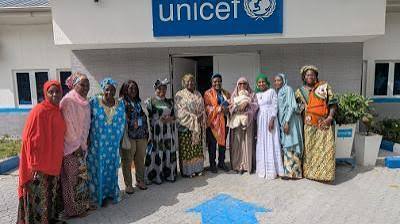
The Kaduna State Government has reaffirmed its commitment to promoting ethical journalism, especially in reporting issues affecting children, as stakeholders gathered for a two-day capacity-building workshop.
Speaking at the workshop organized by the Nigerian Association of Women Journalists (NAWOJ) Kaduna Chapter in collaboration with UNICEF, Commissioner for Information Ahmed Maiyaki described the training as timely and crucial in an era of rapid information dissemination.
Represented by the Director of Information, Yunusa Abdullahi, Maiyaki said the workshop, themed “Strengthening Child-Sensitive Media Reporting,” was particularly relevant.
He emphasized that journalists play a critical role beyond reporting, noting that coverage involving children demands heightened responsibility and ethical consideration.
“When we report on children, we are not just reporting on subjects; we are guardians of their dignity, their safety, and their future,” he said.
Maiyaki stressed that the relationship between government and media should be seen as a partnership for social development rather than a contest, urging journalists to balance accountability with sensitivity when reporting on vulnerable groups.
He highlighted that child-sensitive journalism can serve as a powerful advocacy tool to spotlight issues in education, healthcare, and protection, amplifying the voices of children across the state.
He encouraged participants to view the training as a moral duty capable of inspiring policies that safeguard children, adding that the Kaduna State Government remains committed to creating an enabling environment for a thriving press.
“I urge you to learn as much as possible from the knowledge shared here. Let your stories be marked by empathy, ethics, and excellence,” he said.
Also speaking, NAWOJ Kaduna Chairperson Sahura Maidoki said the UNICEF-supported workshop aims to strengthen women journalists’ capacity in ethical and child-sensitive reporting.
She noted the training would deepen participants’ understanding of child rights frameworks, including the Child Rights Act and the UN Convention on the Rights of the Child, while equipping them with practical skills to report on health, education, nutrition, and child protection issues.
According to Maidoki, the workshop will also enhance data-driven journalism, combat misinformation on child-related matters, and position women journalists as advocates for social change.
“The objectives are clear: build capacity, understand legal frameworks, acquire practical reporting skills, use data effectively, and become stronger advocates for children,” she said.
Maidoki added that the initiative would foster collaboration among women journalists in Kaduna State for sustained, coordinated reporting on child-focused issues.
Dr. Wilfred Mamah, a Child Protection Specialist with UNICEF, identified poverty, insecurity, and entrenched cultural, religious, and social norms as key challenges to child protection.
He urged female journalists to take a leading role in reporting on child-related issues to address these growing challenges.
The workshop is expected to equip participants with the tools to produce impactful, ethical, and evidence-based stories that promote the rights and well-being of children across the state.
