


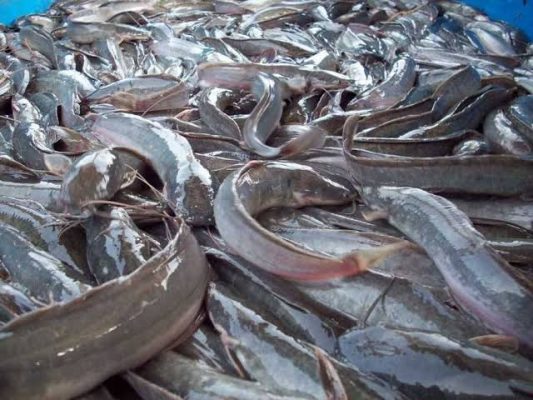
Nigeria’s aquaculture sector is facing mounting pressure as an eight-year export ban by the United States continues to stifle growth, restrict market access, and deter investment in the fish farming industry.
The restriction, imposed in March 2018, followed Nigeria’s failure to submit required safety documentation—specifically the Self-Reporting Tool (SRT)—to U.S. authorities. Since then, exports of smoked catfish and other fish products to the U.S. have remained suspended, cutting off one of the most lucrative international markets for local producers.
Industry stakeholders say the prolonged ban has significantly shrunk export opportunities, weakened investor confidence, and slowed expansion across the aquaculture value chain. With limited access to global markets, many fish farmers are now forced to rely heavily on the domestic market, where pricing pressures and rising production costs continue to erode profitability.
The situation has also compounded broader structural challenges in Nigeria’s fisheries sector, including high feed costs, inadequate infrastructure, and limited access to finance. Analysts warn that without urgent regulatory compliance and policy reforms, the country risks missing out on the multi-billion-dollar global seafood trade.
Experts note that fish exportation plays a critical role in economic diversification, offering foreign exchange earnings, employment opportunities, and value addition within the agricultural sector. However, Nigeria’s inability to meet international safety and documentation standards has undermined its competitiveness in global markets.
Despite the setbacks, stakeholders argue that resolving the compliance issues that triggered the ban could quickly reopen export channels and revive investor interest. They are calling on the federal government to fast-track regulatory alignment with international food safety standards and strengthen institutional capacity to support exporters.
Until then, Nigeria’s fish farmers remain constrained, grappling with limited growth prospects in an industry that holds significant potential for boosting non-oil exports and enhancing food security.
