


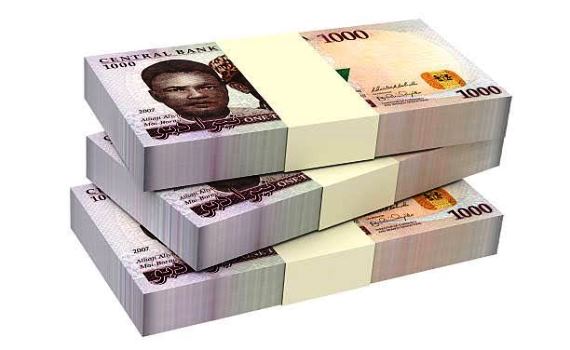
Nigeria’s broad money supply (M3) increased to N124.99 trillion in April 2026, underscoring continued liquidity growth in the financial system despite the Central Bank of Nigeria’s (CBN) tight monetary policy stance.
Latest monetary data showed that M3 rose from N123.12 trillion in February 2026, representing an increase of N1.87 trillion over the two months. The CBN, however, did not publish monetary data for March 2026, creating a gap in the reporting cycle.
Broad money supply, which measures the total liquidity available in the economy, includes currency in circulation, demand deposits, savings deposits, time deposits, and foreign currency holdings. The latest figures indicate sustained expansion across key monetary aggregates.
On a year-on-year basis, money supply grew from N119.22 trillion in April 2025 to N124.99 trillion in April 2026, reflecting persistent monetary expansion over the past 12 months.
Similarly, narrow money supply (M2) increased to N124.98 trillion in April 2026 from N123.11 trillion recorded in February.
A breakdown of the data showed that net foreign assets declined to N24.01 trillion in April from N25.57 trillion in February, while net domestic assets rose significantly to N100.97 trillion from N97.55 trillion during the same period.
The figures suggest that although foreign asset holdings weakened, domestic liquidity remained robust, supported by growth in domestic assets and increased activity within the financial system.
The expansion in money supply comes as the CBN continues to fine-tune its monetary policy in an effort to curb inflation while sustaining economic growth.
At its 304th Monetary Policy Committee (MPC) meeting in February 2026, the apex bank reduced the Monetary Policy Rate (MPR) by 50 basis points to 26.5 per cent from 27 per cent.
The MPC retained the Cash Reserve Ratio (CRR) at 45 per cent for commercial banks and 16 per cent for merchant banks, while maintaining the Liquidity Ratio at 30 per cent. The Standing Facilities Corridor was also left unchanged at +50/-450 basis points around the MPR.
Analysts say the policy mix reflects the CBN’s effort to strike a balance between containing inflationary pressures and supporting economic activity amid a challenging macroeconomic environment.
While inflation has shown signs of moderation in recent months, policymakers remain cautious due to lingering risks from global commodity price volatility and domestic supply-side constraints.
The CBN has consistently maintained that its monetary policy measures are aimed at preserving exchange-rate stability, strengthening investor confidence, and ensuring macroeconomic stability.
Meanwhile, Nigeria’s foreign exchange reserves recorded a notable rebound in May 2026, rising by approximately $551 million during the first three weeks of the month after coming under sustained pressure throughout April.
