

• Home
  • Agric
  • Sci & Tech
  • Health
  • Environment
  • Hausa News
  • More
    • Business/Banking & Finance
    • POLITICS
    • Entertainments & Sports
    • International
    • Investigation
    • Law & Human Rights
    • Africa
    • ACCOUNTABILITY/CORRUPTION
    • Hassan Gimba
    • Column
    • Prof. Jibrin Ibrahim
    • Prof. M.K. Othman
    • Defense/Security
    • Education
    • Energy/Electricity
    • Entertainment/Arts & Sports
    • Society and Lifestyle
    • Food & Agriculture
    • Health & Healthy Living
    • International News
    • Interviews
    • Investigation/Fact-Check
    • LAW & HUMAN RIGHTS
    • Oil & Gas/Mineral Resources
    • PRESS FREEDOM/JOURNALISM/PR
    • General News
    • Presidency
  • About Us
    • Contact Us
    • Board Of Advisory
    • Privacy Policy
    • Ethics Policy
    • Teamwork And Collaboration Policy
    • Fact-Checking Policy
    • Advertising
  • Media OutReach Newswire
    • Wire News
  • The Stories
Facebook Twitter Instagram
Trending
  • Two Straits, One Storm: Yemen, Iran, and the Unfinished Arithmetic of Adventurism
  • Gynaecologist seeks stronger primary healthcare to cut maternal deaths
  • Beyond the dance: Lessons from Osun 2026 for Nigeria 2027, by Prof. M.K. Othman
  • Bwari riders decry motorcycle theft, seizures
  • SDNON felicitates with member over appointment as head of media directorate for Delta NDC guber campaign
  • States spend N35bn on flood, erosion control
  • Of caps, marabouts and politics of envy, by Hassan Gimba
  • FG scraps data charges for students on approved educational platforms
Facebook Twitter Instagram YouTube
AsheNewsAsheNews
  • Home
  • Agric

    Who is policing the poison in Nigeria’s food chain?

    September 12, 2026

    NASC, PIND sign seed partnership

    September 12, 2026

    Women farmers call for investment in value-added agriculture

    September 11, 2026

    Women farmers laud SAA rice program in Jigawa

    September 11, 2026

    Poultry industry key to food security, jobs – PAN official

    September 10, 2026
  • Sci & Tech

    Nigeria urged to mainstream election tech

    September 11, 2026

    Biotech key to Nigeria’s food security, experts say

    September 10, 2026

    Australia to let users switch off social media algorithms

    September 9, 2026

    Africa contributes less than 1% of dementia research despite projected 348% rise in West Africa – Maina

    September 9, 2026

    Nigeria must stop consuming foreign neuroscience knowledge, NSN president says

    September 9, 2026
  • Health

    Gynaecologist seeks stronger primary healthcare to cut maternal deaths

    September 13, 2026

    BRICON urges cancer survivors to embrace life

    September 13, 2026

    Doctor urges Nigerians to prevent illness

    September 12, 2026

    Kaduna begins diphtheria vaccination

    September 12, 2026

    JDPCI calls for disability inclusion

    September 12, 2026
  • Environment

    Bwari riders decry motorcycle theft, seizures

    September 13, 2026

    States spend N35bn on flood, erosion control

    September 13, 2026

    Lagos moves beyond dumpsites

    September 12, 2026

    LASCOPA, NDLEA partner on drug abuse

    September 12, 2026

    RDI urges action to save Okun Alfa

    September 12, 2026
  • Hausa News

    UNA signs MoU to launch air Bissau in Guinea-Bissau

    June 15, 2026

    Otti plans 250-room 5-star hotel in Umuahia

    April 11, 2026

    Anti-quackery task force seals 4 fake hospitals in Rivers

    August 29, 2025

    [BIDIYO] Yadda na lashe gasa ta duniya a fannin Ingilishi – Rukayya ‘yar shekara 17

    August 6, 2025

    A Saka Baki, A Sasanta Saɓani Tsakanin ‘Yanjarida Da Liman, Daga Muhammad Sajo

    May 21, 2025
  • More
    1. Business/Banking & Finance
    2. POLITICS
    3. Entertainments & Sports
    4. International
    5. Investigation
    6. Law & Human Rights
    7. Africa
    8. ACCOUNTABILITY/CORRUPTION
    9. Hassan Gimba
    10. Column
    11. Prof. Jibrin Ibrahim
    12. Prof. M.K. Othman
    13. Defense/Security
    14. Education
    15. Energy/Electricity
    16. Entertainment/Arts & Sports
    17. Society and Lifestyle
    18. Food & Agriculture
    19. Health & Healthy Living
    20. International News
    21. Interviews
    22. Investigation/Fact-Check
    23. LAW & HUMAN RIGHTS
    24. Oil & Gas/Mineral Resources
    25. PRESS FREEDOM/JOURNALISM/PR
    26. General News
    27. Presidency
    Featured
    Recent

    Two Straits, One Storm: Yemen, Iran, and the Unfinished Arithmetic of Adventurism

    September 13, 2026

    Gynaecologist seeks stronger primary healthcare to cut maternal deaths

    September 13, 2026

    Beyond the dance: Lessons from Osun 2026 for Nigeria 2027, by Prof. M.K. Othman

    September 13, 2026
  • About Us
    1. Contact Us
    2. Board Of Advisory
    3. Privacy Policy
    4. Ethics Policy
    5. Teamwork And Collaboration Policy
    6. Fact-Checking Policy
    7. Advertising
    Featured
    Recent

    Two Straits, One Storm: Yemen, Iran, and the Unfinished Arithmetic of Adventurism

    September 13, 2026

    Gynaecologist seeks stronger primary healthcare to cut maternal deaths

    September 13, 2026

    Beyond the dance: Lessons from Osun 2026 for Nigeria 2027, by Prof. M.K. Othman

    September 13, 2026
  • Media OutReach Newswire
    • Wire News
  • The Stories
AsheNewsAsheNews
Home»Food & Agriculture»New study shows 75% of world’s industrial fishing vessels ‘go dark’
Food & Agriculture

New study shows 75% of world’s industrial fishing vessels ‘go dark’

New study shows 75% of world’s industrial fishing vessels ‘go dark’
Abdallah el-KurebeBy Abdallah el-KurebeFebruary 4, 2024Updated:February 4, 2024No Comments3 Mins Read
Share
Facebook Twitter LinkedIn Pinterest Email

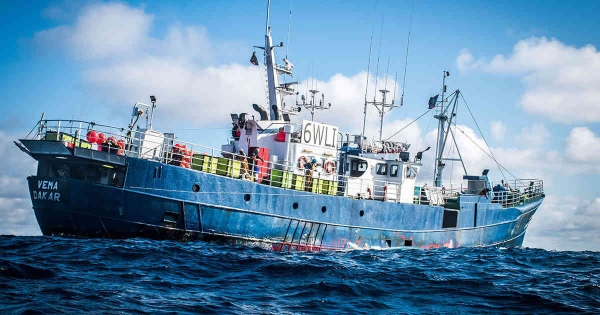
A new study by the Nature magazine has revealed that about 75% of the world’s industrial fishing vessels are not publicly tracked.

In the practice called “going dark”, many of them, mostly is concentrated in West and North Africa and South Asia, hide their positions at sea by turning off their automatic identification systems (AIS).

The researchers used artificial intelligence to collect AIS data and analyzed two million gigabytes of satellite data from the European Space Agency between 2017 and 2021 to determined this.

Global Fishing Watch spearheaded the Nature study.

“These previously invisible vessels radically changed our knowledge about the scale, scope and location of fishing activity,” Jennifer Raynor, a study author and a natural resource economist at the University of Wisconsin-Madison, wrote in The Conversation.

Vessels commonly go dark to cloak crimes, such as entering prohibited areas, conducting illegal transshipments at sea and using explosives to catch huge amounts of fish.

Africa loses an estimated $11.5 billion to illegal fishing annually, by far the most of any region globally, according to the Financial Transparency Coalition (FTC).

Illegal, unreported and unregulated (IUU) fishing decimates fish stocks and threatens the livelihoods of the roughly 5.2 million people who work in the continent’s small-scale fisheries.

The scourge is perpetrated mostly by China’s distant-water fishing (DWF) fleet, the world’s worst IUU fishing violator.

China illegally fished in the exclusive economic zones (EEZ) of more than 80 countries with more than 10 million hours of fishing between 2019 to 2021, a new report by Investigative Journalism Reportika (Ij-Reportika) shows.

China’s DWF fleet began venturing far past its own EEZ after depleting its own fish stocks. According to the IUU Fishing Index, more than 60% of its vessels are involved in IUU fishing around the world.

Illegal fishing also is linked to other sea crimes, such as piracy, human trafficking and drug smuggling.

The IUU fishing threat is most acute in West Africa. Considered the world’s epicenter for IUU fishing, the region loses an estimated $2.3 billion to $9.4 billion annually to IUU fishing, according to the FTC.

About 20% of illegally caught fish worldwide comes from waters near The Gambia, Guinea, Guinea-Bissau, Mauritania, Senegal and Sierra Leone, according to Ij-Reportika.

West African nations in late 2023 began creating a joint network to combat IUU fishing with the same underlying cooperation that reduced piracy in the Gulf of Guinea.

The idea for the combined effort, known as “Blue Africa,” emerged at the first African Maritime Forces Summit held in Cabo Verde in March 2023.

The aim is to strengthen the region’s maritime law enforcement capacity, improve its maritime domain awareness, establish a legal framework to prosecute EEZ violations and establish interagency frameworks to connect the countries, according to the United States Naval Institute, which is helping coordinate the effort.

The Nature report also revealed extensive areas of previously unmapped fishing in North Africa, particularly in Moroccan and Tunisian waters. It also found that 21% to 30% of transport and energy vessel activity is missing from public tracking systems.

“We had an idea that we were missing a big chunk of the activity happening in the ocean, but we didn’t know how much,”

Fernando Paolo, a lead author of the study and a machine learning engineer at Global Fishing Watch, told New Scientist. “And we found that it’s a lot more than we imagined.”

Global Fishing Watch Industrial fishing vessels Nature magazine University of Wisconsin-Madison
Share. Facebook Twitter Pinterest LinkedIn WhatsApp Reddit Tumblr Email
Abdallah el-Kurebe
  • Website
  • Facebook
  • Twitter
  • LinkedIn

Related Posts

Who is policing the poison in Nigeria’s food chain?

September 12, 2026

NASC, PIND sign seed partnership

September 12, 2026

Women farmers call for investment in value-added agriculture

September 11, 2026

Leave A Reply Cancel Reply

Two Straits, One Storm: Yemen, Iran, and the Unfinished Arithmetic of Adventurism

September 13, 2026

Gynaecologist seeks stronger primary healthcare to cut maternal deaths

September 13, 2026

Beyond the dance: Lessons from Osun 2026 for Nigeria 2027, by Prof. M.K. Othman

September 13, 2026

Bwari riders decry motorcycle theft, seizures

September 13, 2026
About Us
About Us

ASHENEWS (AsheNewsDaily.com), published by PenPlus Online Media Publishers, is an independent online newspaper. We report development news, especially on Agriculture, Science, Health and Environment as they affect the under-reported rural and urban poor.

We also conduct investigations, especially in the areas of ASHE, as well as other general interests, including corruption, human rights, illicit financial flows, and politics.

Contact Info:
  • 1st floor, Dogon Daji House, No. 5, Maiduguri Road, Sokoto
  • +234(0)7031140009
  • ashenewsdaily@gmail.com
Facebook Twitter Instagram Pinterest
© 2026 All Rights Reserved. ASHENEWS Daily Designed & Managed By DeedsTech

Type above and press Enter to search. Press Esc to cancel.