

• Home
  • Agric
  • Sci & Tech
  • Health
  • Environment
  • Hausa News
  • More
    • Business/Banking & Finance
    • Politics/Elections
    • Entertainments & Sports
    • International
    • Investigation
    • Law & Human Rights
    • Africa
    • ACCOUNTABILITY/CORRUPTION
    • Hassan Gimba
    • Column
    • Prof. Jibrin Ibrahim
    • Prof. M.K. Othman
    • Defense/Security
    • Education
    • Energy/Electricity
    • Entertainment/Arts & Sports
    • Society and Lifestyle
    • Food & Agriculture
    • Health & Healthy Living
    • International News
    • Interviews
    • Investigation/Fact-Check
    • Judiciary/Legislature/Law & Human Rights
    • Oil & Gas/Mineral Resources
    • Press Freedom/Media/PR/Journalism
    • General News
    • Presidency
  • About Us
    • Contact Us
    • Board Of Advisory
    • Privacy Policy
    • Ethics Policy
    • Teamwork And Collaboration Policy
    • Fact-Checking Policy
    • Advertising
  • Media OutReach Newswire
    • Wire News
  • The Stories
Facebook Twitter Instagram
Trending
  • Naira holds steady at N1,582/€ as Euro weakens amid energy, growth pressures
  • Girls encouraged to lead in AI, digital economy
  • Experts call for boost in local snail production
  • FUTA MBBS programme secures MDCN accreditation, gets 100-student quota
  • West Africa advances lassa fever vaccine readiness
  • [EXPLAINER] Bottled water under the microscope: Why some brands stand out
  • ARD-KWASUTH begins 48-hour warning strike over assault on doctor
  • Nigeria strengthens response to SGBV
Facebook Twitter Instagram YouTube
AsheNewsAsheNews
  • Home
  • Agric

    Experts call for boost in local snail production

    April 23, 2026

    [EXPLAINER] Bottled water under the microscope: Why some brands stand out

    April 23, 2026

    Food prices remain elevated despite N7.65trn imports, FG interventions

    April 23, 2026

    Shettima inaugurates Kano grain facility

    April 23, 2026

    Lawmakers back post-harvest innovation

    April 23, 2026
  • Sci & Tech

    Girls encouraged to lead in AI, digital economy

    April 23, 2026

    RMRDC launches data-driven raw materials platform to boost investment, industrial growth

    April 21, 2026

    Apple names John Ternus as new CEO to lead $4trn tech giant

    April 21, 2026

    Tinubu appoints Fatima Zuntu as NBMA Director-General

    April 21, 2026

    LIFE-ND trains Abia workers in ICT, AI

    April 20, 2026
  • Health

    West Africa advances lassa fever vaccine readiness

    April 23, 2026

    ARD-KWASUTH begins 48-hour warning strike over assault on doctor

    April 23, 2026

    Nigeria strengthens response to SGBV

    April 23, 2026

    NMA suspends national president

    April 23, 2026

    Sightsavers trains health workers in sign language

    April 23, 2026
  • Environment

    FG seeks $516m external financing for Sokoto–Badagry superhighway

    April 23, 2026

    NGE warns NBC over sanction threat

    April 22, 2026

    Don urges geographers to tackle forest crisis

    April 21, 2026

    Ado residents decry poor electricity supply

    April 21, 2026

    ILO certifies 21 new social protection experts in Nigeria

    April 21, 2026
  • Hausa News

    Otti plans 250-room 5-star hotel in Umuahia

    April 11, 2026

    Anti-quackery task force seals 4 fake hospitals in Rivers

    August 29, 2025

    [BIDIYO] Yadda na lashe gasa ta duniya a fannin Ingilishi – Rukayya ‘yar shekara 17

    August 6, 2025

    A Saka Baki, A Sasanta Saɓani Tsakanin ‘Yanjarida Da Liman, Daga Muhammad Sajo

    May 21, 2025

    Dan majalisa ya raba kayan miliyoyi a Funtuwa da Dandume

    March 18, 2025
  • More
    1. Business/Banking & Finance
    2. Politics/Elections
    3. Entertainments & Sports
    4. International
    5. Investigation
    6. Law & Human Rights
    7. Africa
    8. ACCOUNTABILITY/CORRUPTION
    9. Hassan Gimba
    10. Column
    11. Prof. Jibrin Ibrahim
    12. Prof. M.K. Othman
    13. Defense/Security
    14. Education
    15. Energy/Electricity
    16. Entertainment/Arts & Sports
    17. Society and Lifestyle
    18. Food & Agriculture
    19. Health & Healthy Living
    20. International News
    21. Interviews
    22. Investigation/Fact-Check
    23. Judiciary/Legislature/Law & Human Rights
    24. Oil & Gas/Mineral Resources
    25. Press Freedom/Media/PR/Journalism
    26. General News
    27. Presidency
    Featured
    Recent

    Naira holds steady at N1,582/€ as Euro weakens amid energy, growth pressures

    April 23, 2026

    Girls encouraged to lead in AI, digital economy

    April 23, 2026

    Experts call for boost in local snail production

    April 23, 2026
  • About Us
    1. Contact Us
    2. Board Of Advisory
    3. Privacy Policy
    4. Ethics Policy
    5. Teamwork And Collaboration Policy
    6. Fact-Checking Policy
    7. Advertising
    Featured
    Recent

    Naira holds steady at N1,582/€ as Euro weakens amid energy, growth pressures

    April 23, 2026

    Girls encouraged to lead in AI, digital economy

    April 23, 2026

    Experts call for boost in local snail production

    April 23, 2026
  • Media OutReach Newswire
    • Wire News
  • The Stories
AsheNewsAsheNews
Home»Food & Agriculture»Making smallholder farming safer, sustainable and secure for a growing world
Food & Agriculture

Making smallholder farming safer, sustainable and secure for a growing world

Abdallah el-KurebeBy Abdallah el-KurebeSeptember 3, 2025Updated:September 3, 2025No Comments4 Mins Read
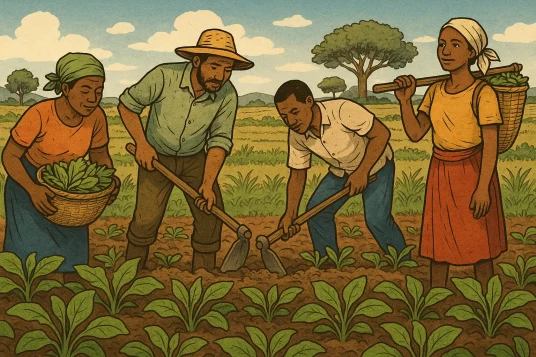
Smallholder farmers
AI image of smallholder farmers
Share
Facebook Twitter LinkedIn Pinterest Email

This year’s Africa Food Systems Summit 2025, in Dakar, Senegal, focuses on Africa’s smallholder farmers – and youth and women, and how they can lead collaboration, innovation, and the implementation of agri-food systems transformation for a stronger and more resilient food value chain.

It is estimated that some 500 million smallholder farmers around the world produce 35–46 percent of the world’s food, helping feed just over 8 billion people living on our fragile planet.

Smallholder farmers are crucial for global food security. But how can their agricultural practices become more sustainable and safer—reducing contamination of food and feed with mycotoxins and pesticide residues? How can they protect themselves and the environment from pesticide risks? And how can young people drive transformation?

Risks to humans, livestock and the environment

Aflatoxins are poisonous carcinogens, primarily linked to liver cancer in humans. They also cause reduced milk production, impaired reproduction, and liver disease in livestock.

Chemical pesticides contaminate water, soil, and air, leading to biodiversity loss, algal blooms, and fish kills, while moving up the food chain.

For humans, pesticide exposure is linked to chronic illnesses including cancer and neurological diseases, with occupational exposure posing serious risks to farm and abattoir workers.

It is clear that broader risks to livestock, ecosystems, and humans must be addressed if we are to achieve safe and sustainable agricultural production.

Youth and women as key players

Young men and women are central to the future of agriculture, where challenges to safe food production must be overcome to reduce significant health burdens.

Economic losses also occur through lost export trade and reduced competitiveness in the agri-food sector. To address these challenges, we need stronger policies, capacity building, technology adoption, and coordination across agriculture, health, environment, and trade sectors.

In essence, a One Health approach is needed—recognising the interconnectedness of human, animal, plant, and ecosystem health to prevent and manage foodborne risks. This requires collaboration across sectors and multi-sector strategies to ensure safe food from production to consumption.

Recognising farmers’ realities

We must recognise the realities of farmers, who must understand which pesticide to use, how to apply it safely, and how to protect themselves through proper Personal Protective Equipment (PPE).

The challenge is that safer, low-risk products are often not economically viable. Farmers sometimes rely on “nasty chemicals” just to secure produce they can sell at a profit.

As global food demand rises, farming practices will intensify, and pests will increase. Pesticides remain important tools, but they must be seen as just one part of an Integrated Pest Management (IPM) toolkit. More low-risk alternatives and supportive policies are needed to make sustainable practices viable.

Safe pesticide use safeguards food security

Careful pesticide use safeguards both food safety and long-term security. Using fewer pesticides also protects soil and water while conserving biodiversity, including pollinators.

In July 2023, the CABI-led PlantwisePlus programme, in partnership with the Centre for Behaviour Change and Communication (CBCC) and the Department of Agriculture, Nakuru County, Kenya, launched the Ukulima True initiative to reduce pesticide risks.

The initiative addressed unsafe pesticide practices, encouraged PPE use, and promoted safe spraying. Importantly, it engaged agrodealers, traders, elders, and young people—not just farmers—ensuring wider awareness and community champions for safe practices.

Youth driving integrated pest management

Young agro-input suppliers and microbusinesses are helping drive IPM by promoting biological pest control alongside responsible pesticide use.

In Kenya and Uganda, PlantwisePlus has trained youth to establish micro-businesses offering pest management advice, safe pesticide application services, and supply of agricultural inputs like biological products, seeds, fertilizers, PPE, and pesticides.

Similarly, in Zambia, CABI, the Zambia Agriculture Research Institute (ZARI), and the University of Zambia (UNZA), with support from the Australian Centre for International Agricultural Research (ACIAR), equipped young farmers to produce and market biological control solutions against fall armyworm. This not only helps control pests sustainably but also creates agribusiness opportunities for youth.

Recognising the role of women and youth

Women and youth remain on the margins of decision-making, with limited control over resources and often relegated to low-paying or unpaid roles in agriculture.

As noted by Kadzamira et al (2024) in CABI Agriculture & Bioscience, “Africa’s women and youth hold the key to the continent’s very survival and the burden to sustain wider global development.” For their effective engagement, multi-sectoral collaboration and long-term dedicated funding from governments and development partners are crucial.

Conclusion

Sustainable, safer, and secure smallholder farming is essential to feed a growing world. But it requires a shift: from chemical dependence to integrated solutions, from farmer isolation to community-driven action, and from marginalisation of youth and women to empowering them as leaders of transformation.

The future of food security rests on how well we support smallholder farmers—and how boldly we commit to safer and more sustainable agricultural systems.

Source: CABI

ACIAR Africa Africa Food Systems Summit 2025 CABI ONE HEALTH PlantWisePlus smallholder farmers Smallholder farming UNZA ZARI
Share. Facebook Twitter Pinterest LinkedIn WhatsApp Reddit Tumblr Email
Abdallah el-Kurebe
  • Website
  • Facebook
  • Twitter
  • LinkedIn

Related Posts

Experts call for boost in local snail production

April 23, 2026

[EXPLAINER] Bottled water under the microscope: Why some brands stand out

April 23, 2026

Food prices remain elevated despite N7.65trn imports, FG interventions

April 23, 2026

Leave A Reply Cancel Reply

Naira holds steady at N1,582/€ as Euro weakens amid energy, growth pressures

April 23, 2026

Girls encouraged to lead in AI, digital economy

April 23, 2026

Experts call for boost in local snail production

April 23, 2026

FUTA MBBS programme secures MDCN accreditation, gets 100-student quota

April 23, 2026
About Us
About Us

ASHENEWS (AsheNewsDaily.com), published by PenPlus Online Media Publishers, is an independent online newspaper. We report development news, especially on Agriculture, Science, Health and Environment as they affect the under-reported rural and urban poor.

We also conduct investigations, especially in the areas of ASHE, as well as other general interests, including corruption, human rights, illicit financial flows, and politics.

Contact Info:
  • 1st floor, Dogon Daji House, No. 5, Maiduguri Road, Sokoto
  • +234(0)7031140009
  • ashenewsdaily@gmail.com
Facebook Twitter Instagram Pinterest
© 2026 All Rights Reserved. ASHENEWS Daily Designed & Managed By DeedsTech

Type above and press Enter to search. Press Esc to cancel.