


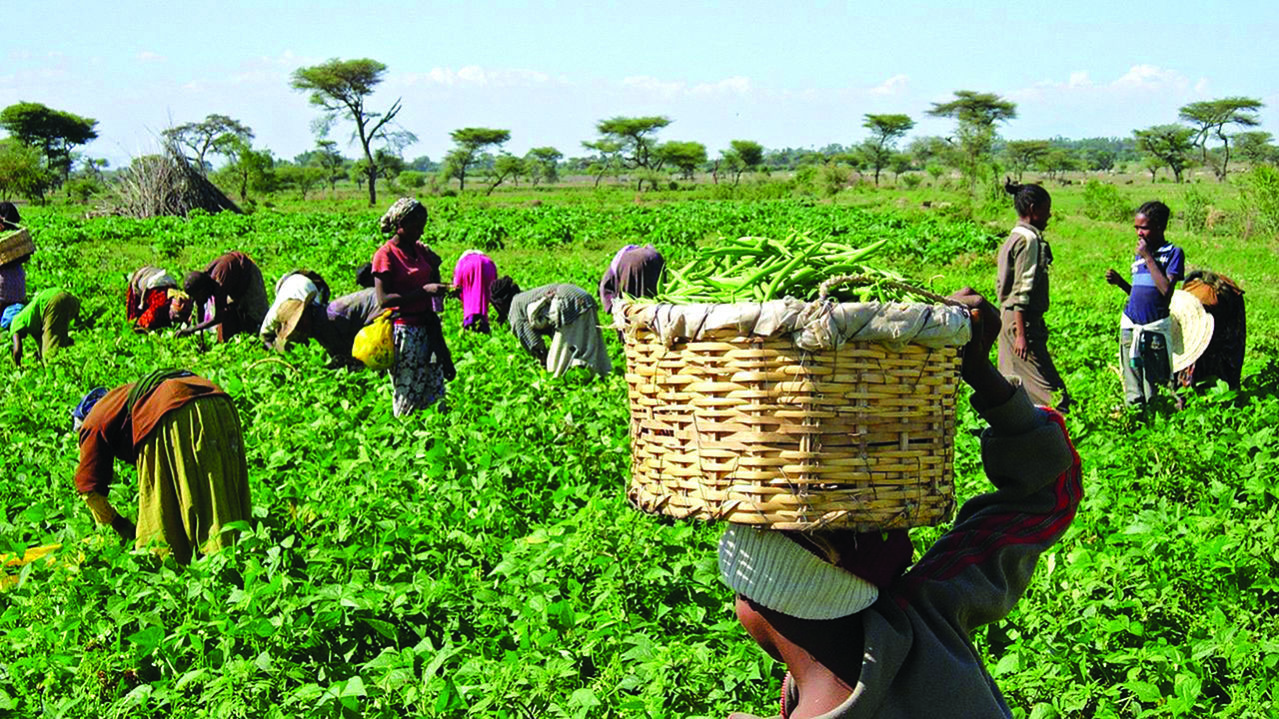
Some agriculture experts have warned local farmers against the misuse of agrochemicals in crop cultivation.
In separate interviews with reporters on Thursday in Lagos, farmers raised the alarm over the misuse of agrochemicals.
A strategic agriculture communication expert, Dr. Olawale Ismail, explained that agrochemicals cannot be completely boycotted in crop cultivation, but strict restraints must be applied to their usage.
“As regards the issue of agrochemical use, I don’t think we can absolutely stop it. It is not possible to absolutely stop it because of the development of these agrochemicals.
“So, this has been the practice—even as far back as the 70s. Growing up, we saw cocoa farmers buy Gamelin 20 and some other chemicals to spread on cocoa, coffee, and kola nut for pest eradication and prevention.
“But recently, the use of agrochemicals has extended to vegetables and some other staple food crops, which is not a problem.
“A major problem of misuse is the over-application of these agrochemicals on crops indiscriminately without measurements.
“There are rules and procedures for applying these chemicals. Farmers sometimes apply too much; it’s not that they don’t have this education—they are aware,” Ismail said.
He urged farmers to ensure strict adherence to technical measurements and safety rules.
“An average Nigerian farmer, if you ask him, knows about one or two chemicals. He will tell you the names of these chemicals and even the years he has been using them.
“But adherence to technical measurements and safety rules—that is where the problem is. And it is not that they have not been exposed to these safety rules, especially the safe application of these chemicals on the crops themselves.
“There is this in-built understanding that the more chemicals you use, the more the yield.
“Most farmers don’t know that using agrochemicals wrongly has its own hazards, but there is a very thin line between profit-making and the fear of God.
“This is very pathetic, and it’s going to take a long time before any advocacy can stop this behavior, because people are afraid for their survival. People want to survive by all means; they commit what we call agro-processing fraud.
“It is fraudulent on the part of farmers who apply chemicals indiscriminately, not bothering about the health implications—even on themselves and on the consumers. It’s a self-inflicted problem,” the expert said.
On his part, Mr. Omotunde Banjoko, an agriculture analyst and farmer, said farmers could adopt organic farming systems as an alternative to chemical-induced farming.
“To boycott the use of agrochemicals, we will have to start adopting what is called organic mode of agriculture, where we use biological means to control pests, biological means to fertilize the crops, and then the best practices in agriculture generally.
“So, it’s possible, though it might not be 100 per cent in most cases, because you might still need to use one or two things that are non-natural, but at least it can be greatly reduced.
“However, even in most markets—both local and international—products of organic grade are always more expensive than inorganic ones, so we must also be ready for the price variation.
“To educate farmers, it means we have to get more extension agents to go to the farms and rural communities, empower the extension agents with the right information, and give them the tools to sensitize farmers against agrochemical misuse,” Banjoko said.
