

• Home
  • Agric
  • Sci & Tech
  • Health
  • Environment
  • Hausa News
  • More
    • Business/Banking & Finance
    • Politics/Elections
    • Entertainments & Sports
    • International
    • Investigation
    • Law & Human Rights
    • Africa
    • ACCOUNTABILITY/CORRUPTION
    • Hassan Gimba
    • Column
    • Prof. Jibrin Ibrahim
    • Prof. M.K. Othman
    • Defense/Security
    • Education
    • Energy/Electricity
    • Entertainment/Arts & Sports
    • Society and Lifestyle
    • Food & Agriculture
    • Health & Healthy Living
    • International News
    • Interviews
    • Investigation/Fact-Check
    • Judiciary/Legislature/Law & Human Rights
    • Oil & Gas/Mineral Resources
    • Press Freedom/Media/PR/Journalism
    • General News
    • Presidency
  • About Us
    • Contact Us
    • Board Of Advisory
    • Privacy Policy
    • Ethics Policy
    • Teamwork And Collaboration Policy
    • Fact-Checking Policy
    • Advertising
  • Media OutReach Newswire
    • Wire News
  • The Stories
Facebook Twitter Instagram
Trending
  • Makinde appoints acting board for Oyo electricity commission
  • IFAD programme urges Ebonyi women to boost family, economic support
  • Zulum approves recruitment of 473 health workers in Borno
  • Huawei, MTN sign strategic MoU to accelerate AI-driven intelligent networks in Africa
  • ICRISAT, Queensland varsity sign strategic partnership to improve crop farming in Africa
  • CBN sets ₦20,000 transaction limit for newly activated banking apps in first 24 hours
  • Saai and AfriForum collaborate to advance agricultural development
  • Akwa Ibom govt pushes large-scale farming with equipment leasing firm
Facebook Twitter Instagram YouTube
AsheNewsAsheNews
  • Home
  • Agric

    IFAD programme urges Ebonyi women to boost family, economic support

    March 13, 2026

    ICRISAT, Queensland varsity sign strategic partnership to improve crop farming in Africa

    March 13, 2026

    Saai and AfriForum collaborate to advance agricultural development

    March 13, 2026

    Akwa Ibom govt pushes large-scale farming with equipment leasing firm

    March 13, 2026

    IITA confirms release of over 200 improved climate-resilient maize varieties to Sub-Saharan Africa countries

    March 13, 2026
  • Sci & Tech

    Makinde appoints acting board for Oyo electricity commission

    March 13, 2026

    Huawei, MTN sign strategic MoU to accelerate AI-driven intelligent networks in Africa

    March 13, 2026

    NAN MD urges shift to local innovation over foreign tech dependence

    March 13, 2026

    Commercialize Nigeria’s space programme to unlock economic gains, Expert advises

    March 12, 2026

    MTN advances digital education through strategic partnership

    March 12, 2026
  • Health

    Zulum approves recruitment of 473 health workers in Borno

    March 13, 2026

    World Sleep Day: medical expert advocates 7–9 hours sleep for adults

    March 13, 2026

     Soludo appoints new CMD for Ojukwu teaching hospital

    March 13, 2026

    NHIA: No woman should die over inability to pay for pregnancy treatment

    March 13, 2026

    Meningitis: NiMet identifies Sokoto, 9 others as high-risk states [LIST]

    March 13, 2026
  • Environment

    Nigeria strengthens frameworks for biosphere reserve sustainability

    March 12, 2026

    Türkiye moves to ban single-use plastics

    March 12, 2026

    Nigerian govt, World bank launch $500m SPIN project

    March 11, 2026

    Nigerian govt reaffirms commitment to climate resilience, land restoration

    March 10, 2026

    NBMA,NOUN partner to boost biosafety education, public confidence

    March 10, 2026
  • Hausa News

    Anti-quackery task force seals 4 fake hospitals in Rivers

    August 29, 2025

    [BIDIYO] Yadda na lashe gasa ta duniya a fannin Ingilishi – Rukayya ‘yar shekara 17

    August 6, 2025

    A Saka Baki, A Sasanta Saɓani Tsakanin ‘Yanjarida Da Liman, Daga Muhammad Sajo

    May 21, 2025

    Dan majalisa ya raba kayan miliyoyi a Funtuwa da Dandume

    March 18, 2025

    [VIDIYO] Fassarar mafalki akan aikin Hajji

    January 6, 2025
  • More
    1. Business/Banking & Finance
    2. Politics/Elections
    3. Entertainments & Sports
    4. International
    5. Investigation
    6. Law & Human Rights
    7. Africa
    8. ACCOUNTABILITY/CORRUPTION
    9. Hassan Gimba
    10. Column
    11. Prof. Jibrin Ibrahim
    12. Prof. M.K. Othman
    13. Defense/Security
    14. Education
    15. Energy/Electricity
    16. Entertainment/Arts & Sports
    17. Society and Lifestyle
    18. Food & Agriculture
    19. Health & Healthy Living
    20. International News
    21. Interviews
    22. Investigation/Fact-Check
    23. Judiciary/Legislature/Law & Human Rights
    24. Oil & Gas/Mineral Resources
    25. Press Freedom/Media/PR/Journalism
    26. General News
    27. Presidency
    Featured
    Recent

    Makinde appoints acting board for Oyo electricity commission

    March 13, 2026

    IFAD programme urges Ebonyi women to boost family, economic support

    March 13, 2026

    Zulum approves recruitment of 473 health workers in Borno

    March 13, 2026
  • About Us
    1. Contact Us
    2. Board Of Advisory
    3. Privacy Policy
    4. Ethics Policy
    5. Teamwork And Collaboration Policy
    6. Fact-Checking Policy
    7. Advertising
    Featured
    Recent

    Makinde appoints acting board for Oyo electricity commission

    March 13, 2026

    IFAD programme urges Ebonyi women to boost family, economic support

    March 13, 2026

    Zulum approves recruitment of 473 health workers in Borno

    March 13, 2026
  • Media OutReach Newswire
    • Wire News
  • The Stories
AsheNewsAsheNews
Home»Food & Agriculture»AGRICULTURE: Bt cotton drives socio-economic transformation among Indian farmers
Food & Agriculture

AGRICULTURE: Bt cotton drives socio-economic transformation among Indian farmers

EditorBy EditorJuly 10, 2021No Comments6 Mins Read
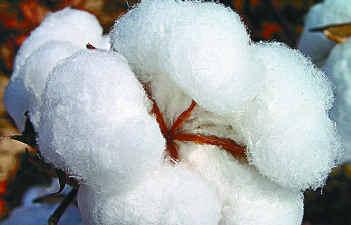
Cotton
Cotton
Share
Facebook Twitter LinkedIn Pinterest Email

Despite the challenges of misinformation, the technology has enjoyed the confidence of farmers, researchers and policymakers, due to the attributes of genetically engineered hybrid seeds and the results observed in the field in terms of pests control.

In the year 2022, Bt cotton will complete two decades of cultivation in India. Despite the challenges of misinformation, the technology has enjoyed the confidence of farmers, researchers and policymakers, due to the attributes of genetically engineered hybrid seeds and the results observed in the field in terms of pests control that lead to increased yield and farm remuneration. The extent of achievement can be drawn from the fact that about 11.7 million hectares (93.6 percent) of total 12.5 million hectares under cotton cultivation in 2019-20 was planted with Bt cotton seeds.

There is no doubt that Bt cotton has not only benefitted the farmers, but also the textile industry, oil industry and boosted our economy. According to the Directorate of Economics and Statistics, Ministry of Agriculture, Government of India, over the last decade, cotton yields in the country increased by more than 300%; pesticide consumption reduced by ~ 50%; acreage increased by 150% and production increased by 400%. This technological advancement enabled over 7 million farmers earn an additional farm income of USD 16.69 billion. While yield increase was not a claim for the Bt technology, excellent control of bollworms led to reduced stress on the crops that resulted in higher yields. Before Bt cotton was used, the total income per hectares was ₹7,558 in the rain-fed area. However, it went up to ₹16,000 in rainfed areas and even up to 25,000 in irrigated areas within a decade.

Over the last 20 years, the partnership between farmers, seed and biotechnology companies, agriculture universities and scientists, rural trade, Central and State Governments and the user industry have enabled India’s cotton revolution by doubling production to claim the world’s second highest producer and exporter spot. The benefits of Bt cotton technologies in high-yielding hybrid cotton seeds along with improving farming inputs and favourable market conditions has helped create Rs. 31,500 crores (PG Economics, UK) additional value for cotton farmers by significantly reducing insecticide usage and increasing yield.

It took 36 years to double the yield per hectare in India from 100 kg in 1950-51 to 200 kg in 1986-87. From 1992 – 2000, the decade average was 300 kg/ ha. Biotechnology in cotton, post its introduction in the year 2002, has led to nation-wide transformational changes in cotton cultivation with doubling of cotton yields from 241 kg/ hectare in 2002 – 2003 to 541 kg/ hectare in 2018 – 2019. According to the BKS-CSD study, this has led to significant increase in farmer incomes from higher yields and reduced usage of insecticides thereby helping generate an additional farm income of over Rs. 42,300 crores.

A paper published in Proceedings of the US National Academy of Sciences stated that Bt cotton adoption has raised consumption expenditures, a common measure of household living standards by approximately 18%. It added that Bt cotton had created large and sustainable benefits which have contributed to positive economic and social development in India.

The benefits of Bt cotton have spread beyond just the farming community. Since 2002, Bt cotton technology has boosted the fortunes of the Indian cotton seed industry by giving technology access to small and medium-sized seed companies. This has enabled companies to invest in innovation, improve their cotton seed germplasm and adopt various mechanization options in the fields. Numerous stakeholders across the cotton value chain – seed industry, ginners, textile industry have benefitted from the technology. Not surprisingly, over the last decade, while the cotton seed industry (consisting of more than 90% share for Indian seed companies) has grown 8 times from Rs. 0.45 billion in 2002 to Rs. 40 billion in 2018, the Indian textile industry which today employs over 0.04 billion workers continues with large-scale investments. Besides India, farmers in many other nations have benefitted due to Bt cotton cultivation e.g. USA, China and Australia.

Several studies by third-party economists, sociologists and others 2,4,5,6,7 have established 85% of hybrid Bt cotton seed farmers and farm workers invested in better education for children; 77% reported better intake of nutritious food; 75% better health of their family members; 64% invested on health of livestock; female workers on Bt cotton fields earned average 55 per cent higher income; and 42.4 crores additional days of rural employment have been generated in recent years by farmers doubling cotton production using hybrid Bt cotton seeds on over 90 per cent of acres. In a study conducted by IIMA, the performance of Bt cotton relating to other factors and inputs like Bt genes, hybrid, pesticides, fertilizer, irrigation and agroclimatic zone was affected by multicollinearity but indicated a significant impact of Bt as yield determinant. Its estimated impact on yield and profitability was found to be 22 and 35% respectively.

It is important to understand that it is not just the technology that contributes to increasing yields. India’s farmers face numerous uncertainties and crop management challenges, which affect farm yields and incomes and knowledge of cultivation and correct agronomic practices make a significant impact. What is required today is an increase in extension efforts, to help increase knowledge of good agricultural practices amongst India’s agrarian communities. It would also be worthwhile to note that GM seeds have helped conserve biodiversity with higher productivity from limited acreage, thus the expansion of agricultural land into forest areas has been greatly curtailed in several countries.

Farmers continue to face numerous challenges in their fields – increasing labour costs for cultivation – cost of labour is more than 40% of the total cost of cultivation in many crops as per the statistics published by the Government of India – or pest attacks where crop protection challenges exist. Increasing temperatures and climate change pose new challenges. Even today farmers are using a 15 year old technology to mitigate latest pest incidence in Cotton. Indian agriculture today needs new technologies to maintain the competitiveness of its farmers on global platforms.

Disclaimer: This is a company press release. No HT journalist is involved in the creation of this content.

Culled from www.hindustantimes.com

Agriculture Biotechnology Bt Cotton Germplasm India Indian farmers US Academy of Sciences
Share. Facebook Twitter Pinterest LinkedIn WhatsApp Reddit Tumblr Email
Editor
  • Website

Related Posts

IFAD programme urges Ebonyi women to boost family, economic support

March 13, 2026

ICRISAT, Queensland varsity sign strategic partnership to improve crop farming in Africa

March 13, 2026

Saai and AfriForum collaborate to advance agricultural development

March 13, 2026

Leave A Reply Cancel Reply

Makinde appoints acting board for Oyo electricity commission

March 13, 2026

IFAD programme urges Ebonyi women to boost family, economic support

March 13, 2026

Zulum approves recruitment of 473 health workers in Borno

March 13, 2026

Huawei, MTN sign strategic MoU to accelerate AI-driven intelligent networks in Africa

March 13, 2026
About Us
About Us

ASHENEWS (AsheNewsDaily.com), published by PenPlus Online Media Publishers, is an independent online newspaper. We report development news, especially on Agriculture, Science, Health and Environment as they affect the under-reported rural and urban poor.

We also conduct investigations, especially in the areas of ASHE, as well as other general interests, including corruption, human rights, illicit financial flows, and politics.

Contact Info:
  • 1st floor, Dogon Daji House, No. 5, Maiduguri Road, Sokoto
  • +234(0)7031140009
  • ashenewsdaily@gmail.com
Facebook Twitter Instagram Pinterest
© 2026 All Rights Reserved. ASHENEWS Daily Designed & Managed By DeedsTech

Type above and press Enter to search. Press Esc to cancel.