

• Home
  • Agric
  • Sci & Tech
  • Health
  • Environment
  • Hausa News
  • More
    • Business/Banking & Finance
    • Politics/Elections
    • Entertainments & Sports
    • International
    • Investigation
    • Law & Human Rights
    • Africa
    • ACCOUNTABILITY/CORRUPTION
    • Hassan Gimba
    • Column
    • Prof. Jibrin Ibrahim
    • Prof. M.K. Othman
    • Defense/Security
    • Education
    • Energy/Electricity
    • Entertainment/Arts & Sports
    • Society and Lifestyle
    • Food & Agriculture
    • Health & Healthy Living
    • International News
    • Interviews
    • Investigation/Fact-Check
    • Judiciary/Legislature/Law & Human Rights
    • Oil & Gas/Mineral Resources
    • Press Freedom/Media/PR/Journalism
    • General News
    • Presidency
  • About Us
    • Contact Us
    • Board Of Advisory
    • Privacy Policy
    • Ethics Policy
    • Teamwork And Collaboration Policy
    • Fact-Checking Policy
    • Advertising
  • Media OutReach Newswire
    • Wire News
  • The Stories
Facebook Twitter Instagram
Trending
  • AAN urges inclusive policies for women with disabilities
  • Expert warns of risks in Fibroid surgery
  • Educationist urges better health facilities in schools
  • When representation becomes reputation – Mohammed Mohammed Haruna
  • NiMet: Moderate dust haze weekend outlook nationwide
  • PHC visits surge to 170m as Nigeria deepens health reforms
  • Beware fake links, protect NIN, BVN online – Expert
  • NPF cyber centre rolls out online safety drive with UK NCA
Facebook Twitter Instagram YouTube
AsheNewsAsheNews
  • Home
  • Agric

    Nigerian needs 25m tonnes of maize yearly for food security – FG

    March 7, 2026

    Kano explores global partnerships to boost crop yields, modernize farming

    March 7, 2026

    FG grants N250bn facility to BOA for smallholder farmers

    March 6, 2026

    Hamm launches smart compact pro for real-time compaction

    March 6, 2026

    [EXPLAINER] How biostimulants could play a bigger role in sustainable agriculture

    March 6, 2026
  • Sci & Tech

    Beware fake links, protect NIN, BVN online – Expert

    March 7, 2026

    NPF cyber centre rolls out online safety drive with UK NCA

    March 7, 2026

    UDUS admits 3,717 students into science-based faculties, colleges

    March 7, 2026

    Ghana secures Huawei support for free AI training for girls

    March 7, 2026

    Ex-minister Nnaji’s aide denies panel confirmed certificate forgery

    March 7, 2026
  • Health

    AAN urges inclusive policies for women with disabilities

    March 7, 2026

    Expert warns of risks in Fibroid surgery

    March 7, 2026

    Educationist urges better health facilities in schools

    March 7, 2026

    PHC visits surge to 170m as Nigeria deepens health reforms

    March 7, 2026

    Nigerian govt reaffirms commitment to better healthcare at NPMCN investiture

    March 7, 2026
  • Environment

    NiMet: Moderate dust haze weekend outlook nationwide

    March 7, 2026

    Kaduna women receive clean cookstoves from BTG on IWD 2026

    March 7, 2026

    IATA: Focus Africa 2026 eyes aviation safety, growth in Africa

    March 7, 2026

    AEPB decries poor performance by Abuja waste contractors

    March 7, 2026

    Africa CDC warns: Climate change fuels spread of infectious diseases

    March 6, 2026
  • Hausa News

    Anti-quackery task force seals 4 fake hospitals in Rivers

    August 29, 2025

    [BIDIYO] Yadda na lashe gasa ta duniya a fannin Ingilishi – Rukayya ‘yar shekara 17

    August 6, 2025

    A Saka Baki, A Sasanta Saɓani Tsakanin ‘Yanjarida Da Liman, Daga Muhammad Sajo

    May 21, 2025

    Dan majalisa ya raba kayan miliyoyi a Funtuwa da Dandume

    March 18, 2025

    [VIDIYO] Fassarar mafalki akan aikin Hajji

    January 6, 2025
  • More
    1. Business/Banking & Finance
    2. Politics/Elections
    3. Entertainments & Sports
    4. International
    5. Investigation
    6. Law & Human Rights
    7. Africa
    8. ACCOUNTABILITY/CORRUPTION
    9. Hassan Gimba
    10. Column
    11. Prof. Jibrin Ibrahim
    12. Prof. M.K. Othman
    13. Defense/Security
    14. Education
    15. Energy/Electricity
    16. Entertainment/Arts & Sports
    17. Society and Lifestyle
    18. Food & Agriculture
    19. Health & Healthy Living
    20. International News
    21. Interviews
    22. Investigation/Fact-Check
    23. Judiciary/Legislature/Law & Human Rights
    24. Oil & Gas/Mineral Resources
    25. Press Freedom/Media/PR/Journalism
    26. General News
    27. Presidency
    Featured
    Recent

    AAN urges inclusive policies for women with disabilities

    March 7, 2026

    Expert warns of risks in Fibroid surgery

    March 7, 2026

    Educationist urges better health facilities in schools

    March 7, 2026
  • About Us
    1. Contact Us
    2. Board Of Advisory
    3. Privacy Policy
    4. Ethics Policy
    5. Teamwork And Collaboration Policy
    6. Fact-Checking Policy
    7. Advertising
    Featured
    Recent

    AAN urges inclusive policies for women with disabilities

    March 7, 2026

    Expert warns of risks in Fibroid surgery

    March 7, 2026

    Educationist urges better health facilities in schools

    March 7, 2026
  • Media OutReach Newswire
    • Wire News
  • The Stories
AsheNewsAsheNews
Home»Column»Prof. M.K. Othman»Nigeria, greatness and the missing link [I], By Prof. M. K. Othman
Prof. M.K. Othman

Nigeria, greatness and the missing link [I], By Prof. M. K. Othman

EditorBy EditorFebruary 14, 2026Updated:February 14, 2026No Comments5 Mins Read
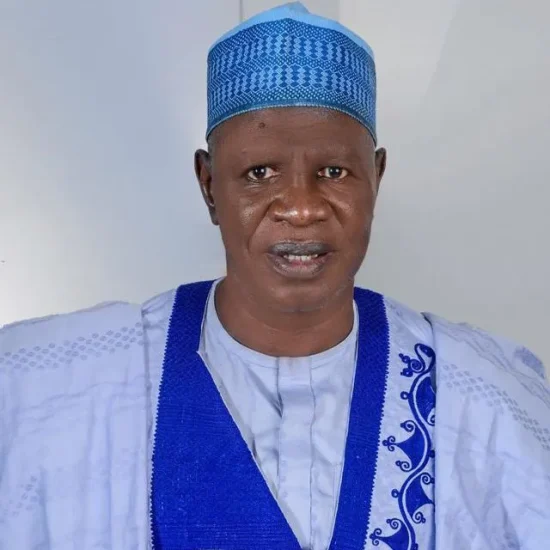
Nigeria - Prof. MK Othman
Prof. MK Othman
Share
Facebook Twitter LinkedIn Pinterest Email

This month of October 2021, Nigeria is 61 years old as an independent nation, free from colonialism, and 107 years old as a nation called Nigeria. The amalgamation of the British colonies and the northern and southern protectorates into a single country, Nigeria, in 1914 was made by fiat, without any consultation with the people. Under colonization, the land, its contents, and the people were considered as booty of the colonial masters. Some people felt, and still feel, that the amalgamation was an “accident of history”, which shouldn’t have been; how can over “200 nations” be fiercely jam-packed as “one nation”? Nevertheless, the country survived the political, religious, and tribal turmoil, plundering, and kleptomania over many decades, and still wearing the toga of a potentially “great nation of the 21st century”. Can Nigeria achieve greatness in this century?

Nigeria is stupendously blessed with both human and natural resources, making other countries grin with envy.  The country is richly endowed with natural resources, including precious metals and various industrial stones. Each of the 36 states and the FCT has several untapped mineral resources. Kaduna State alone has over 10 mineral resources, including Amethyst, Aqua Marine, Asbestos, Clay, Felspar, Gemstone, Gold, Graphite, Kaolin, Hyalite, Mica, Rock Crystal, Ruby, Sapphire, Sillimanite, Superantinite, Tantalite, Topaz & Tourmaline. Other states, such as Nasarawa, Ondo, Plateau, Sokoto, Edo, Imo, Zamfara, and Katsina, have a variety of mineral resources similar to those in Kaduna State. Most of these mineral resources are in appreciable quantities but unexploited, save for illegal mining. For instance, there are about 3 billion tons of iron ore deposits in Kogi, Niger State, and the FCT, and 10 million tons of zinc/lead in Abuja, Kano, and Cross River. There are over 2 million tons of rock salt and over 3 billion tons of coal deposits in Plateau, Enugu, and Anambra states. Large quantities of gold are found in Zamfara, Sokoto, Oyo, Niger, Kwara, and Kebbi states, among others. These mineral resources provide tremendous investment opportunities for economic growth and nation-building. If tapped, the country could be an Eldorado.  

Presently, Nigeria is dependent on two major mineral resources: petroleum, oil and gas. They account for 90 percent of foreign exchange earnings, with the remaining 10 percent contributed by all other economic sectors. Oil also accounts for about 70 percent of annual income for the three tiers of government: Federal, state, and LGAs.

Nigeria is the largest oil-producing country in Africa. Experts have estimated that Nigeria’s oil and gas reserves are 23 billion barrels of crude oil and 160 trillion cubic meters of gas (www.nigeria.gov.ng). Nigerian oil is of high quality, with low sulfur and high paraffin content, making it attractive in the international market. Despite oil’s massive contribution to foreign exchange earnings, it accounts for only 9% of the Gross Domestic Product (GDP).

Water and land resources are similar in large quantities. Nigeria is divided into seven climate zones based on water resources, with average annual rainfall from 700 mm in the Sahel savannah of the north to 4,000 mm in riverine areas of the south. Rainfall provides trillions of liters of water annually in addition to other trillions of liters from the River Niger. The river passes through the country and drains an average of 5,589 cubic meters of water every second into the Atlantic Ocean. The River Niger, with a length of 4,180 km and a drainage basin area of 2.1 million Km2, is the third-largest river in Africa.  There are unlimited water resources available for development in Nigeria.    

Regarding land resources, Nigeria has 91 million hectares of arable land, with only 50% utilization, despite the availability of water resources, soil fertility, favorable topography, and climate.

With all these huge natural resources, 47.3% of Nigerians live in multidimensional poverty according to recent statistics. Why? This is because, except for oil, other natural resources are merely potential and have not yet been transformed into realities that can propel the nation’s economic development. Potentials are like fertile land with adequate water for both crop and livestock production, left unattended and become vulnerable to infestation by dangerous reptiles. In any community or society, human resources are the driver of transforming potential into tangible reality. How capable are human resources in Nigeria to transform these potentials?

In 1960, the Nigerian population was estimated at 45 million. Today (16/9/2021), the population is estimated at 212,945,643, making the country the 7th most populous in the world. From 1960 to 2019, the Nigerian population increased by 471%. The rate of population growth in Nigeria is “one birth in every four seconds and one death in every fourteen seconds”. In the next 30 years, Nigeria will have an estimated population of 450 million people and will rank 3rd among the world’s most populous countries, behind India and China. Interestingly, more than 80% of the Nigerian population is under 55 years old. This demographic analysis clearly shows that Nigeria is tremendously endowed with human resources. How qualitative are the human resources?

The major qualitative indicator of human resources in any society is the level of its human capital. Human capital refers to the stock of competencies, skills, knowledge, and personality attributes that individuals embody.  These attributes are responsible for creating a high-quality labor force with appreciable economic, social, and personal values. Labor is the most important factor of production. Human capital is therefore a primary factor that converts all resources for the use and benefits of mankind and national development. How is Human capital developed?

To be concluded next week

Nigeria
Share. Facebook Twitter Pinterest LinkedIn WhatsApp Reddit Tumblr Email
Editor
  • Website

Related Posts

Muhammad Hassan Sale: The demise of an academic—one death too many, By Prof. M. K. Othman

March 3, 2026

[VIEWPOINT] Religious rhetoric, social media and the fragile fabric of Nigeria – Abanikanda Olumoro (UK)

February 26, 2026

Nigeria, greatness and the missing ink [II], By Prof. M. K. Othman

February 23, 2026

Leave A Reply Cancel Reply

AAN urges inclusive policies for women with disabilities

March 7, 2026

Expert warns of risks in Fibroid surgery

March 7, 2026

Educationist urges better health facilities in schools

March 7, 2026

When representation becomes reputation – Mohammed Mohammed Haruna

March 7, 2026
About Us
About Us

ASHENEWS (AsheNewsDaily.com), published by PenPlus Online Media Publishers, is an independent online newspaper. We report development news, especially on Agriculture, Science, Health and Environment as they affect the under-reported rural and urban poor.

We also conduct investigations, especially in the areas of ASHE, as well as other general interests, including corruption, human rights, illicit financial flows, and politics.

Contact Info:
  • 1st floor, Dogon Daji House, No. 5, Maiduguri Road, Sokoto
  • +234(0)7031140009
  • ashenewsdaily@gmail.com
Facebook Twitter Instagram Pinterest
© 2026 All Rights Reserved. ASHENEWS Daily Designed & Managed By DeedsTech

Type above and press Enter to search. Press Esc to cancel.