

• Home
  • Agric
  • Sci & Tech
  • Health
  • Environment
  • Hausa News
  • More
    • Business/Banking & Finance
    • POLITICS
    • Entertainments & Sports
    • International
    • Investigation
    • Law & Human Rights
    • Africa
    • ACCOUNTABILITY/CORRUPTION
    • Hassan Gimba
    • Column
    • Prof. Jibrin Ibrahim
    • Prof. M.K. Othman
    • Defense/Security
    • Education
    • Energy/Electricity
    • Entertainment/Arts & Sports
    • Society and Lifestyle
    • Food & Agriculture
    • Health & Healthy Living
    • International News
    • Interviews
    • Investigation/Fact-Check
    • LAW & HUMAN RIGHTS
    • Oil & Gas/Mineral Resources
    • PRESS FREEDOM/JOURNALISM/PR
    • General News
    • Presidency
  • About Us
    • Contact Us
    • Board Of Advisory
    • Privacy Policy
    • Ethics Policy
    • Teamwork And Collaboration Policy
    • Fact-Checking Policy
    • Advertising
  • Media OutReach Newswire
    • Wire News
  • The Stories
Facebook Twitter Instagram
Trending
  • Nigeria’s neem advantage: Unlocking a strategic bioeconomy industry for climate, agriculture and industrial growth, Dr Fakunle Aremu
  • NAFDAC holds workshop on medicine safety in Karu
  • AFAN predicts drop in food prices after fertiliser distribution
  • IBB university secures ABU approval for medical students clinical training
  • Edo state reaffirms commitment to fight drug abuse
  • PAAU student arrested for alleged forced cult initiation
  • Africa’s first social justice improv festival opens in Abuja
  • Umahi orders temporary halt on Ibadan-Ife-Ilesa road work
Facebook Twitter Instagram YouTube
AsheNewsAsheNews
  • Home
  • Agric

    Nigeria’s neem advantage: Unlocking a strategic bioeconomy industry for climate, agriculture and industrial growth, Dr Fakunle Aremu

    June 22, 2026

    AFAN predicts drop in food prices after fertiliser distribution

    June 22, 2026

    Northern Nigeria’s poultry economy: Unlocking a multi-billion dollar investment opportunity across the value chain, By Dr. Fakunle Aremu

    June 19, 2026

    Association trains farmers on agroforestry, carbon opportunities

    June 18, 2026

    IWMI, IFPRI link Kano farmers to solar irrigation support

    June 17, 2026
  • Sci & Tech

    ALTON supports CBN’s local data hosting mandate

    June 20, 2026

    NDPC seeks INEC data records over breach allegations

    June 20, 2026

    SGF urges Galaxy Backbone to boost cybersecurity, broadband

    June 20, 2026

    Experts urge AI, satellite data to build safer, more sustainable cities at FUTA symposium

    June 19, 2026

    Anambra disburses N80m to 80 startups for tech growth

    June 19, 2026
  • Health

    NAFDAC holds workshop on medicine safety in Karu

    June 22, 2026

    Expert urges focused use of N10bn for Ebola preparedness

    June 22, 2026

    From Sokoto to Bulgaria: Dr. Dange’s mission to transform pediatric care

    June 21, 2026

    Nigeria’s Fathers face silent mental health crisis

    June 21, 2026

    NGO promotes menstrual hygiene in Benue schools

    June 20, 2026
  • Environment

    Floods, Windstorm devastate Ebonyi farmlands, shops

    June 22, 2026

    Progress on Lagos-Calabar road celebrated

    June 22, 2026

    Sanitation concerns at Lagos market

    June 21, 2026

    Lagos envoy defends waste enforcement efforts

    June 20, 2026

    Tinubu: Abuja crime hideouts disappearing

    June 20, 2026
  • Hausa News

    UNA signs MoU to launch air Bissau in Guinea-Bissau

    June 15, 2026

    Otti plans 250-room 5-star hotel in Umuahia

    April 11, 2026

    Anti-quackery task force seals 4 fake hospitals in Rivers

    August 29, 2025

    [BIDIYO] Yadda na lashe gasa ta duniya a fannin Ingilishi – Rukayya ‘yar shekara 17

    August 6, 2025

    A Saka Baki, A Sasanta Saɓani Tsakanin ‘Yanjarida Da Liman, Daga Muhammad Sajo

    May 21, 2025
  • More
    1. Business/Banking & Finance
    2. POLITICS
    3. Entertainments & Sports
    4. International
    5. Investigation
    6. Law & Human Rights
    7. Africa
    8. ACCOUNTABILITY/CORRUPTION
    9. Hassan Gimba
    10. Column
    11. Prof. Jibrin Ibrahim
    12. Prof. M.K. Othman
    13. Defense/Security
    14. Education
    15. Energy/Electricity
    16. Entertainment/Arts & Sports
    17. Society and Lifestyle
    18. Food & Agriculture
    19. Health & Healthy Living
    20. International News
    21. Interviews
    22. Investigation/Fact-Check
    23. LAW & HUMAN RIGHTS
    24. Oil & Gas/Mineral Resources
    25. PRESS FREEDOM/JOURNALISM/PR
    26. General News
    27. Presidency
    Featured
    Recent

    Nigeria’s neem advantage: Unlocking a strategic bioeconomy industry for climate, agriculture and industrial growth, Dr Fakunle Aremu

    June 22, 2026

    NAFDAC holds workshop on medicine safety in Karu

    June 22, 2026

    AFAN predicts drop in food prices after fertiliser distribution

    June 22, 2026
  • About Us
    1. Contact Us
    2. Board Of Advisory
    3. Privacy Policy
    4. Ethics Policy
    5. Teamwork And Collaboration Policy
    6. Fact-Checking Policy
    7. Advertising
    Featured
    Recent

    Nigeria’s neem advantage: Unlocking a strategic bioeconomy industry for climate, agriculture and industrial growth, Dr Fakunle Aremu

    June 22, 2026

    NAFDAC holds workshop on medicine safety in Karu

    June 22, 2026

    AFAN predicts drop in food prices after fertiliser distribution

    June 22, 2026
  • Media OutReach Newswire
    • Wire News
  • The Stories
AsheNewsAsheNews
Home»Column»Prof. M.K. Othman»Strong clemency appeal for the great ABU Zaria [II], By Prof. M. K. Othman
Prof. M.K. Othman

Strong clemency appeal for the great ABU Zaria [II], By Prof. M. K. Othman

EditorBy EditorJune 1, 2026Updated:June 2, 2026No Comments6 Mins Read
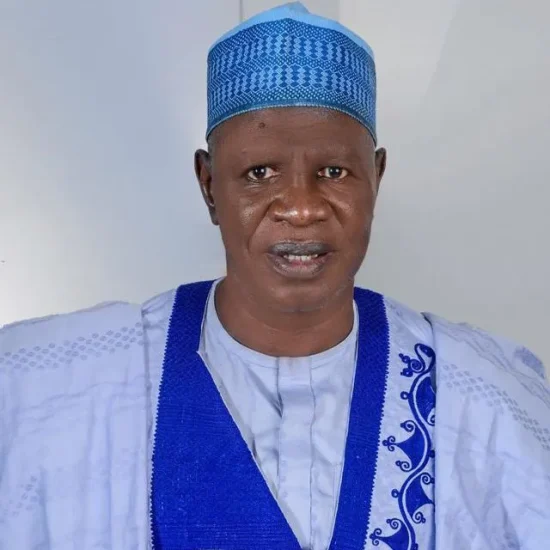
Nigeria - Prof. MK Othman
Prof. MK Othman
Share
Facebook Twitter LinkedIn Pinterest Email

The Ahmadu Bello University (ABU Zaria), like other public-funded tertiary institutions, is already navigating severe fiscal constraints. Inflation has driven up the costs of basic operations, while government allocations have struggled to keep pace with rising student populations and the increasing demands for higher-quality education and research outputs. Many universities are operating under enormous pressure, expected to expand access, produce globally competitive graduates, and contribute to national development even as resources remain limited. This is the context; the national discourse around the ABU judgment should evolve. The question is no longer simply whether the payment should be made— the courts have spoken clearly on that. University, as a product of law, must respect law and order. Therefore, the more urgent and constructive conversation must center on *how* the payment can be implemented responsibly, without inflicting severe and lasting damage on the university’s ability to serve its core mandate. Should ABU Zaria be held responsible for the actions of its appointed sole administrator, who had to create sanity for the university? Should the appointees (FGN) of the sole administrator bear the costs of his actions?

Historical context also demands sober reflection. The original disengagements in 1996 did not occur under normal circumstances. They emerged during a period of significant institutional crisis that prompted direct federal government intervention. Successive administrations, across different political eras, have inherited both the decisions and their lingering consequences. This reality raises a legitimate policy dilemma: Should financial liabilities rooted in those extraordinary circumstances of state involvement be borne exclusively by the university’s current operating budgets? Or does the state itself, having played a central role at the time, have a responsibility to provide targeted support? This question does not undermine judicial authority. Rather, it acknowledges that governance involves balancing multiple public interests and that the state possesses various instruments—beyond pure litigation—to resolve such inherited challenges.

Governments around the world have long recognized this tension. Public debt restructuring, special intervention funds, phased payment schedules, and negotiated settlement frameworks exist precisely because nations must protect vital institutions while honoring legal obligations. It is just like providing funds to salvage failed banks. An old African proverb powerfully captures this wisdom: when two elephants fight, it is the grass that suffers. Here, the grass represents not just the former workers and the university management, but also current students struggling to complete their studies, parents making enormous sacrifices, researchers pushing the frontiers of knowledge, and ordinary Nigerians who rely on ABU’s continued excellence. Another proverb reminds us that a child not embraced by the village may one day burn it down in search of warmth. This should not be misread as a threat of unrest, but as a profound observation about human nature: unresolved grievances, when left unattended for too long, tend to create wider ripples of discontent and instability.

ALSO READ Strong clemency appeal for the great ABU Zaria, by Prof. M. K. Othman [I]

Nigeria’s youthful population—predominantly students and recent graduates—already shoulders heavy burdens. They contend with high unemployment, escalating living costs, limited access to quality education, and deep uncertainty about their future prospects. In a politically sensitive period, with general elections still some months away but mobilization cycles already gathering momentum, any development that triggers prolonged academic disruption in a flagship institution like ABU requires careful handling. This is not a prediction of crisis, but a call for foresight. Academic continuity remains one of the strongest pillars of social stability in our country.

A solution to this problem that does not harm the educational system at ABU is possible and urgently needed. The Federal Government should begin by making a clear, public commitment to respect the Court of Appeal judgment and the rights of the affected former staff. Crucially, all stakeholders must resist the temptation to demonize one another. The former staff are not enemies of education or national progress. They are citizens who fought for their rights through lawful means. Similarly, the university leadership is not opposed to justice; it bears the heavy responsibility of preserving an institution that serves tens of thousands directly and millions indirectly. Both sides are products of the same Nigerian project.

The responsibility for resolving this matter now rests significantly with the administration of His Excellency, President Bola Ahmed Tinubu, GCFR; since assuming office in May 2023, his government has earned considerable recognition for its attention to tertiary education. It is on record that academic, professional learning, and training activities have proceeded without major disruption on the university campuses since President Tinubu came into office in 2023, as part of the pact he made with Nigerian students during his inaugural address to the nation.

Therefore, this case presents an important opportunity not to be treated as just another routine institutional dispute or a mere court judgment to be ticked off on paper. Instead, the case must be approached as a broader governance challenge—one that tests our ability to deliver justice for past wrongs without creating fresh disruptions for the present generation, as seen in mature democracies. Nations that thrive balance individual rights with institutional sustainability, reduce uncertainty, and maintain public confidence. If this moment is managed with wisdom, fairness, urgency, and creativity, Nigeria will achieve far more than saving one university. We will strengthen the cherished principle that justice for yesterday and national interest for today need not stand in permanent opposition. They can, and must, be reconciled for the greater good of our collective future.

Consequently, the simplest and fastest way to resolve the matter is for President Bola Ahmed Tinubu to approve the release of the necessary funds to settle the workers’ wages and to provide a stabilization fund to the university to cover incidental expenses incurred in the judicial process. Doing so amounts to accepting responsibility for the FGN’s actions in appointing the Sole Administrator, who acted and submitted feedback and reports to the FGN. The FGN duly endorsed the Sole Administrator’s actions, thereby designating itself as the body responsible for the procedures, policies, and actions aimed at mitigating the 1996 crisis and all ensuing developments. 

This piece gives voice to the cries of 50 professors from diverse disciplines who passionately wrote an appeal to President Bola Ahmed Tinubu, the university’s visitor, to kindly intervene, make restitution, and close an unfortunate chapter in ABU’s history. May our cries fall on the listening ears of Mr. President so that the ongoing supersonic academic progress can be enhanced, amen. 

ABU Zaria Clemency apeal
Share. Facebook Twitter Pinterest LinkedIn WhatsApp Reddit Tumblr Email
Editor
  • Website

Related Posts

Strong clemency appeal for the great ABU Zaria, by Prof. M. K. Othman [I]

May 25, 2026

Radda’s relentless efforts on security: Dialogue, deterrence, and search for stability, By Prof. M.K. Othman

May 18, 2026

Artemis II: Space exploration, and the question of African future [II], By Prof. M. K. Othman

May 12, 2026

Leave A Reply Cancel Reply

Nigeria’s neem advantage: Unlocking a strategic bioeconomy industry for climate, agriculture and industrial growth, Dr Fakunle Aremu

June 22, 2026

NAFDAC holds workshop on medicine safety in Karu

June 22, 2026

AFAN predicts drop in food prices after fertiliser distribution

June 22, 2026

IBB university secures ABU approval for medical students clinical training

June 22, 2026
About Us
About Us

ASHENEWS (AsheNewsDaily.com), published by PenPlus Online Media Publishers, is an independent online newspaper. We report development news, especially on Agriculture, Science, Health and Environment as they affect the under-reported rural and urban poor.

We also conduct investigations, especially in the areas of ASHE, as well as other general interests, including corruption, human rights, illicit financial flows, and politics.

Contact Info:
  • 1st floor, Dogon Daji House, No. 5, Maiduguri Road, Sokoto
  • +234(0)7031140009
  • ashenewsdaily@gmail.com
Facebook Twitter Instagram Pinterest
© 2026 All Rights Reserved. ASHENEWS Daily Designed & Managed By DeedsTech

Type above and press Enter to search. Press Esc to cancel.