

• Home
  • Agric
  • Sci & Tech
  • Health
  • Environment
  • Hausa News
  • More
    • Business/Banking & Finance
    • POLITICS
    • Entertainments & Sports
    • International
    • Investigation
    • Law & Human Rights
    • Africa
    • ACCOUNTABILITY/CORRUPTION
    • Hassan Gimba
    • Column
    • Prof. Jibrin Ibrahim
    • Prof. M.K. Othman
    • Defense/Security
    • Education
    • Energy/Electricity
    • Entertainment/Arts & Sports
    • Society and Lifestyle
    • Food & Agriculture
    • Health & Healthy Living
    • International News
    • Interviews
    • Investigation/Fact-Check
    • LAW & HUMAN RIGHTS
    • Oil & Gas/Mineral Resources
    • PRESS FREEDOM/JOURNALISM/PR
    • General News
    • Presidency
  • About Us
    • Contact Us
    • Board Of Advisory
    • Privacy Policy
    • Ethics Policy
    • Teamwork And Collaboration Policy
    • Fact-Checking Policy
    • Advertising
  • Media OutReach Newswire
    • Wire News
  • The Stories
Facebook Twitter Instagram
Trending
  • Sokoto celebrates international day of play
  • Cross River activates emergency measures against Ebola
  • China’s development model inspires global participants
  • Sultan congratulates new Ilorin chief Imam
  • Rainy season boosts demand for disposable ponchos in Lagos
  • UNESCO REF urges more investment to end child labour
  • NCDMB trains 160 youths in AI, data analytics
  • Kaduna leads in domesticating national WDC guideline
Facebook Twitter Instagram YouTube
AsheNewsAsheNews
  • Home
  • Agric

    NADF begins fertilizer distribution to farmers in South-West

    June 12, 2026

    FG distributes 80,640 bags of fertilizer to 20,160 farmers

    June 10, 2026

    Q1 2026: Fertilizer exports among Nigeria’s biggest FX earners, hit N1.37trn

    June 10, 2026

    IFAD-VCDP distributes poultry equipment to 20 persons with disabilities in Enugu

    June 10, 2026

    AANI, DGF launch support program for women, youths in Kaduna

    June 8, 2026
  • Sci & Tech

    NCDMB trains 160 youths in AI, data analytics

    June 12, 2026

    Stakeholders urge Nigeria to boost local food ingredient production

    June 10, 2026

    Perplexity AI locks in 2028 IPO date, won’t wait for Anthropic or OpenAI to market

    June 9, 2026

    Q4 2025: TikTok removes over 4m videos in Nigeria

    June 9, 2026

    NCC appoints princess Emiko as interim DBI chair

    June 9, 2026
  • Health

    Cross River activates emergency measures against Ebola

    June 12, 2026

    Kaduna leads in domesticating national WDC guideline

    June 12, 2026

    Rising diabetes rates in Nigeria, South-South most affected

    June 12, 2026

    NCDC launches Ebola preparedness Webinar series

    June 12, 2026

    FG postpones global AMR ministerial conference

    June 11, 2026
  • Environment

    Rainy season boosts demand for disposable ponchos in Lagos

    June 12, 2026

    UNESCO REF urges more investment to end child labour

    June 12, 2026

    Association urges Nigeria to renew commitment to peace, progress

    June 12, 2026

    AMAC launches crackdown on business revenue evasion

    June 11, 2026

    Inauguration of FCT road highlights Wike’s infrastructure focus

    June 10, 2026
  • Hausa News

    Otti plans 250-room 5-star hotel in Umuahia

    April 11, 2026

    Anti-quackery task force seals 4 fake hospitals in Rivers

    August 29, 2025

    [BIDIYO] Yadda na lashe gasa ta duniya a fannin Ingilishi – Rukayya ‘yar shekara 17

    August 6, 2025

    A Saka Baki, A Sasanta Saɓani Tsakanin ‘Yanjarida Da Liman, Daga Muhammad Sajo

    May 21, 2025

    Dan majalisa ya raba kayan miliyoyi a Funtuwa da Dandume

    March 18, 2025
  • More
    1. Business/Banking & Finance
    2. POLITICS
    3. Entertainments & Sports
    4. International
    5. Investigation
    6. Law & Human Rights
    7. Africa
    8. ACCOUNTABILITY/CORRUPTION
    9. Hassan Gimba
    10. Column
    11. Prof. Jibrin Ibrahim
    12. Prof. M.K. Othman
    13. Defense/Security
    14. Education
    15. Energy/Electricity
    16. Entertainment/Arts & Sports
    17. Society and Lifestyle
    18. Food & Agriculture
    19. Health & Healthy Living
    20. International News
    21. Interviews
    22. Investigation/Fact-Check
    23. LAW & HUMAN RIGHTS
    24. Oil & Gas/Mineral Resources
    25. PRESS FREEDOM/JOURNALISM/PR
    26. General News
    27. Presidency
    Featured
    Recent

    Sokoto celebrates international day of play

    June 12, 2026

    Cross River activates emergency measures against Ebola

    June 12, 2026

    China’s development model inspires global participants

    June 12, 2026
  • About Us
    1. Contact Us
    2. Board Of Advisory
    3. Privacy Policy
    4. Ethics Policy
    5. Teamwork And Collaboration Policy
    6. Fact-Checking Policy
    7. Advertising
    Featured
    Recent

    Sokoto celebrates international day of play

    June 12, 2026

    Cross River activates emergency measures against Ebola

    June 12, 2026

    China’s development model inspires global participants

    June 12, 2026
  • Media OutReach Newswire
    • Wire News
  • The Stories
AsheNewsAsheNews
Home»Column»Prof. M.K. Othman»Strong clemency appeal for the great ABU Zaria, by Prof. M. K. Othman [I]
Prof. M.K. Othman

Strong clemency appeal for the great ABU Zaria, by Prof. M. K. Othman [I]

EditorBy EditorMay 25, 2026Updated:May 26, 2026No Comments6 Mins Read
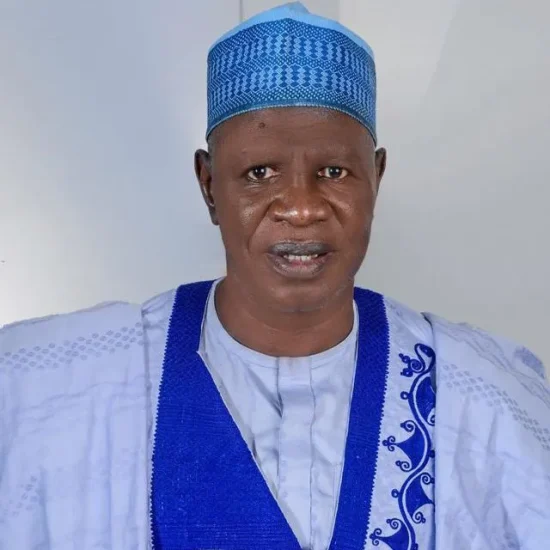
Nigeria - Prof. MK Othman
Prof. MK Othman
Share
Facebook Twitter LinkedIn Pinterest Email

For some of us, Ahmadu Bello University Zaria, the great ABU, is a paradise on earth, as it modeled our lives from our teenage years to the 60s to be the best in serving God and humanity for the admiration of others. That is why, when ABU sneezes, we not only catch a cold but also develop insomnia until the problem is addressed. Today, ABU is under intense pressure to lose its treasured over three billion Naira held in the Central Bank for research, training, community service, and the purchase of essentials. No thanks to the ruling of the Court of Appeal in Abuja, 6 February 2026, in favor of its sacked 110 workers 30 years ago.

The situation is worrisome. The university is being transformed by dynamic leadership from its vice chancellor, Prof. Adamu Ahmed, an admirable and pleasant personality, and by seasoned technocrat Pro-Chancellor, Alhaji Yayale Ahmed. Both and their teams have earned the goodwill of the university’s vast alumni, who are generously funding infrastructure. Visit ABU and see the environmental beautification, a conducive learning environment, cultural unity, staff and student friendliness, and romantic affairs that often lead to marriage. ABU is unique: staff and students represent all 774 local government areas in Nigeria.  

As mentioned in this column, today ABU Zaria is where Nigerians from across the nation come together to study, live, argue, celebrate, and dream, as the university not only admits students but also welcomes Nigeria itself, serving as an undeniable icon of nation-building. While the ABU peers are serving as regional universities, ABU is a national in its blood, spirit, and breath.  Walking through the University of Nigeria, Nsukka, one finds Igbo language and culture prominently displayed at every turn. University of Ibadan and Obafemi Awolowo University, Ile-Ife, immerse visitors in Yoruba culture and tradition. ABU Zaria truly reflects the federal character principle that Nigeria has struggled to nurture for decades—bringing together students and staff from diverse ethnic, religious, and regional backgrounds in a genuine melting pot of ideas and aspirations.

On 6 February 2026, the Court of Appeal in Abuja delivered a major judgment. It may be one of the most significant rulings in Nigerian higher education. In two unanimous decisions, Justice Okon Abang led the court to reject ABU’s and the Central Bank’s applications to halt enforcement of an earlier judgment. The court ruled in favor of 110 former staff whose appointments ended in 1996. It ordered the immediate release of over ₦2.5 billion in outstanding payments and warned of further delays. This ruling reaffirmed the National Industrial Court’s earlier verdict, declaring the disengagement unlawful and awarding workers their lost salaries and benefits.

For many Nigerians unaware of this long-running dispute, it may appear sudden or surprising. Yet its roots go back three decades to a tough period in ABU’s history. In 1996, during institutional turmoil and national uncertainty, the military Head of State intervened. He dissolved the university management and council, named a sole administrator, and allowed the senate and other managers to continue academic work. All this was done under military law, specifically Decree 29 of 1996.

The sole administrator, General Mamman Tsoho Kontagora (Rt), of blessed memory, took major restructuring steps that led to the closure of many sub-degree programs and the disengagement of over 110 staff members. When the university returned to normal a decade later, the sacked workers went to court. Nearly 20 years later, in November 2015, Justice Peter Lifu of the National Industrial Court ruled in favor of the affected group. He ordered their reinstatement and payment of entitlements—about ₦2.585 billion. This sparked a lengthy legal battle, including multiple enforcement actions, garnishee orders, and repeated appeals. The Court of Appeal’s February 2026 decision has largely brought the legal phase to an end, turning attention to the practical challenges ahead.

Recent commentary distills this complex issue into a shallow binary: side with the dismissed staff who seek justice, or with the university struggling to survive. This reduction misses the main point: both respect for judicial decisions and ABU’s operational stability are vital. The issue is not about choosing sides, but about recognizing that enforcing legal judgments must take into account the long-term consequences for critical national institutions like ABU Zaria.

It is crucial to affirm the fundamental rights and hardships of the disengaged staff, many of whom have endured decades of uncertainty. However, the bigger issue is this: while the courts must be respected, the fallout from their decisions imposes high financial and societal costs on ABU. The priority must be to address the dilemma of achieving justice without destabilizing a national institution essential to Nigeria’s future.

First, legal correctness and smart public policy do not always match. Ahmadu Bello University is not a typical commercial body. Established in 1962, it has grown to be one of the largest universities in Africa. Today, it has over 70,000 undergraduate and postgraduate students from across the nation and continent. Its alumni are prominent in government, business, academia, medicine, engineering, and every major field, both in Nigeria and abroad. ABU’s stability, therefore, is a matter of real national importance that cannot be compromised without grievous consequences. 

Second, ABU Zaria is not a private enterprise with flexible revenue streams; public universities operate with layered, often rigid finances: personnel costs, statutory government allocations, student fees, research grants, utility bills, maintenance obligations, and long-term infrastructure commitments. Liquidity is frequently precarious. The sudden withdrawal of approximately ₦2.6 billion from the university’s accounts would immediately raise pressing practical questions. How would the institution sustain electricity supply to lecture halls, laboratories, and hostels, which typically cost over 200 million Naira? What would happen to essential municipal services, student accommodation, ongoing research projects, postgraduate training programs, and the thousands of young Nigerians currently pursuing their dreams on that campus? These are not abstract or sentimental concerns—they reflect the daily operational realities of Nigerian public universities today. What are the immediate and long-term consequences of implementing the court ruling? Should ABU of today, operating under the University Miscellaneous Act, be held responsible for the ABU operated 30 years ago under a sole administrator governed by Decree 29 of 1996? What is the best way forward?

To be concluded next week. 

ABU Zaria Clemency apeal
Share. Facebook Twitter Pinterest LinkedIn WhatsApp Reddit Tumblr Email
Editor
  • Website

Related Posts

Strong clemency appeal for the great ABU Zaria [II], By Prof. M. K. Othman

June 1, 2026

Radda’s relentless efforts on security: Dialogue, deterrence, and search for stability, By Prof. M.K. Othman

May 18, 2026

Artemis II: Space exploration, and the question of African future [II], By Prof. M. K. Othman

May 12, 2026

Leave A Reply Cancel Reply

Sokoto celebrates international day of play

June 12, 2026

Cross River activates emergency measures against Ebola

June 12, 2026

China’s development model inspires global participants

June 12, 2026

Sultan congratulates new Ilorin chief Imam

June 12, 2026
About Us
About Us

ASHENEWS (AsheNewsDaily.com), published by PenPlus Online Media Publishers, is an independent online newspaper. We report development news, especially on Agriculture, Science, Health and Environment as they affect the under-reported rural and urban poor.

We also conduct investigations, especially in the areas of ASHE, as well as other general interests, including corruption, human rights, illicit financial flows, and politics.

Contact Info:
  • 1st floor, Dogon Daji House, No. 5, Maiduguri Road, Sokoto
  • +234(0)7031140009
  • ashenewsdaily@gmail.com
Facebook Twitter Instagram Pinterest
© 2026 All Rights Reserved. ASHENEWS Daily Designed & Managed By DeedsTech

Type above and press Enter to search. Press Esc to cancel.