


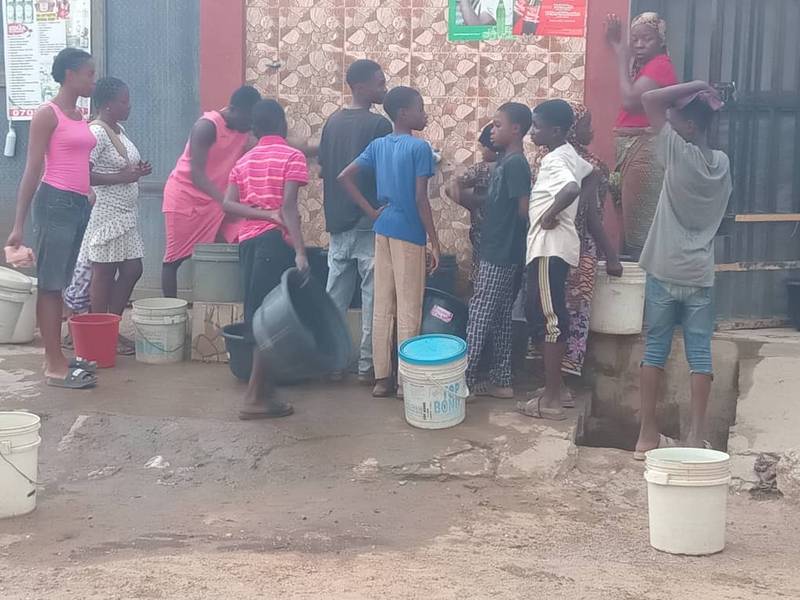
Residents of Kwamba community in the Suleja axis of Niger State have raised concerns over worsening water scarcity, describing it as a growing burden.
Some residents, who spoke with reporters on Saturday, said access to clean water had become increasingly difficult and frustrating.
Ms Kisiah Jeremiah, a student, said the challenge was affecting her punctuality at school.
She explained that long queues at wells often mean the water runs out before her turn, forcing her to search elsewhere.
“Sometimes, we wake up very early to look for water so we won’t be late for school. At times, we even go to a dried river and wait for the little water that seeps out, but many people are already there,” she said.
Jeremiah added that while some of the water is used for domestic purposes, residents avoid drinking from certain sources due to health concerns.
“We notice changes in our bodies, such as rashes and stomach pain. Some people keep treating malaria repeatedly because of the water we use,” she said.
Mr Patrick Ojuche, an artisan, described the situation as unbearable, especially for his family.
“My wife is pregnant, so I cannot allow her to fetch water. After a long day at work, I still have to look for water for the household because vendors do not come regularly,” he said.
Mrs Rabiat Abdulkadir, a trader and widow, said the situation was very difficult for her as she lives alone.
READ ALSO: Society pushes wider risk management adoption
“All my children are no longer at home. I have to fetch water myself. Water vendors charge between N1,500 and N2,000, and even finding them is a struggle,” she said.
Ms Rachel Ologunde, another resident, noted that water scarcity is a recurring problem, especially during the dry season.
“We go long distances from one well to another. Even at boreholes, queues are long and sometimes chaotic,” she said.
The residents appealed to government authorities to provide additional boreholes to ease the situation and reduce pressure on existing sources.
Efforts to obtain comments from the local government chairman were unsuccessful.
