


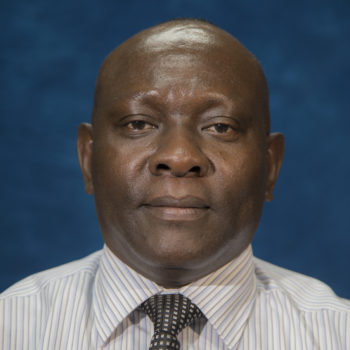
By Peter Wamboga-Mugirya
The recent issuance of a raft of presidential directives in succession: banning of rice-growing in wetlands; banning the burning and trade in charcoal, and the most recent ban on importation of and trade in mivumba (second-and clothes), are in my humble view, not well-timed and needed certain solid steps before issuance. For they unfortunately—hopefully unintendedly—target almost the same low social-class of people in our society.
Burning and trade in charcoal: The lower-end rural and urban people across Uganda, are the ones who burn charcoal and trade in it respectively. They daily engage in collecting and transporting it—as traders, drivers, turn-boys), buy it (as house-helps/maids, use it to cook for low-class workers and it is used by slum-dwelling housewives, and low-earning families whose cheapest source of energy is charcoal).
Growing/consumption of rice in Uganda: The largest rice-growers in Uganda are peasants and smallholder farmers [with exception of large-scale government wetland-based rice schemes in Kibimba, Doho, Olweny etc]. But lower-end Ugandans (the same-class like the one in charcoal) trade in rice—as wholesalers and retailers—cook it in restaurants and in rural, suburb and urban slum-dwellings (call them homes). It is sold in the lowest amounts as small as grams, to low-income earners. And on the other hand, the largest number of consumers of rice are poorer Ugandans whose low incomes dictate to buy/consume it, for its relatively low prices, besides the advantages of less energy needed to cook it. Rice is preferred by mainly bachelors, spinsters and casual labourers, among other low-income groups across Uganda.
The ban on mivumba: As if bans on charcoal and rice-growing are not bad enough for targeting the same low-income earners, then came in the latest presidential ban on mivumba [second-and clothes])! Boom!!! This is to hit hardest the same group of Ugandans—the low-earning class—that trades (wholesaling and retailing) in mivumba. Again this group of low-income earners are to suffer most the effects of this new presidential directive. How? They are the ones who, first and foremost, need [not want] the mivumbas (for their diversity [in designs/fashions]; colours, versatility, wide-availability, comparative-affordability, durability, e.t.c). The collapse of the local textile industry and government divestiture of State-owned cotton and textile industries/parastatals [late 80s/90s] led to cotton farmers losing interest and a market, hence low cotton production levels. This situation caused a vacuum, which dealers in mivumba came in handy, to fill. Largely, the cotton-textile industry had begun a downward spiral in mid to late 1970s during the Idi Amin era, when Asians who dominated this sector, were expelled in 1972. Big cooperatives that produced the raw materials (cotton), the cotton processing sub-sector (the likes of Nyanza Textile Industries Limited (NYTIL), African Textile Mills (ATM), MULCO, Lira Spinning Mills, and the State-marketing parastatal, Lint Marketing Board (LMB)—all State-owned and State-run—among other value-chain players, collapsed over the past political and economic turbulence and malaise. This led to the dysfunctional state of the cotton and textile sub-sector in Uganda. It was part of the economic collapse of the 1970s, whose economy was mainly hinged on the 3Cs (Coffee, Cotton and Copper), and 3Ts (Tea, Tourism and Tobacco). Successively, thousands of citizens left a politically and economically turbulent Uganda, to live in Europe and North America. Here, they came across a lot of used household properties including clothes, shoes, furniture and appliances disposed off on garbage skips and along streets by affluent Europeans and Americans. Others donated such used items to Charitable organizations including Christian groups [NGOs and churches], used to collect/and do continue collecting such materials including books and used machinery like sewing-machines and vehicles, for onward donation to the needy and refugees. Over time, business people realized these clothes are liked/needed by the general public, and are therefore tradable.
Hence they joined in the buying and selling to wholesalers and retailers across Africa and the rest of the Third world. Those who used to dispose off for free, also must have realized they could raise money from these 2nd-hand clothes. This is how the mivumba trade and business grew and expanded to date, where it is. Kampala’s busy downtown Central Business District (CBD) is dotted with hundreds of warehouses, where mivumba bales are stored before other wholesale and retail traders buy them off for further distribution in markets, sops and supermarkets. Boys/men who stand at street corners of Kampala—mostly in evenings—sell suits, ties, jackets, trousers and coats, which are second-hand. All sorts of clothes make up the mivumba today—sizes for all ages, types (inner garments: knickers, underpants, vests and bras); handkerchiefs, coats, sweaters, raincoats, suits, blouses, skirts, shirts, trousers, ties, jackets, children’s wear, scarfs, stockings, socks, gloves e.t.c]. Mivumbas also consist of shoes, boots, belts, bags, hats, caps, sandals and wallets. The 2nd-hand clothes are also a diversity of tastes/designs, materials, colours, prints, texture and lengths, etc. Some are of the 1960-70s fashions, while others of the 80s, 90s and 2000s’ styles. But can all these be addressed by a local cotton and textile industry in Uganda? Yes, why not? These are the questions His Excellency President Yoweri Museveni and his Government should have asked and addressed before issuing the directive on mivumba as we will see a little while ahead. Against that background, this is what and how the Government of Uganda should have handled the rice, charcoal and mivumba (second-hand clothes) issues, in the first place. I’ll illustrate it here below.
Growing Rice in Wetlands: This is the case globally, whereby paddy rice is grown in wetlands. There’s no other variety of rice that can grow in a wetly/water-logged/soaked ecology or environment, except the paddy rice variety. The world’s largest rice-producing region of south-east Asia [India, China, Vietnams, Laos, Cambodia, Pakistan, Bangladesh, Philippines, Indonesia, Sri Lanka, Malaysia, e.t.c], they’ve been growing the paddy rice variety for centuries. Paddy rice is adapted to aquatic clay soils found in the wetlands of other regions, like Africa or sub-Saharan Africa. Uganda falls here. So our farmers are no exception growing rice in wetlands. Infact the Government of Uganda in early 70s entered agreement with that of the People’s Republic of China (PRC) to support Uganda grow paddy rice in Kibimba vast wetland now in Bugiri District, eastern Uganda. That is how the multi-million dollar Kibimba Rice Scheme project—the largest in Uganda—was started by the Chinese in 1973 and completed in 1976, to increase food production. Today, the scheme is a privatized entity, when it was sold in 1996 to Tilda Uganda Ltd.
Kibimba served as the first example to Ugandans that rice grows well in wetlands. The other and second-largest state-owned rice scheme is the Doho Rice Irrigation Scheme in Butaleja District, also in eastern Uganda and Olweny Rice scheme in Lira District, northern Uganda. These were the other examples that demonstrated to Ugandans that [paddy] rice—hitherto imported—is/can be grown in wetlands, that were/are plenty around Uganda. From the 1970s todate, Ugandans have been growing paddy rice in wetlands, the crop doesn’t damage wetlands, nor does it require to drain away all the water as it [rice] depends on it to grow. Paddy rice in summary, is an aquatic plant that grows well nowhere else other than in wetlands. So does it require the government of Uganda to outlaw paddy rice-growing in wetlands? My answer is: No! President Museveni’s directive calls on paddy rice-growers to shift to rearing fish in ponds of water curved out of wetlands, which he argues is a more profitable and environmentally-friendly activity than paddy-rice growing [by 2021 it had reached 303,283 metric tons]. Will farmers pay heed?
I don’t know. But some overzealous Resident District Commissioners (RDCs) have already swung into action to slash down rice in some wetlands around the country. Meanwhile, Ugandan farmers besides paddy – also grow rice on upland soils [outside wetlands]. This type is locally known as “Upland-Rice” adopted by Uganda’s National Agricultural Research Organization (NARO) from the West Africa Rice Development Agency (WARDA) based in Sierra Leone. So Uganda has two rices that have been well-developed and today have contributed to a big crop of rice, tradable and widely-consumed as a staple food. And in Africa, Uganda is today one of the biggest rice producers on the continent. Although this small East African nation also imports rice—most traders and consumers—prefer what is popularly-known as kaiso [(needle-shaped and Pakistan’s Basmati (paddy rice varieties)] both famed for their nice aroma and taste. For the meantime, that is the story of rice growing in wetlands. Let me address myself to the directive on charcoal.
Burning, trading in and use of charcoal: This black carbon substance is a common source of energy that has been burnt, traded and used in Uganda for many decades. So it is part of Uganda’s energy culture/tradition and economy. Charcoal is derived from trees felled down, chopped into logs and specially piled up into heaps, covered by mud and dust, to slowly burn with little oxygen and without open flames. This process that lasts over two weeks, brings forth black charred but cooled/solidified, hardened but brittle pieces of charcoal that when lit with fire, it heats up to red-hot temperature. It burns slowly, hence excellent for domestic cooking, firing up smelters and industrial boilers; schools, barracks and other large and small-scale hotel cooking, alcohol distilleries e.t.c.
At the beginning of this article, what did I mean by “not well-timed and needed certain solid steps before issuance” [of the Presidential directives]? I meant that the Presidential spirit and goals are excellent. But there’s need for national policy decisions and programmatic planning [be included in the 5-year National Development Plans [NDPs], under which government should systematically institute alternatives to rice-growing in wetlands, charcoal burning, trade and usage; and the restoration of cotton-growing and textile development [it one-time existed]. The initiatives also need feasibility studies, consultations for stakeholder inputs and resources-mobilization, backed up by regional benchmarking especially in Kenya (on the vigorous cotton-growing, textile industry restoration underway and geo-thermal energy in use]; Tanzania and Rwanda—both where natural gas is in use (Uganda has it in abundance in the Albertine Graben). The State of Uganda should reform the private sector-led economic development dictum—[I’ll not call it a policy as I don’t know about it; it’s just a declaration and practice]—to State-led economic development (via clearly written policy approved by Parliament]. Thereafter, the State should lead in these initiatives through the Uganda Development Corporation (UDC) and the Uganda Development Bank (UDB). In the short and medium terms for UDB. In the long-run, Government should revive the Cooperative Bank—name and structure it—as the National Cooperative and Agricultural Bank, to re-establish a new Cooperative Movement/Unions, provide conducive credit facilitation of cooperatives and agriculture and institutionally, a fund setting up of the new National Cotton Revival and Textile Development program, be formulated/set up, to spearhead eventual phasing out of mivumba.
Wamboga-Mugirya is a Director of Communication and Strategic Partnerships and Board Member of the Science Foundation for Livelihoods and Development (SCIFODE).
