

• Home
  • Agric
  • Sci & Tech
  • Health
  • Environment
  • Hausa News
  • More
    • Business/Banking & Finance
    • POLITICS
    • Entertainments & Sports
    • International
    • Investigation
    • Law & Human Rights
    • Africa
    • ACCOUNTABILITY/CORRUPTION
    • Hassan Gimba
    • Column
    • Prof. Jibrin Ibrahim
    • Prof. M.K. Othman
    • Defense/Security
    • Education
    • Energy/Electricity
    • Entertainment/Arts & Sports
    • Society and Lifestyle
    • Food & Agriculture
    • Health & Healthy Living
    • International News
    • Interviews
    • Investigation/Fact-Check
    • LAW & HUMAN RIGHTS
    • Oil & Gas/Mineral Resources
    • PRESS FREEDOM/JOURNALISM/PR
    • General News
    • Presidency
  • About Us
    • Contact Us
    • Board Of Advisory
    • Privacy Policy
    • Ethics Policy
    • Teamwork And Collaboration Policy
    • Fact-Checking Policy
    • Advertising
  • Media OutReach Newswire
    • Wire News
  • The Stories
Facebook Twitter Instagram
Trending
  • Inside the AU files: The unanswered questions in Nigeria’s failed 2031 African Games bid
  • Perplexity AI locks in 2028 IPO date, won’t wait for Anthropic or OpenAI to market
  • Key drivers for water utility improvement highlighted at Abuja workshop
  • Kenyan police clash with protesters over U.S. Ebola quarantine center
  • SUNU health Nigeria to launch mobile app for easier healthcare access
  • Shell Nigeria gas highlights gas expansion for industrial growth
  • WHO chief urges Uganda to keep borders open amid Ebola outbreak
  • Primary deadlines: Why we’re appealing court ruling – INEC
Facebook Twitter Instagram YouTube
AsheNewsAsheNews
  • Home
  • Agric

    AANI, DGF launch support program for women, youths in Kaduna

    June 8, 2026

    FAO highlights data’s role in ensuring food safety

    June 8, 2026

    N-HYPPADEC distributes power tillers to Kaduna farmers

    June 6, 2026

    Niger Assembly approves $14.4m loan to finance Niger Foods

    June 3, 2026

    Expert: Nigerian food products face export challenges

    June 3, 2026
  • Sci & Tech

    Perplexity AI locks in 2028 IPO date, won’t wait for Anthropic or OpenAI to market

    June 9, 2026

    Q4 2025: TikTok removes over 4m videos in Nigeria

    June 9, 2026

    NCC appoints princess Emiko as interim DBI chair

    June 9, 2026

    Okedeyi calls for more investment in climate physics

    June 8, 2026

    NCC supports girls in ICT with industry excursion for 185 students

    June 8, 2026
  • Health

    SUNU health Nigeria to launch mobile app for easier healthcare access

    June 9, 2026

    WHO chief urges Uganda to keep borders open amid Ebola outbreak

    June 9, 2026

    NAFDAC starts pharmacovigilance assessment in Kwara

    June 9, 2026

    Malaria campaign launches for children under 5 in FCT

    June 8, 2026

    Expert warns of rabies risk from unvaccinated stray dogs

    June 8, 2026
  • Environment

    Key drivers for water utility improvement highlighted at Abuja workshop

    June 9, 2026

    Warri–Itakpe train derails, kills infant, 3 others in Delta

    June 9, 2026

    LASTMA rescues victim in hit, run on Lekki-Epe expressway

    June 8, 2026

    Fire destroys Iyanu plastic store in Osogbo, property worth millions lost

    June 8, 2026

    Edo fire service controls market blaze

    June 8, 2026
  • Hausa News

    Otti plans 250-room 5-star hotel in Umuahia

    April 11, 2026

    Anti-quackery task force seals 4 fake hospitals in Rivers

    August 29, 2025

    [BIDIYO] Yadda na lashe gasa ta duniya a fannin Ingilishi – Rukayya ‘yar shekara 17

    August 6, 2025

    A Saka Baki, A Sasanta Saɓani Tsakanin ‘Yanjarida Da Liman, Daga Muhammad Sajo

    May 21, 2025

    Dan majalisa ya raba kayan miliyoyi a Funtuwa da Dandume

    March 18, 2025
  • More
    1. Business/Banking & Finance
    2. POLITICS
    3. Entertainments & Sports
    4. International
    5. Investigation
    6. Law & Human Rights
    7. Africa
    8. ACCOUNTABILITY/CORRUPTION
    9. Hassan Gimba
    10. Column
    11. Prof. Jibrin Ibrahim
    12. Prof. M.K. Othman
    13. Defense/Security
    14. Education
    15. Energy/Electricity
    16. Entertainment/Arts & Sports
    17. Society and Lifestyle
    18. Food & Agriculture
    19. Health & Healthy Living
    20. International News
    21. Interviews
    22. Investigation/Fact-Check
    23. LAW & HUMAN RIGHTS
    24. Oil & Gas/Mineral Resources
    25. PRESS FREEDOM/JOURNALISM/PR
    26. General News
    27. Presidency
    Featured
    Recent

    Inside the AU files: The unanswered questions in Nigeria’s failed 2031 African Games bid

    June 9, 2026

    Perplexity AI locks in 2028 IPO date, won’t wait for Anthropic or OpenAI to market

    June 9, 2026

    Key drivers for water utility improvement highlighted at Abuja workshop

    June 9, 2026
  • About Us
    1. Contact Us
    2. Board Of Advisory
    3. Privacy Policy
    4. Ethics Policy
    5. Teamwork And Collaboration Policy
    6. Fact-Checking Policy
    7. Advertising
    Featured
    Recent

    Inside the AU files: The unanswered questions in Nigeria’s failed 2031 African Games bid

    June 9, 2026

    Perplexity AI locks in 2028 IPO date, won’t wait for Anthropic or OpenAI to market

    June 9, 2026

    Key drivers for water utility improvement highlighted at Abuja workshop

    June 9, 2026
  • Media OutReach Newswire
    • Wire News
  • The Stories
AsheNewsAsheNews
Home»Viewpoint»[VIEWPOINT] Midway into SDGs target date: Can world leaders deliver?
Viewpoint

[VIEWPOINT] Midway into SDGs target date: Can world leaders deliver?

EditorBy EditorAugust 16, 2023Updated:August 16, 2023No Comments6 Mins Read
Share
Facebook Twitter LinkedIn Pinterest Email

By Kayode Adebiyi

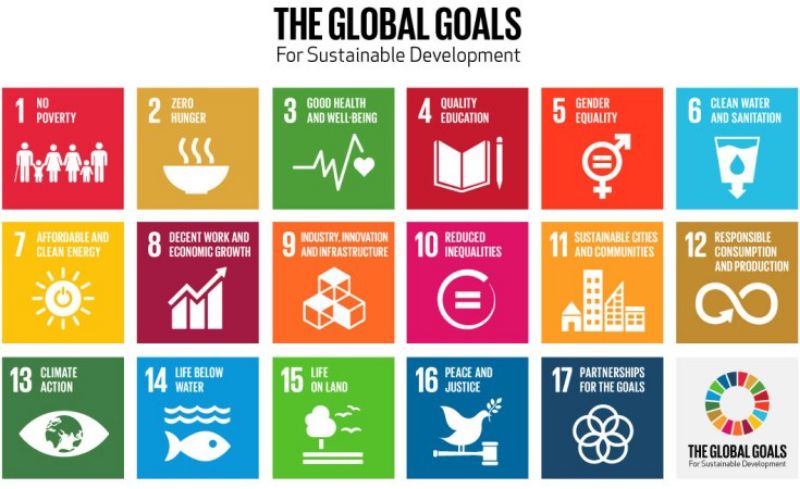
In 2015, the United Nations member states adopted the 2030 Agenda for Sustainable Development known as Sustainable Development goals (SDGs) as a follow-up to the Millennium Development Goals. (MDGs) and expired in 2015.

The UN said the 17 Sustainable Development Goals (SDGs) which is expected to be delivered before 2030 “provides a shared blueprint for peace and prosperity for people and the planet, now and into the future”.

It also said the goals are an urgent call for action by both developed and developing countries in a global partnership.

The SDGs came as a realisation that there have to be strategies in place to address issues such as inequality, climate change, health and education as a response to the big issue of ending poverty.

The 17 MDGs are: 1 No poverty, 2) zero hunger, 3) good health and well-being, 4) quality education, 5) gender equality, 6) clean water and sanitation, 7) affordable and clean energy.

Other are 8) decent work and economic growth, 9) industry, innovation and infrastructure, 10) reduced inequalities, 11) sustainable cities and communities, 12) responsible consumption and production, 13) climate action.

The rest are: 14) life below water, 15) life on land, 16) peace, justice and strong institutions and 17) partnerships for the goals.

Midway into the 2030 deadline, development experts say a combination of factors have left the 2030 Agenda for Sustainable Development out of touch and ineffective.

In the Sustainable Development Goals Report 2022, the UN Department of Economic and Social Affairs said both the SDGs and humanity were in grave danger.

“The confluence of crises, dominated by COVID-19, climate change, and conflicts, are creating spin-off impacts on food and nutrition, health, education, the environment, and peace and security, and affecting all the SDGs”, the report said.

The report also said although progress was made in the area of alleviating poverty, COVID-19 dealt a deadly blow to the goals.

“More than four years of progress in alleviating poverty have been wiped out, pushing 93 million more people worldwide into extreme poverty in 2020.

“An estimated 147 million children also missed more than half of their in-person instruction over the past two years.

“The pandemic also severely disrupted essential health services, derailing hard-won progress on SDG 3,” it said.

But critics are asking if world leaders were helpless in the case of the pandemic derailing progress, what about the derailments as a result of human failures, such as conflicts, inequality and climate inaction?

Mr Abiodun Gbeja, a development expert, said nothing exposed the inequality between the Global South and Global North than the outbreak of COVID-19.

“If we agree that the 17 goals are intertwined then we should agree that if goals 5, 10, 12 and 16 are not achieved it means that world leaders are just paying lip service to the MDGs.

“Remember that at the height of the pandemic when vaccines became available, developed countries mopped everything from the market and left developing countries to scramble for crumbs.

“It becomes clear that some animals are more equal than others, against MDG 10 which is to ‘reduce inequality within and among countries’.

On June 27, the United Nations Conference on Trade and Development (UNCTAD) released the 5th edition of its annual SDG Pulse, a global reference for tracking progress towards achieving the MDGs by 2030.

The report summarised four key takeaways from the agenda.

The first is the soaring debt levels among developing countries, which it said, is holding back progress on many goals.

It said one in three countries worldwide faces a high risk of a fiscal crisis, with developing countries bearing the heaviest debt burden.

The second is that the fight against hunger is losing ground, with funding available per person in a food crisis falling by 30 per cent between 2017 and 2021.

“Despite the world’s surplus of calories, seven in 10 economies import more food than they export. The Middle East and Africa are home to many net-importing nations”, it said.

The third takeaway has to do with climate action and UNCTAD said climate resilience is at risk and vulnerable nations are in danger.

Finally, according to the report, many developing economies continue to grapple with diversifying their trade portfolios.

“In 2021, the 25 nations with the highest trade concentration index were all developing economies, indicating an over-reliance on just a handful of exports – mainly raw materials and commodities”, the report said.

Anu Peltola, UNCTAD’s statistics work head said: “We’ve reached the halfway mark of the 2030 Agenda, and multiple global crises are battering our economies, societies and the planet.”

It is true that globally considerable gains have been recorded in achieving some goals, especially those concerning health and wellbeing as well as inclusion.

However, a country-by-country assessment shows that developing countries still lag behind even in areas where progress has been made.

In Nigeria, for instance, key performance indices show minimal progress in health, gender equality, education and poverty eradication.

For instance, a 2022 UNESCO report noted that approximately 20 million Nigerian individuals of its approximately 200 million population are not enrolled in school, giving it the highest number of out-of-school children in the world.

Another report by UNICEF said Nigeria accounts for the third-highest number of women and girls who have undergone Female Genital Mutilation (FGM).

It further stated that 4.3 million girls are at risk of FGM in 2023, while the number is projected to reach 4.6 million by 2030.

In April 2001, heads of state of African Union countries met and pledged to set a target of allocating at least 15 per cent of their annual budget to improve the health sector.

By 2011, only Rwanda and South Africa had achieved the target on the continent. In April WHO said Nigeria was far from meeting the Abuja Declaration on improving the health sector.

In the 2023 fiscal year, the total budgetary allocation to health is 5.75 per cent, a far cry from the 15 per cent stipulated in the AU declaration.

The World Poverty Clock also reported in its 2023 data that there are 71 million extremely poor Nigerians, making the country the somewhat poverty capital of the world.

Experts argue that the evaluation of data on the SDGs should focus more on individual countries rather than collective progress.

They say although the SDGs have not been a complete failure, it will be difficult to reach their target in 2030 at the present pace.

It is not all gloom and doom. Transferrable technology and immunisation are some of the success stories in developing countries, but they need to be scaled up.

NANFeatures)

Share. Facebook Twitter Pinterest LinkedIn WhatsApp Reddit Tumblr Email
Editor
  • Website

Related Posts

Stop religious blame — tackle Nigeria’s security crisis, By Lukman Raimi

June 7, 2026

Insecurity: Which narrative should we believe: Fulanisation or Islamisation?

June 7, 2026

How Sultan Bello industrial and skills hubs shone at the 3rd SSASASNET conference

June 4, 2026

Leave A Reply Cancel Reply

Inside the AU files: The unanswered questions in Nigeria’s failed 2031 African Games bid

June 9, 2026

Perplexity AI locks in 2028 IPO date, won’t wait for Anthropic or OpenAI to market

June 9, 2026

Key drivers for water utility improvement highlighted at Abuja workshop

June 9, 2026

Kenyan police clash with protesters over U.S. Ebola quarantine center

June 9, 2026
About Us
About Us

ASHENEWS (AsheNewsDaily.com), published by PenPlus Online Media Publishers, is an independent online newspaper. We report development news, especially on Agriculture, Science, Health and Environment as they affect the under-reported rural and urban poor.

We also conduct investigations, especially in the areas of ASHE, as well as other general interests, including corruption, human rights, illicit financial flows, and politics.

Contact Info:
  • 1st floor, Dogon Daji House, No. 5, Maiduguri Road, Sokoto
  • +234(0)7031140009
  • ashenewsdaily@gmail.com
Facebook Twitter Instagram Pinterest
© 2026 All Rights Reserved. ASHENEWS Daily Designed & Managed By DeedsTech

Type above and press Enter to search. Press Esc to cancel.