


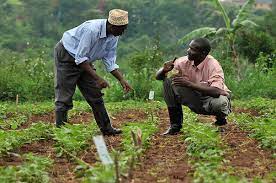
Farmers in Hinna community, Yamaltu/Deba Local Government Area of Gombe State, have suffered heavy losses following erratic rainfall this year.
Zakari Ladan, the community’s head farmer, described the losses in an interview with reporters in Hinna on Monday.
Ladan said low and irregular rainfall had led to poor harvests, affecting most farmers.
He said more than 2,000 farmers in the community had been affected to varying degrees, with some selling or abandoning their farmland for herders to graze their cattle.
He described the 2026 farming season as a major loss for many farmers, who had spent their resources on agricultural inputs without getting the expected returns.
“The erratic rainfall has seriously affected our yields. The rain did not come as expected, and even the little that fell in early October could not salvage the situation.
“Many farmers have left their farmlands for herders to graze their cattle at no cost.
“A small-scale farmer who hoped to harvest between eight and 10 bags of rice cannot boast of even one, while those who usually harvest up to 40 bags are getting only four or five.
“Farming this year has been a huge loss for us. Many of us invested our resources in agricultural inputs, yet got no reasonable yield. We are scared of hunger; we have no hope of what to eat,” he said.
Ladan also lamented that farmers could not afford to hire labourers to harvest their crops because the value of the produce would not cover their wages.
According to him, many farmers had to source money elsewhere to pay the labourers, leaving them in debt.
“Some who invested more than N500,000 may not get up to N300,000, while others have lost more than 80 per cent of their investments.
“Just go to the farms and see the massive damage and impact of climate change. It is really an unpleasant situation for farmers this year,” he said.
Ladan urged governments at all levels and non-governmental organisations (NGOs) to intervene urgently, particularly by supporting irrigation farming, as most people in the community relied solely on agriculture.
Dauda Hassan, a smallholder rice farmer, also urged the government to support farmers with agricultural inputs.
He said erratic rainfall, driven by climate change, had become a serious threat not only to food security but also to farmers’ incomes and livelihoods.
“The way to go is irrigation, since we have a water body in Hinna. The government should support us; we are appealing.
“The government should help us return to the work that puts food on our tables. We do not want to go hungry.
“We need urgent support with inputs and improved seeds so that we can cultivate early in the dry season and harvest early in 2027, to avert a major food crisis in the state and country,” he said.
