


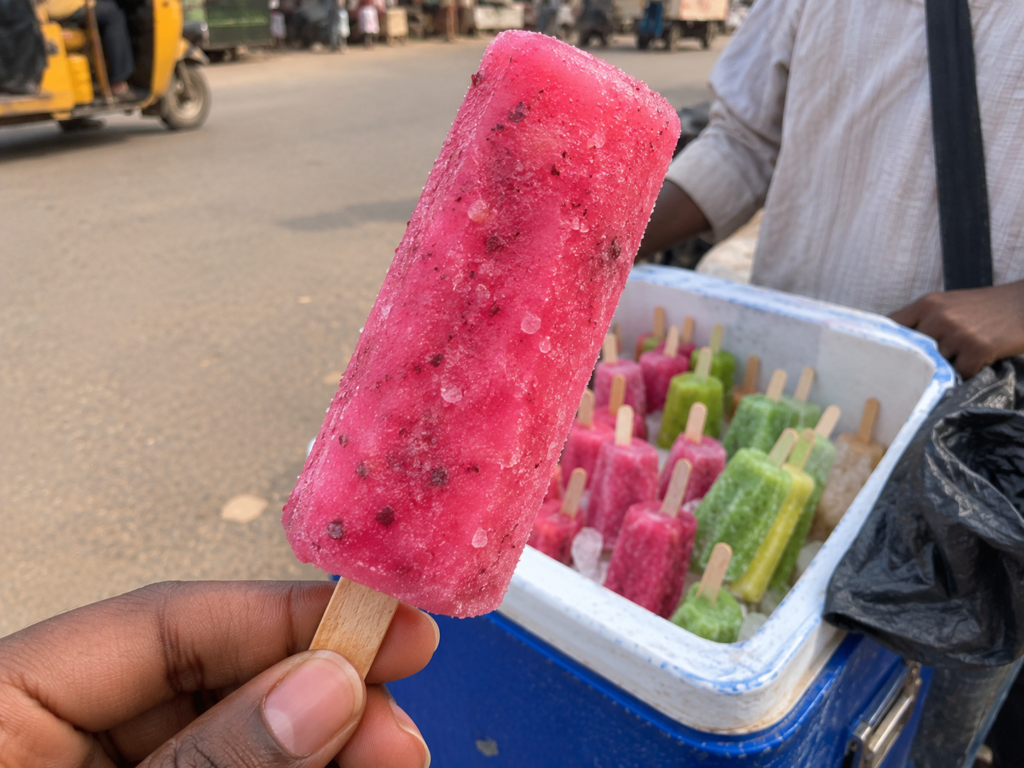
A dietician, Dr Mujahid Faruk of Lucass Hospital in Abuja, has urged Nigerians to exercise caution when buying unlabelled popsicles from roadside vendors, citing concerns about their ingredients, hygiene and safety.
He gave the advice in an interview with reporters in Abuja on Tuesday.
Popsicles are frozen, flavoured treats made from water, sugar, fruit juice, food colouring or other ingredients. They are frozen around wooden sticks for easy handling and consumption.
In Nigeria, locally made popsicles are commonly sold by street hawkers, including vendors who carry coolers containing brightly coloured frozen treats on sticks.
The warning follows a TikTok post alleging that some roadside popsicle sellers use chemicals and saccharin to prepare the treats. The post raised questions about the safety of products sold without identifiable brand names or clear ingredient information.
It also claimed that the products had been banned by the National Agency for Food and Drug Administration and Control (NAFDAC). However, the alleged ban could not be independently verified, highlighting the need for the relevant authorities to clarify the products’ regulatory status.
Faruk said unauthorised ingredients, contaminated water, unsafe food additives and unhygienic preparation methods could pose health risks.
“The effects of chemical exposure depend on the substance involved, the quantity consumed and the duration of exposure,” he said.
Atika Adamu, a resident of the Federal Capital Territory (FCT), also expressed concern about unbranded popsicles after finding a foreign object in one she had bought.
“I bought a popsicle on Friday to consume, only to find a broomstick inside it,” she said.
Consumers have been advised to exercise caution when buying frozen treats from sources where the ingredients, production conditions and storage practices cannot be verified.
The concerns highlight the need for regulatory authorities to investigate the allegations, test suspected products where necessary and provide clear guidance to consumers.
Consumers who suspect a food product is unsafe should report it to the relevant authorities for investigation rather than relying on unverified social media claims.
