


Sokoto, one of the 19 Nigerian states, grappling with challenges in girl-child education, stands to gain significantly from the Adolescent Girls Initiative for Learning and Education (AGILE). This initiative offers numerous benefits, which can transform the educational landscape for girls in the state.
A good start at ensuring this benefit was the choice of a young educationist, Dr. Mansur Isa-Buhari, whose record as an advocate of educational revolution in the state, stands out to the appreciation of all citizens, as the State Project Coordinator.
On July 3, 2024, AGILE organised a Maiden Bi-Annual Media Roundtable tagged “Implementing to Complement” where the coordinator reeled out the project overview and gaps that it seeks to bridge in Sokoto state. “AGILE is a Federal Government project supported by the World Bank, focusing on northern Nigeria to encourage and positively reposition girls’ education and future,” he said while disclosing that since it joined the implementing states lately, it already had renovated 367 junior and senior secondary schools across its 23 LGAs.
“199,921 students have already received scholarships through conditional cash transfers nationwide. Additionally, 6,914 schools have been renovated, and 6,704 WASH facilities have been provided.
“The project has also equipped at least 6,000 girls with skills and digital literacy, impacting around 20 million girls across 18 states,” Isa-Buhari said.
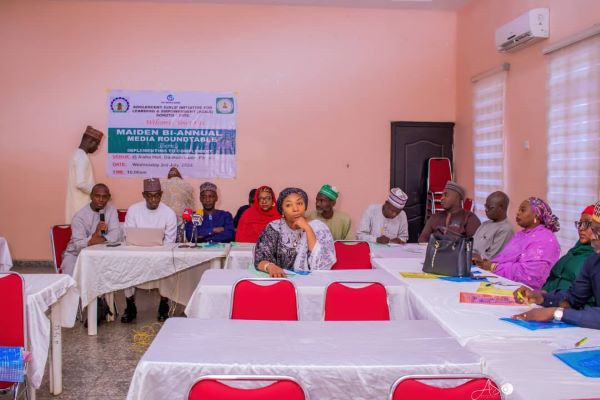
Emphasising the importance of media involvement as a strategy to achieve the project’s objectives, counter misconceptions, and mobilize communities, he said, “The media is a positive mobilizer that can contribute to AGILE’s advocacy approach, helping the girl child and parents accept the project with an open mind.”
He further highlighted the role of religious and community groups, ministries, and agencies in strengthening approaches and achieving the desired outcomes of the project.
Enter the benefits
One major benefit is improved access to education. AGILE has already renovated 367 junior and senior secondary schools in Sokoto. This significant enhancement of school facilities, including classrooms and sanitation, makes the learning environment more conducive. For example, renovated classrooms with adequate seating, lighting, and ventilation can greatly enhance the learning experience and reduce drop-out rates among girls.
Another critical benefit is the provision of scholarships and conditional cash transfers, which offer financial support for families. By easing the financial burden, these measures encourage families to send and keep their daughters in school. For instance, a conditional cash transfer program that provides monthly stipends to families who ensure their daughters attend school regularly can be a powerful incentive for education, countering pressures of child labor or early marriage.

ALSO READ AGILE seeks media partnership for community awareness in Sokoto
AGILE also focuses on skills and digital literacy training, which empowers girls through education. Training in various skills and digital literacy equips them with the knowledge and competencies needed for the modern workforce, thus improving their future employment prospects. Workshops on coding, graphic design, or entrepreneurship, for example, can open new career paths for girls, making them economically independent.
The provision of WASH (Water, Sanitation, and Hygiene) facilities is another vital benefit. With 6,704 WASH facilities provided, girls benefit from improved hygiene, crucial for their health and school attendance, particularly during menstruation. Clean toilets and sanitary pads available at schools can reduce absenteeism among adolescent girls during their menstrual periods.
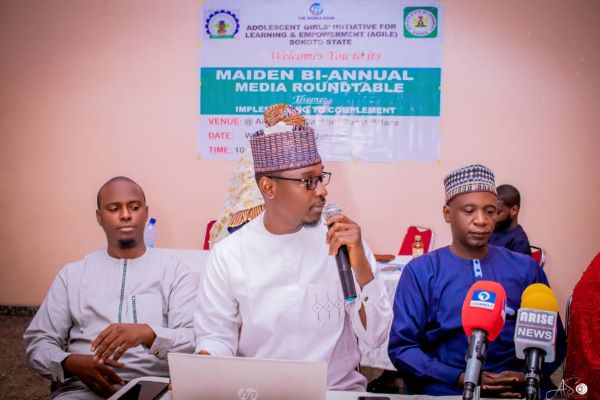
Community engagement and advocacy are essential components of AGILE. By focusing on these areas, AGILE helps shift cultural norms and attitudes towards girls’ education. Involving religious and community leaders can address misconceptions and promote the value of educating girls. Organizing community forums and discussions led by influential local figures who advocate for girls’ education can help change long-standing beliefs and practices.
Support for livelihoods is another benefit. By providing training in life skills and entrepreneurship, AGILE helps girls and their families develop alternative livelihoods, reducing economic barriers to education. For instance, teaching girls how to start small businesses, such as tailoring or baking, can provide them with income-generating skills, fostering economic resilience.
Enhanced policy implementation is also a critical benefit. AGILE supports local government agencies and schools in implementing policies that promote girls’ education, ensuring sustainability and long-term impact. Capacity-building programs for school administrators and teachers, for example, can improve the quality of education and create a supportive environment for girls.
Finally, AGILE employs robust monitoring and evaluation frameworks to ensure that interventions are effective and adjusted as needed to meet the specific challenges of Sokoto State. Regular assessments of school attendance and performance data can help identify and address issues promptly, ensuring that the initiatives yield the desired outcomes.
Therefore, Sokoto State stands to benefit from AGILE through improved educational infrastructure, financial support for families, skills training, enhanced hygiene facilities, community engagement, economic empowerment, strengthened policy implementation, and effective monitoring and evaluation. These multifaceted interventions collectively aim to overcome the barriers to girl child education and pave the way for a brighter future for girls in the state.
