

• Home
  • Agric
  • Sci & Tech
  • Health
  • Environment
  • Hausa News
  • More
    • Business/Banking & Finance
    • Politics/Elections
    • Entertainments & Sports
    • International
    • Investigation
    • Law & Human Rights
    • Africa
    • ACCOUNTABILITY/CORRUPTION
    • Hassan Gimba
    • Column
    • Prof. Jibrin Ibrahim
    • Prof. M.K. Othman
    • Defense/Security
    • Education
    • Energy/Electricity
    • Entertainment/Arts & Sports
    • Society and Lifestyle
    • Food & Agriculture
    • Health & Healthy Living
    • International News
    • Interviews
    • Investigation/Fact-Check
    • Judiciary/Legislature/Law & Human Rights
    • Oil & Gas/Mineral Resources
    • Press Freedom/Media/PR/Journalism
    • General News
    • Presidency
  • About Us
    • Contact Us
    • Board Of Advisory
    • Privacy Policy
    • Ethics Policy
    • Teamwork And Collaboration Policy
    • Fact-Checking Policy
    • Advertising
  • Media OutReach Newswire
    • Wire News
  • The Stories
Facebook Twitter Instagram
Trending
  • FG pledges support for IOM climate migration investment initiative
  • Lagos onboards 19 accelerators for N10bn LASMECO micro enterprise scheme
  • Lagos pushes mandatory health insurance, PPPs to close N100bn healthcare gap
  • The Muslim 500 ranks Sultan Abubakar 17th World’s Most Influential for 2026
  • Ododo charges NYSC members on discipline, unity
  • Only 30% of Nigerian farmers use mechanisation – AFAN
  • Trump says Iran ceasefire on life support
  • WHO: Countries must not strand people at sea
Facebook Twitter Instagram YouTube
AsheNewsAsheNews
  • Home
  • Agric

    Only 30% of Nigerian farmers use mechanisation – AFAN

    May 12, 2026

    Ebonyi lecturer calls for massive palm tree plantations

    May 12, 2026

    How strategic partnerships will sustain blue economy in West Africa, by Abdallah el-Kurebe

    May 11, 2026

    Association trains maize, soybean farmers on financial, digital literacy

    May 10, 2026

    Uganda’s new anti-tick vaccine a revolution for African agriculture — Scientists

    May 9, 2026
  • Sci & Tech

    Moniepoint deepens investment in women’s tech talent development

    May 11, 2026

    Bauchi intensifies science school enrolment to boost health workforce

    May 11, 2026

    Association calls for stronger penalties to protect telecom infrastructure

    May 8, 2026

    Hemingway’s Safaris Africa, LCCI host AI robotics bootcamp

    May 8, 2026

    Nigeria ranks among top AI-adopting nations

    May 7, 2026
  • Health

    Lagos pushes mandatory health insurance, PPPs to close N100bn healthcare gap

    May 12, 2026

    WHO: Countries must not strand people at sea

    May 12, 2026

    WHO releases names of 6 countries with 8 cases of hantavirus [FULL LIST]

    May 12, 2026

    Malaria prevalence in Lagos drops to 2% from 15%

    May 12, 2026

    Japa syndrome worsens Nigeria’s healthcare crisis

    May 11, 2026
  • Environment

    FG pledges support for IOM climate migration investment initiative

    May 12, 2026

    NEMA receives 170 stranded Nigerians repatriated from Libya

    May 11, 2026

    NIESV Lagos urges infrastructure upgrade to curb rising rents

    May 11, 2026

    Oborevwori pledges more jobs through infrastructure projects

    May 11, 2026

    EU-backed WASOP launches new blue economy initiatives at Africa forward summit

    May 11, 2026
  • Hausa News

    Otti plans 250-room 5-star hotel in Umuahia

    April 11, 2026

    Anti-quackery task force seals 4 fake hospitals in Rivers

    August 29, 2025

    [BIDIYO] Yadda na lashe gasa ta duniya a fannin Ingilishi – Rukayya ‘yar shekara 17

    August 6, 2025

    A Saka Baki, A Sasanta Saɓani Tsakanin ‘Yanjarida Da Liman, Daga Muhammad Sajo

    May 21, 2025

    Dan majalisa ya raba kayan miliyoyi a Funtuwa da Dandume

    March 18, 2025
  • More
    1. Business/Banking & Finance
    2. Politics/Elections
    3. Entertainments & Sports
    4. International
    5. Investigation
    6. Law & Human Rights
    7. Africa
    8. ACCOUNTABILITY/CORRUPTION
    9. Hassan Gimba
    10. Column
    11. Prof. Jibrin Ibrahim
    12. Prof. M.K. Othman
    13. Defense/Security
    14. Education
    15. Energy/Electricity
    16. Entertainment/Arts & Sports
    17. Society and Lifestyle
    18. Food & Agriculture
    19. Health & Healthy Living
    20. International News
    21. Interviews
    22. Investigation/Fact-Check
    23. Judiciary/Legislature/Law & Human Rights
    24. Oil & Gas/Mineral Resources
    25. Press Freedom/Media/PR/Journalism
    26. General News
    27. Presidency
    Featured
    Recent

    FG pledges support for IOM climate migration investment initiative

    May 12, 2026

    Lagos onboards 19 accelerators for N10bn LASMECO micro enterprise scheme

    May 12, 2026

    Lagos pushes mandatory health insurance, PPPs to close N100bn healthcare gap

    May 12, 2026
  • About Us
    1. Contact Us
    2. Board Of Advisory
    3. Privacy Policy
    4. Ethics Policy
    5. Teamwork And Collaboration Policy
    6. Fact-Checking Policy
    7. Advertising
    Featured
    Recent

    FG pledges support for IOM climate migration investment initiative

    May 12, 2026

    Lagos onboards 19 accelerators for N10bn LASMECO micro enterprise scheme

    May 12, 2026

    Lagos pushes mandatory health insurance, PPPs to close N100bn healthcare gap

    May 12, 2026
  • Media OutReach Newswire
    • Wire News
  • The Stories
AsheNewsAsheNews
Home»Special Reports/Supplements»REPORT: Why Niger’s visually impaired still feel neglected
Special Reports/Supplements

REPORT: Why Niger’s visually impaired still feel neglected

REPORT: Why Niger’s visually impaired still feel neglected
EditorBy EditorSeptember 30, 2023Updated:September 30, 2023No Comments6 Mins Read
Share
Facebook Twitter LinkedIn Pinterest Email

By Fatima Muhammad

The data on disability in Nigeria is scanty. However, the 2018 Nigeria Demographic and Health Survey suggests that seven percent of all household members in the country have some form of disability.

The 2007 Nigerian National Blindness and Visual Impairment survey estimates that 4.25 million adults between the ages of 18 and 64 years are living with vision impairment.

The survey also said that 3.15 million children are visually impaired in Nigeria.

Out of this number, 50 percent die within one or two years of becoming blind, the survey says.

Despite these significant statistics, persons with disabilities (PWDs) are still struggling to have their rights upheld.
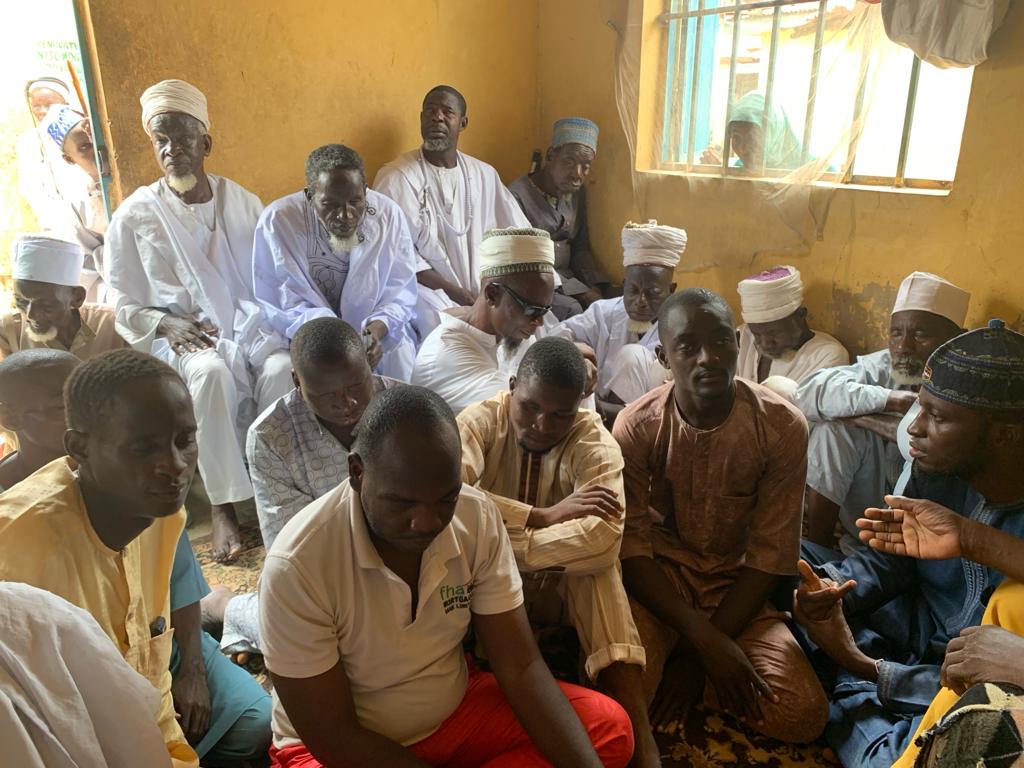
Some visually impaired persons in Minna, Niger state

The 2020 disability inclusion report in Nigeria by the World Bank reveals that persons with disabilities are faced with a lack of access to basic services motivated by the non-existent or non-implementation of existing legislation.

More worrisome is that the report projects an increase in disabilities in Nigeria owing to ongoing conflicts and insecurity occasioned by the activities of insurgents in some parts of the country.

Despite this projected increase, the lives of persons with disabilities remain heavily marred by stigma and discrimination, with socioeconomic barriers hindering the quest for inclusion.

Aside from the social constructs that demean disability, negative attitudes within the family and society make it a herculean task for persons with disabilities to reach their potential.

In an interview with ASHENEWS, the community head of the blind people’s colony in Minna, the Niger state capital, Rabiu Abdullahi attributes the challenges faced by PWDs to ignorance and an age-long attitude of neglect by society.

“I woke up one day and I realized that I couldn’t see. It started with a headache and I went to the hospital several times but it was already too late,” said a 35-year-old Mudassir Saadu who lost his sight in 2006.

Mudassir, who was a secondary school student at that time, had to drop out due to this incident.

He would later enroll in the Nigerian Farmcraft Centre for the Blind, Lagos state where he earned a diploma in rehabilitation.

“Our disabilities have become barriers to us not because of our inability to see but because the government has neglected us and refused to give us opportunities to live better lives.

“As an abled person, the government has not neglected you, it thinks about your welfare. Why then should a visually impaired person be sidelined when he needs support the most? You can carry out any job you want, but for us, our lack of vision can limit us,” he told ASHENEWS.

Educational barrier, major inequity faced by Niger’s disabled youth

Many young people with disabilities in Niger state do not attend school, Saadu said, while attributing it to financial constraints and a lack of awareness of the value of education to PWDs.

“The greatest challenge for young people with disabilities here is the lack of opportunities to get an education.

“Young people with disabilities value education. We want to go to school just like everybody else, we just don’t get scholarships to further our education as other people do,” Saadu said.

The effect of this is increased unemployment among young people and in the long run, increased disparity which further widens existing inequalities.

The Disability Inclusion in Nigeria report by the World Bank Group documented that in the case where they get an education, not only do visually impaired students feel left out of the learning process, but their education is also hindered by a lack of access to learning materials.

The report also said that students with disabilities in tertiary institutions do not have special support to aid their educational pursuits.

This, the report said is further aggravated by a shortage of qualified specialists and a lack of assistive devices.

Our rights not recognized – Saadu

Although Mudassir was able to beat the odds to get an education, he has been unable to get a job almost 10 years after he secured a diploma.

He believes that most employers are biased towards persons with disabilities due to the notion that PWDs can not carry out basic tasks.

“I don’t think there is enough understanding between the abled and the disabled.

“For instance, there is this misunderstanding by society when we talk about employment for persons with disabilities.

“We hear responses like what can a blind man do and it’s likes when in reality, we have a lot to offer. I know a lot of PWDs who were lucky to receive an education and are doing exceptionally well in their various fields of work.”

According to the Nigeria disability inclusion report, a lot of employers do not see beyond a person’s disability. This attitude relegates PWDs to the back of the line in a society where thousands are jostling for jobs that are barely there.

If they get hired, most PWDs have to contend with an unfriendly working environment due to a lack of accessible structures, devices, or unfriendly coworkers.

Way-forward

The Niger State House of Assembly had in 2014 gazetted a law to establish a commission for the welfare, protection, and rehabilitation of persons with disability and other connected purposes. As of 2023, the commission was yet to come to fruition.

On another hand, the federal government’s passage of the Discrimination Against Persons with Disabilities (Prohibition) Act 2018 despite the accolades that followed its passage has seen little on the side of implementation.

Policymakers must therefore recognize the importance of breaking down the existing barriers for people like Mudassir who already suffer marginalization due to their impairments.

In the face of persisting poverty and rising cost of living, we must begin to see policies that provide practical solutions to the challenges they face.

Structural barriers such as the refusal of employers to recognize persons with disabilities must be addressed.

Most importantly, the government must make sure it comes up with data on persons with disabilities. This will ensure that decisions aren’t made based on assumptions but based on the reality of things.

There must also be concerted efforts to raise awareness to debunk stereotypes around disabilities.

Also as suggested by the World Bank, Nigeria’s agenda for poverty reduction will continue to be hindered by the inequalities faced by persons with disabilities.

This report, which is among the requirements for the Disability and Inclusion in the Media Fellowship 2023 is supported by the Africa Foundation for Young Media Professionals.

Africa Foundation for Young Media Professionals National Demographic Health Survey Visually impaired persons
Share. Facebook Twitter Pinterest LinkedIn WhatsApp Reddit Tumblr Email
Editor
  • Website

Related Posts

Safer Internet Day: From bans in Europe to building IQ in Nigeria – How we can protect our children

February 10, 2026

World Cancer Day: Confronting the challenges of cancer care and diagnosis in Nigeria

February 4, 2026

ANALYSIS: Sokoto’s ₦758bn ‘zero-debt’ gamble: Understanding the 2026 budget priorities

January 23, 2026

Leave A Reply Cancel Reply

FG pledges support for IOM climate migration investment initiative

May 12, 2026

Lagos onboards 19 accelerators for N10bn LASMECO micro enterprise scheme

May 12, 2026

Lagos pushes mandatory health insurance, PPPs to close N100bn healthcare gap

May 12, 2026

The Muslim 500 ranks Sultan Abubakar 17th World’s Most Influential for 2026

May 12, 2026
About Us
About Us

ASHENEWS (AsheNewsDaily.com), published by PenPlus Online Media Publishers, is an independent online newspaper. We report development news, especially on Agriculture, Science, Health and Environment as they affect the under-reported rural and urban poor.

We also conduct investigations, especially in the areas of ASHE, as well as other general interests, including corruption, human rights, illicit financial flows, and politics.

Contact Info:
  • 1st floor, Dogon Daji House, No. 5, Maiduguri Road, Sokoto
  • +234(0)7031140009
  • ashenewsdaily@gmail.com
Facebook Twitter Instagram Pinterest
© 2026 All Rights Reserved. ASHENEWS Daily Designed & Managed By DeedsTech

Type above and press Enter to search. Press Esc to cancel.