

• Home
  • Agric
  • Sci & Tech
  • Health
  • Environment
  • Hausa News
  • More
    • Business/Banking & Finance
    • Politics/Elections
    • Entertainments & Sports
    • International
    • Investigation
    • Law & Human Rights
    • Africa
    • ACCOUNTABILITY/CORRUPTION
    • Hassan Gimba
    • Column
    • Prof. Jibrin Ibrahim
    • Prof. M.K. Othman
    • Defense/Security
    • Education
    • Energy/Electricity
    • Entertainment/Arts & Sports
    • Society and Lifestyle
    • Food & Agriculture
    • Health & Healthy Living
    • International News
    • Interviews
    • Investigation/Fact-Check
    • Judiciary/Legislature/Law & Human Rights
    • Oil & Gas/Mineral Resources
    • Press Freedom/Media/PR/Journalism
    • General News
    • Presidency
  • About Us
    • Contact Us
    • Board Of Advisory
    • Privacy Policy
    • Ethics Policy
    • Teamwork And Collaboration Policy
    • Fact-Checking Policy
    • Advertising
  • Media OutReach Newswire
    • Wire News
  • The Stories
Facebook Twitter Instagram
Trending
  • CITAD urges more girls in tech
  • NCC to upgrade 12,000 towers, compensate users
  • Lagos cracks down on E-waste
  • Nigeria achieves 91% aviation safety rating
  • Nigeria must shift from reform to investment, NESG says
  • Naira holds steady at N1,582/€ as Euro weakens amid energy, growth pressures
  • Girls encouraged to lead in AI, digital economy
  • Experts call for boost in local snail production
Facebook Twitter Instagram YouTube
AsheNewsAsheNews
  • Home
  • Agric

    Experts call for boost in local snail production

    April 23, 2026

    [EXPLAINER] Bottled water under the microscope: Why some brands stand out

    April 23, 2026

    Food prices remain elevated despite N7.65trn imports, FG interventions

    April 23, 2026

    Shettima inaugurates Kano grain facility

    April 23, 2026

    Lawmakers back post-harvest innovation

    April 23, 2026
  • Sci & Tech

    CITAD urges more girls in tech

    April 23, 2026

    NCC to upgrade 12,000 towers, compensate users

    April 23, 2026

    Girls encouraged to lead in AI, digital economy

    April 23, 2026

    RMRDC launches data-driven raw materials platform to boost investment, industrial growth

    April 21, 2026

    Apple names John Ternus as new CEO to lead $4trn tech giant

    April 21, 2026
  • Health

    West Africa advances lassa fever vaccine readiness

    April 23, 2026

    ARD-KWASUTH begins 48-hour warning strike over assault on doctor

    April 23, 2026

    Nigeria strengthens response to SGBV

    April 23, 2026

    NMA suspends national president

    April 23, 2026

    Sightsavers trains health workers in sign language

    April 23, 2026
  • Environment

    Lagos cracks down on E-waste

    April 23, 2026

    Nigeria achieves 91% aviation safety rating

    April 23, 2026

    FG seeks $516m external financing for Sokoto–Badagry superhighway

    April 23, 2026

    NGE warns NBC over sanction threat

    April 22, 2026

    Don urges geographers to tackle forest crisis

    April 21, 2026
  • Hausa News

    Otti plans 250-room 5-star hotel in Umuahia

    April 11, 2026

    Anti-quackery task force seals 4 fake hospitals in Rivers

    August 29, 2025

    [BIDIYO] Yadda na lashe gasa ta duniya a fannin Ingilishi – Rukayya ‘yar shekara 17

    August 6, 2025

    A Saka Baki, A Sasanta Saɓani Tsakanin ‘Yanjarida Da Liman, Daga Muhammad Sajo

    May 21, 2025

    Dan majalisa ya raba kayan miliyoyi a Funtuwa da Dandume

    March 18, 2025
  • More
    1. Business/Banking & Finance
    2. Politics/Elections
    3. Entertainments & Sports
    4. International
    5. Investigation
    6. Law & Human Rights
    7. Africa
    8. ACCOUNTABILITY/CORRUPTION
    9. Hassan Gimba
    10. Column
    11. Prof. Jibrin Ibrahim
    12. Prof. M.K. Othman
    13. Defense/Security
    14. Education
    15. Energy/Electricity
    16. Entertainment/Arts & Sports
    17. Society and Lifestyle
    18. Food & Agriculture
    19. Health & Healthy Living
    20. International News
    21. Interviews
    22. Investigation/Fact-Check
    23. Judiciary/Legislature/Law & Human Rights
    24. Oil & Gas/Mineral Resources
    25. Press Freedom/Media/PR/Journalism
    26. General News
    27. Presidency
    Featured
    Recent

    CITAD urges more girls in tech

    April 23, 2026

    NCC to upgrade 12,000 towers, compensate users

    April 23, 2026

    Lagos cracks down on E-waste

    April 23, 2026
  • About Us
    1. Contact Us
    2. Board Of Advisory
    3. Privacy Policy
    4. Ethics Policy
    5. Teamwork And Collaboration Policy
    6. Fact-Checking Policy
    7. Advertising
    Featured
    Recent

    CITAD urges more girls in tech

    April 23, 2026

    NCC to upgrade 12,000 towers, compensate users

    April 23, 2026

    Lagos cracks down on E-waste

    April 23, 2026
  • Media OutReach Newswire
    • Wire News
  • The Stories
AsheNewsAsheNews
Home»Health & Healthy Living»UNICEF says 186,452 children in Sokoto, Zamfara, Kebbi unvaccinated as at Dec. 2022
Health & Healthy Living

UNICEF says 186,452 children in Sokoto, Zamfara, Kebbi unvaccinated as at Dec. 2022

UNICEF says 186,452 children in Sokoto, Zamfara, Kebbi unvaccinated as at Dec. 2022
NewsdeskBy NewsdeskNovember 12, 2023Updated:December 16, 2023No Comments5 Mins Read
Share
Facebook Twitter LinkedIn Pinterest Email

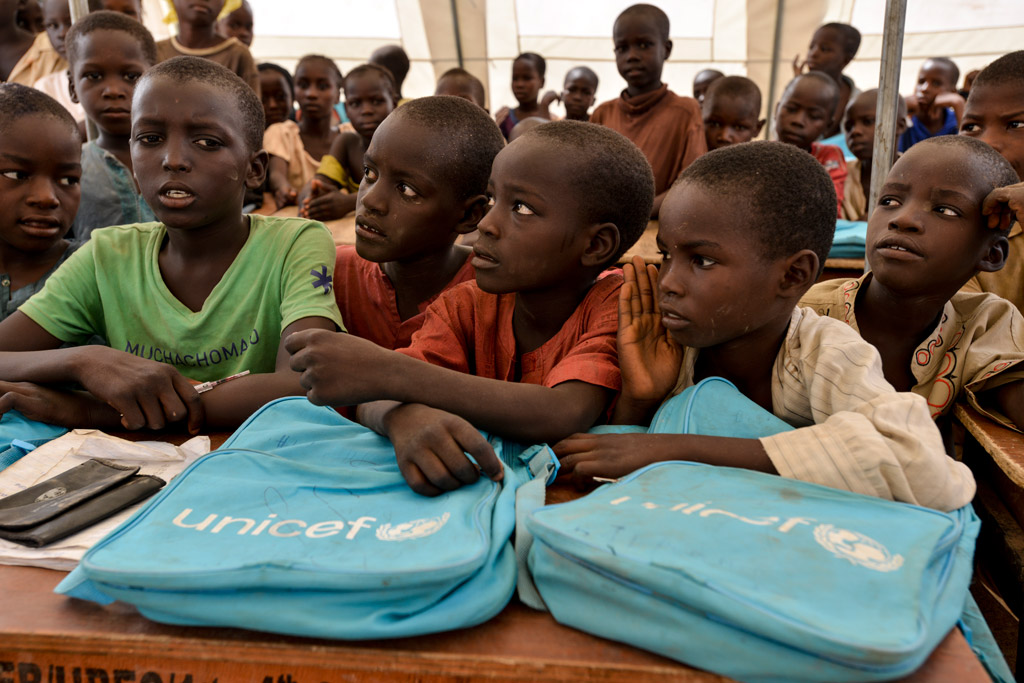
The UN Children’s Fund (UNICEF) says 189,452 children in Sokoto, Zamfara and Kebbi states did not receive certain vaccines as at December 2022, referring to them as zero-dose children.

This is as Nigeria makes up 2.2 million zero dose of the 48 million children around the globe who did not receive a single regular dose.

The Health Specialist, UNICEF Sokoto Field Office, Dr. Danjuma Nehemiah, disclosed this on Sunday in Sokoto during a two-day Media Dialogue on Routine Immunisation and the Zero-Dose campaign.

The dialogue was organized by UNICEF, in collaboration with the primary healthcare development agencies of Kebbi, Sokoto and Zamfara.

Zero-dose refers to children who did not receive a single dose of antigens they should have taken at their age to give them protection from vaccine-preventable diseases.

The health specialist, therefore, said immunization is a key priority for the next five years.

He added that “in spite of decades of progression to increase access to immunization in lower-income countries, at least 12.4 million children still go without basic routine vaccines every year.

“UNICEF is now focusing on reaching these zero-dose children because zero-dose children account for nearly half of all vaccine-preventable deaths.”

He, however, said that the goal is to reduce the number of zero-dose children by 25 per cent by 2025, and by 50 per cent by 2030, which would also mark the closing of the UN Sustainable Development Goals (SDGs).

Giving a breakdown of the figures, Nehemiah said that Sokoto accounts for 122,015 zero dose children in 13 local government areas, Zamfara, with 47,085 in six areas and 17,352 zero dose children in three local government areas.

“Some of the indicators show that with the way we are going, it will take so many years for us to achieve our target.

“If after every five years you are achieving three per cent increase only, then it will take so many years to reach the 85 per cent target expected for routine immunization coverage.”

Nehemiah said that Kebbi has achieved more than three-fold improvement over the two other states due to intervention that was provided some years back by the European Union, where a lot of outreaches were done in hard-to-reach communities.

Citing reasons some gave for nonvaccinating the children, he listed lack of knowledge or information, lack of time or other family issues and mistrust or fear of side reactions.

Others are religious beliefs, misinformation and rumours, vaccination fatigue (too many rounds), inability to understand the benefits of vaccination, absence of vaccine card and service delivery issues such as distance.

He added that to address the non-compliance, continuous advocacy and engagements at all levels are important, as well as continuous engagement of community structures to promote the benefits of immunization.

He said that reframing messages to communicate the benefits of immunization to different target audience was also essential.

He stressed the need to reach communities with zero dose children, saying “these unprotected communities are not only potential epicentres of disease outbreaks, but they are also often deprived of other basic services and suffer from entrenched inequities.

“This means that collaboration across government Ministries, Departments and Agencies and civil society could bring benefits far beyond immunization alone.

“By working together, we have a chance to leverage all our strengths to reach these communities with everything they need for a healthy, successful life, from nutrition and education to clean water to immunization.”

The UNICEF Chief of Field Office for Sokoto, Dr Maryam Darwesh Sa’id, said immunization is the most cost-effective, high-impact intervention for dealing with vaccine-preventable diseases, especially in children under five years.

Represented by the Health Manager, UNICEF Sokoto Field Office, Dr. Shamina Sharmin, she said Nigeria had made progress in immunization, with national Routine Immunization (RI) coverage of children receiving all three doses of the pentavalent vaccine at 57 per cent, citing the National Immunization Coverage Survey (NICS) 2021.

However, she said, the completeness of RI coverage stands at 36 per cent, while for Northwest Nigeria, the figure is only 25 per cent.

“Furthermore, recent data from UNICEF’s flagship report, the State of the World Children’s Report (SOWC) 2023, lists Nigeria as one of the countries with highest zero-dose children.

 “According to the report, out of the 67 million children who missed routine vaccination between 2019 and 2022, 48 million didn’t receive a single regular vaccine.

“As of the end of 2021, India and Nigeria had the most significant numbers of zero-dose children.”

For the Director, Public Health, Sokoto State Ministry of Health, Dr. Abdulrahaman Ahmad, the three Northwestern states have now become areas of Intractable Transmission (AIT).

This, he said, is because the states are battling high level of zero-dose immunization and high level of vaccine preventable diseases.

He decried the high rate of rejection of immunization in the states, blaming it on  ignorance.

Ahmad, however, said that the three states need continuous public enlightenment on the importance of taking the life saving interventions to ensure that children are guarded against vaccine preventable diseases.

Healthcare India Kebbi SDGs UNICEF Zamfara
Share. Facebook Twitter Pinterest LinkedIn WhatsApp Reddit Tumblr Email
Newsdesk
  • Website

Related Posts

West Africa advances lassa fever vaccine readiness

April 23, 2026

ARD-KWASUTH begins 48-hour warning strike over assault on doctor

April 23, 2026

Nigeria strengthens response to SGBV

April 23, 2026

Leave A Reply Cancel Reply

CITAD urges more girls in tech

April 23, 2026

NCC to upgrade 12,000 towers, compensate users

April 23, 2026

Lagos cracks down on E-waste

April 23, 2026

Nigeria achieves 91% aviation safety rating

April 23, 2026
About Us
About Us

ASHENEWS (AsheNewsDaily.com), published by PenPlus Online Media Publishers, is an independent online newspaper. We report development news, especially on Agriculture, Science, Health and Environment as they affect the under-reported rural and urban poor.

We also conduct investigations, especially in the areas of ASHE, as well as other general interests, including corruption, human rights, illicit financial flows, and politics.

Contact Info:
  • 1st floor, Dogon Daji House, No. 5, Maiduguri Road, Sokoto
  • +234(0)7031140009
  • ashenewsdaily@gmail.com
Facebook Twitter Instagram Pinterest
© 2026 All Rights Reserved. ASHENEWS Daily Designed & Managed By DeedsTech

Type above and press Enter to search. Press Esc to cancel.