


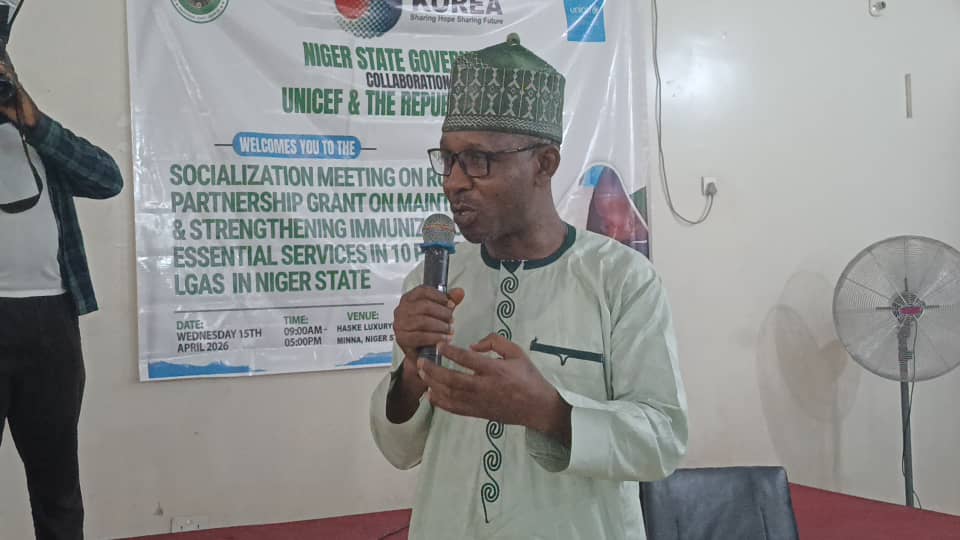
Niger State Government has intensified efforts to close the immunisation gap (also known as zero-dose) among children, with renewed support from the Republic of Korea and the United Nations Children’s Fund (UNICEF).
The state government is targeting ten local government areas over the next eight months with the available support.
The initiative, unveiled during a socialisation meeting on the ROK–UNICEF partnership grant, focuses on sustaining and strengthening immunisation and essential health services in communities identified with high numbers of zero-dose children.
Commissioner for Health, Dr. Murtala Bagana who was represented by the Permanent Secretary of the ministry, Dr. Abdullahi Imam, attributed the rising number of unvaccinated children to insecurity and the difficulty in accessing remote settlements.
He noted that these challenges have continued to limit outreach efforts across several parts of the state.
He said, “It is not enough to plan for zero-dose. We must plan so that there will be no zero-dose at all, because every child who is not immunised is exposed and poses a risk to others.”
He urged the benefiting LGAs which are Bida, Chanchaga, Edati, Gurara, Katcha, Kontagora, Mariga, Rafi, Suleja and Wushishi to take full ownership of the programme by strengthening routine immunisation and expanding outreach services both at health facilities and within communities.
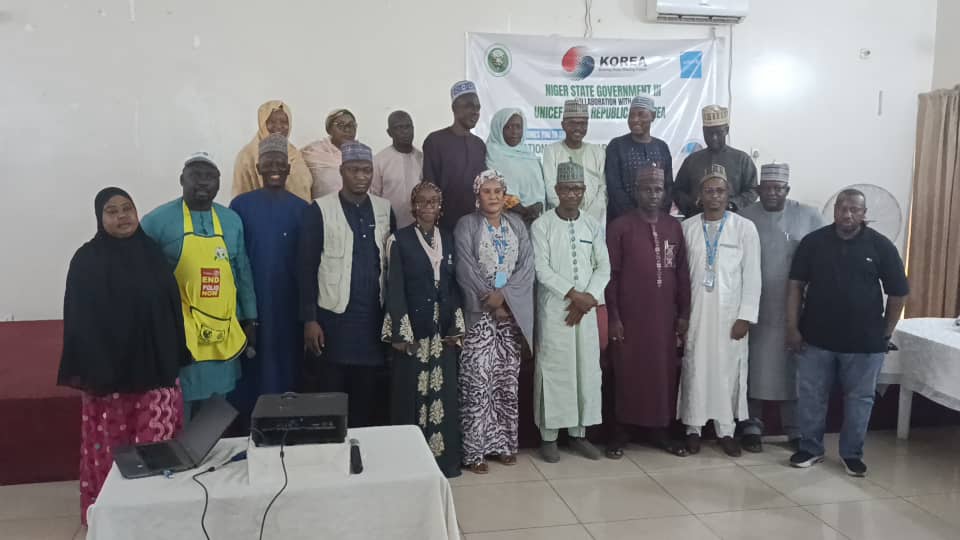
Also speaking, the Executive Director of the Niger State Primary Health Care Development Agency, Dr. Inuwa Junaidu, said the state’s geographical location and security concerns, particularly around neighbouring states, have contributed to the challenge.
According to him, “We carried out a rapid assessment to identify the LGAs contributing most to the zero-dose burden. With support from the Korean government and UNICEF, we are working to ensure these children are identified and vaccinated within the next eight months.”
Junaidu added that the programme will focus on identifying, enumerating and vaccinating zero-dose children within the implementation period, with the aim of significantly reducing the burden across the state.
In a goodwill message, UNICEF Health Specialist from the Kaduna Field Office, Dr. Ahmed Tsofo, reaffirmed the organisation’s commitment to supporting the state throughout the project. “UNICEF will continue to stand with the state to ensure the success of this intervention.” he said.
Tsofo noted that Nigeria currently has about 2.1 million zero-dose children which according to him is the highest globall with Niger among the six most affected states.
“The gaps in immunisation coverage and recurring outbreaks of vaccine-preventable diseases such as diphtheria, measles and cholera are key reasons for this support. However, insecurity has continued to hinder access to vulnerable children.” he expounded.
