


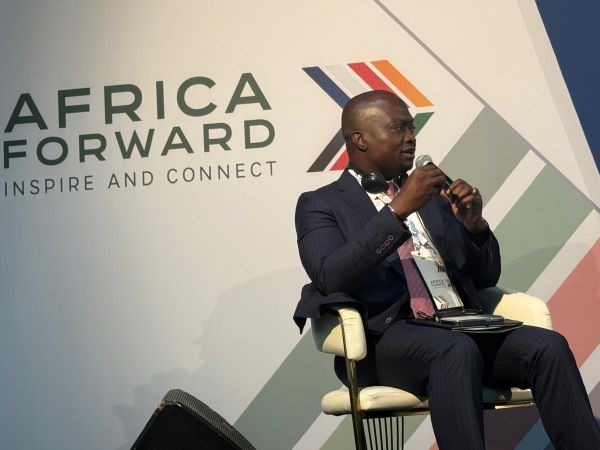
As West Africa intensifies efforts to harness the economic potential of its oceans and coastal resources, concerns around climate change, illegal fishing, maritime insecurity, and sustainable financing continue to shape discussions on the future of the region’s blue economy. In this interview with ASHENEWS Founder and Editor-in-Chief, Abdallah el-Kurebe, the Director of the Department of Sustainable Development Finance (DFDD) at Banque Ouest Africaine de Développement, Moubarak Moukaila, speaks on the strategic role of the €59 million West Africa Sustainable Ocean Programme (WASOP), regional cooperation, climate resilience, innovative financing, and how institutions such as BOAD are positioning sustainable ocean governance as a driver of economic growth, regional integration, and long-term stability across West Africa. EXCERPTS:
How can West African countries balance aggressive blue economy expansion with the urgent need to protect marine ecosystems and coastal biodiversity?
Blue economy expansion is precisely about balancing inclusive economic growth with sustainable resource management. Countries need appropriate legal and policy frameworks to ensure that the prosperity of blue economy sectors contributes to protecting natural capital rather than depleting it.
It is also critical to set up financial instruments dedicated to marine and coastal ecosystem preservation and restoration. If we give value to ecosystems because they are a source of growth, sustainable aquaculture or eco-tourism, for example, then it is a win-win deal, good for the local economy and for biodiversity.
At BOAD, we have translated this philosophy into concrete financing commitments: 25% of our overall financing envelope is now dedicated to climate resilience, including coastal and marine ecosystem protection. We channel these resources through our four multilateral climate accreditations, with the Green Climate Fund (GCF), the Global Environment Facility (GEF), the Adaptation Fund, and the Loss and Damage Fund (FRLD), which gives us access to concessional instruments specifically designed for ecosystem-based adaptation and sustainable ocean investments.
What mechanisms are being put in place to ensure that the €59 million EU-backed WASOP initiative translates into measurable economic benefits for coastal communities, especially youth and small-scale fishers?
West Africa Sustainable Ocean Programme (WASOP) is a genuinely ambitious initiative, and the €59 million EU backing sends a strong signal. But the real question is: how does that translate into tangible benefits for a small-scale fisher in Dakar or a young woman in a coastal community in Ghana?
ALSO READ How strategic partnerships will sustain blue economy in West Africa, by Abdallah el-Kurebe
On the governance side, Pillar 1 focuses on four key priorities: reducing IUU fishing, promoting science-based management of shared small pelagic stocks, strengthening regional fisheries governance, and empowering artisanal fisheries, which are the backbone of food security and livelihoods across the region. IUU fishing deprives West Africa of billions of dollars annually: tackling it is not just an environmental issue; it is an economic and social emergency.
On the ecosystem side, Pillar 3, implemented by IUCN, aims to develop innovative tools for the management of marine protected areas, including community-based protected areas to secure both ecosystem protection and sustainable economic revenue for coastal communities. The €10 million small grants mechanism targets local initiatives with high replication potential. But funding alone is not enough: youth and small-scale fishers must be active partners in governance, not passive beneficiaries.
From BOAD’s side, our response operates on two complementary levels. At the financing level, we dedicate 45% of our resources to inclusive social and economic progress, covering livelihoods, food security, rural infrastructure, and MSME support along coastal value chains, using blended finance to combine concessional and commercial capital. At the upstream level, we offer the Fonds d’Études Climat (FEC), a facility that finances climate feasibility studies at 0% interest for sovereign borrowers, enabling coastal communities and states to design bankable blue economy projects that meet the eligibility standards of GCF, GEF, the Adaptation Fund, and the FRLD.
Given increasing concerns over maritime insecurity, piracy, illegal fishing, and trafficking in the Gulf of Guinea, how can sustainable blue economy initiatives be aligned with regional maritime security frameworks?
The Gulf of Guinea’s future hinges on recognizing that security and sustainability are not competing priorities; they reinforce each other. Piracy, illegal fishing, and trafficking are deeply interconnected with the region’s economic potential; addressing the root causes of one often addresses the others.
Policy integration is the first lever. Regional frameworks, such as the Yaoundé Code of Conduct and ECOWAS’s maritime strategy, already provide a foundation. National blue economy plans must explicitly incorporate security measures, and institutional coordination between ministries, fisheries, environment, defense, is non-negotiable.
Technology can serve dual purposes. Shared Maritime Domain Awareness centres, satellite monitoring, and tools like Global Fishing Watch track both security threats and illegal fishing simultaneously. Vessel Monitoring Systems and AIS data combat IUU fishing, which often overlaps with trafficking networks. Investing in sustainable fisheries and eco-tourism provides livelihoods that reduce incentives for illicit activities.
BOAD’s contribution to this integrated agenda is both financial and analytical. We are investing in climate-resilient coastal infrastructure and deploying geospatial analysis and AI-assisted monitoring to track the real-time performance of our projects in coastal zones. The FEC finances pre-feasibility studies on maritime infrastructure and coastal resilience, ensuring these projects are structured to meet international climate finance standards from the outset. A secure Gulf of Guinea is, ultimately, also a bankable Gulf of Guinea.
To what extent can the proposed “Blue & Green Port Network” transform West African ports into globally competitive, climate-resilient, and environmentally sustainable logistics hubs?
ALSO READ EU-backed WASOP launches new blue economy initiatives at Africa forward summit
WASOP is a prime example of large-scale EU–West Africa collaboration. When applied to the Blue & Green Port Network, this means that two major instruments converge: the EU’s Global Gateway strategy on one hand, and the BOAD-led West African group of the FiCS Ocean Coalition on the other, together leveraging funding for sustainable port operations across the region.
Every port today understands that climate adaptation and environmental transition are crucial for its economic resilience and market competitiveness. What many lack is methodological guidance. The network is primarily about sharing experiences and best practices and developing customised tools for West and Central African ports to guide their own transition. For example, more advanced ports can share their ISO 14001 certification journey, and PMAWCA, with the technical support of WASOP, can develop a guiding tool for others.
At BOAD, we see this network as an important dialogue platform. We are financing the consolidation of regional port hubs and integrated logistics corridors through blended finance and PPP instruments, and we are actively interested in structuring flagship port modernization projects with port authorities and private logistics players. The FEC plays a pivotal upstream role: it finances the feasibility studies that make these projects eligible for GCF or GEF climate finance, turning environmental ambitions into investment-ready operations.
How can public-private partnerships be strengthened to mobilise long-term investment in sustainable maritime infrastructure, renewable ocean energy, fisheries, and ocean innovation across West Africa?
The key lies in our ability to reduce perceived risk for private investors. Blue economy projects across West Africa, whether in maritime infrastructure, ocean energy, or fisheries, are often seen as too risky, too long-term, or too complex. That is precisely where development banks must step in as first movers, providing guarantees, concessional finance, and technical assistance to make these projects bankable.
Blended finance is another critical lever: structuring combinations of grants, public equity, and private capital in a way that shares both risk and returns fairly. Clearer and more stable regulatory frameworks at the national level are equally essential, because investors need predictability; a project that looks viable today can collapse tomorrow if the policy environment shifts.
BOAD has significantly expanded its toolkit to support this agenda. On the upstream side, we now offer a Project Preparation Facility and Development Equity instruments to accompany projects from early structuring through to execution. Our financing instruments include subordinated and mezzanine debt, viability gap funding, and thematic bond issuances, green, blue, and sustainability-linked, to diversify our investor base. The FEC removes the first barrier by financing climate feasibility studies at 0% interest for sovereigns, so that coastal projects arrive at investment committees with a solid technical and climate case already built. Through Finance in Common, we lead the West African group dedicated to the sustainable ocean economy, working alongside WASOP to develop instruments and mobilize private sector players for a bankable blue economy.
What role should regional institutions such as BOAD, AGPAOC, PMAWCA, and ECOWAS play in harmonising blue economy policies and avoiding fragmented implementation among member states?
Regional institutions have a critical role to play. Policy institutions such as ECOWAS and UEMOA act as orchestrators, ensuring member states move in the same direction rather than developing isolated, fragmented approaches. This means building a shared Blue Economy framework with common standards and indicators so that progress is comparable across countries.
As a development bank, BOAD should go further by helping states design and finance bankable projects, pooling resources and de-risking investments to attract private capital. PMAWCA needs to harmonise port regulations and maritime rules to actually enable regional trade. Beyond financing, what we really need is a shift in mindset, from a project-by-project logic to a regional investment pipeline where the Blue Economy becomes a genuine driver of integration rather than a source of competition between member states.
Concretely, BOAD dedicates 30% of its financing to regional integration — including transboundary infrastructure, energy interconnections, and cross-border logistics corridors. For the blue economy specifically, the FEC provides a standardised instrument available to all eight UEMOA member states to finance climate feasibility studies, ensuring every country can access the same upstream support to develop projects eligible for GCF, GEF, Adaptation Fund, and FRLD financing. This consistency is what transforms fragmented national initiatives into a coherent regional blue economy investment pipeline.
As climate change continues to threaten coastal economies through erosion, flooding, and declining fish stocks, how can West African governments integrate climate adaptation and resilience into their blue economy strategies without slowing economic growth?
Integrating climate change into blue economy strategies should be seen as an economic opportunity, not a threat. Climate-proofing investments means building more resilient infrastructure, more durable value chains, and businesses that are better prepared for future shocks, which ultimately protects economic returns over the medium and long term.
This is why BOAD created the Fonds d’Études Climat (FEC), established by the UEMOA Council of Ministers in 2023. The FEC finances climate feasibility studies at 0% interest for sovereign borrowers and 0.5% for the private sector, for amounts of up to 500 million FCFA per project. It covers adaptation, mitigation, and dual co-benefit projects aligned with national NDCs, the Paris Agreement, and the SDGs. With a disbursement timeline of 45 working days, it is designed to be agile and responsive to project preparation needs.
Beyond the FEC, BOAD dedicates 25% of its overall financing to climate resilience, with particular emphasis on agriculture, water management, and energy, the sectors most exposed to climate risk along West Africa’s coastline. Our geospatial analysis tools, which have already geo-referenced more than 1,000 infrastructure assets across the UEMOA, allow us to monitor climate risk exposure in real time and orient financing accordingly. We also draw on all four of our multilateral climate accreditations, GCF, GEF, Adaptation Fund, and FRLD, to mobilize concessional resources at scale.
Most West African countries are now actively translating their climate goals into national sectoral strategies. Our role is to make sure this ambition is reflected in the concrete investment projects we finance, turning climate commitments into bankable, impactful, and resilient coastal economies.
