


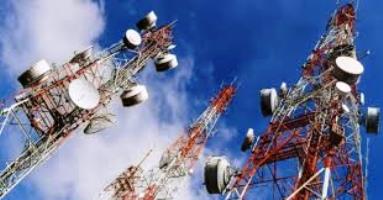
The Association of Telecommunications Companies of Nigeria (ATCON) on Thursday warned that weak penalties under Nigeria’s Critical National Information Infrastructure (CNII) policy are weakening efforts to protect telecom assets.
The President of ATCON, Mr Tony Emoekpere, made this known during an interview with reporters in Lagos while calling for urgent legal reforms to strengthen enforcement.
Emoekpere said that although offenders are being apprehended and prosecuted, the current framework is failing to serve as a deterrent.
He noted that Nigeria’s Designation and Protection of Critical National Information Infrastructure (CNII) Order 2024, signed by President Bola Ahmed Tinubu, provides the main legal framework for safeguarding critical ICT infrastructure against vandalism, sabotage, and theft.
The Order, anchored on the Cybercrimes (Prohibition, Prevention, etc.) Act 2015, classifies telecom towers, fibre-optic cables, and data centres as critical national infrastructure deserving enhanced protection.
“People are being caught, but the offences are still treated as petty crimes. That limits the impact. CNII needs stronger legal backing — such as an Act or a more robust executive order — to give it more teeth,” the ATCON president said.
Emoekpere said the association is actively supporting the implementation of the CNII policy in collaboration with security agencies, stressing that telecom infrastructure is critical to national security and economic growth.
He also reaffirmed support for the Federal Government’s “Project Bridge,” aimed at expanding connectivity across the country, but identified right-of-way approvals across states as a major bottleneck.
According to him, the need to secure approvals from multiple states is slowing down implementation, though efforts are ongoing to resolve the issue.
On service quality, Emoekpere acknowledged that operators are struggling to keep pace with rising subscriber numbers and increasing data demand, despite recent tariff adjustments.
“The challenge is not that nothing is being done — investments are ongoing. But demand is growing even faster, and operators are constantly trying to catch up,” he said.
He added that subscriber migration between networks and shifting usage patterns are placing additional pressure on certain operators, contributing to service fluctuations.
READ ALSO: Hemingway’s Safaris Africa, LCCI host AI robotics bootcamp
However, he assured customers that efforts are ongoing to improve network performance.
“We value our subscribers, and everything is being done not just to maintain, but to improve service delivery,” he said.
The telecommunications sector has consistently identified infrastructure vandalism as a major challenge affecting service delivery and operational costs.
Industry stakeholders believe the CNII Order will strengthen the protection of telecom assets and improve quality of service, following years of rising attacks on infrastructure.
Data from operators show that fibre-optic cable cuts remain one of the biggest threats to telecom operations. Nigeria recorded 1,883 fibre cuts in the first quarter of 2026. Between January and August 2025, about 19,384 incidents were reported nationwide, averaging more than 2,400 monthly cases.
MTN Nigeria alone reported 9,218 fibre cuts in 2025, up from 9,000 in 2024 and 6,000 in 2023.
The sector has also faced widespread theft of generators, batteries, and other power assets. In 2025, criminals stole 656 critical power assets, including 152 generators and 504 batteries, while operators lost an estimated ₦27 billion due to infrastructure damage within a 12-month period.
Industry reports indicated that 577 network outages recorded in the first quarter of 2026 were directly linked to vandalism of telecom infrastructure.
