


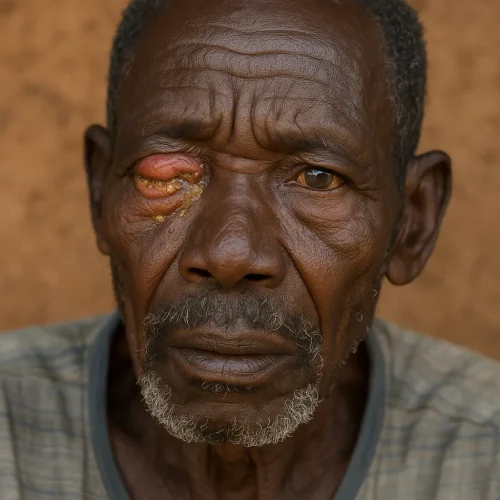
The Kaduna State Government says it has successfully eliminated trachoma as a public health problem in the state.
The Commissioner for Health, Umma Kaltum-Ahmed, disclosed this on Saturday at a stakeholders’ engagement and recognition ceremony to mark the 2026 World Neglected Tropical Diseases (NTDs) Day in Kaduna.
Kaltum-Ahmed said the event, with the theme “Unite, Act, Eliminate NTDs Towards the Achievement of Universal Health Coverage and the Sustainable Development Goals,” underscored the need for collective action against diseases that disproportionately affect poor and vulnerable populations.
She said NTDs reduce productivity, increase healthcare costs and deepen poverty due to the disabilities and complications they cause.
Represented by the Medical Director of Barau Dikko Teaching Hospital, Dr Musa Tabari, the commissioner said NTDs remained a major public health concern, driven by poverty, poor sanitation, lack of clean water and limited access to healthcare.
She said an estimated six million people in Kaduna State were at risk of one or more NTDs, including onchocerciasis, lymphatic filariasis, schistosomiasis and soil-transmitted helminth infections.
Kaltum-Ahmed said the state had recorded significant progress through mass drug administration, morbidity management, integrated vector control, sanitation and hygiene promotion, and improved access to safe water.
According to her, 15 of the 18 local government areas (LGAs) in the state had interrupted transmission of lymphatic filariasis, while 12 LGAs had stopped treatment for onchocerciasis.
The commissioner, however, said all 23 LGAs remained endemic for schistosomiasis, while 14 LGAs were still affected by soil-transmitted helminths and required impact assessments.
Kaltum-Ahmed said achievements recorded included the treatment of 1,261,262 persons for lymphatic filariasis out of a target of 1,571,893, representing 80 per cent coverage.
She said 4,089,867 people were treated for onchocerciasis out of a target of 5,427,604, while 2,381,343 people received treatment for schistosomiasis and intestinal worms out of 2,976,667, also representing 80 per cent coverage.
Kaltum-Ahmed added that 110 people benefited from lymphedema home-based care, exceeding the target of 100, while 54 hydrocelectomy surgeries were conducted out of a target of 50.
She said 2,501,457 children received azithromycin for trachoma prevention out of a target of 2,875,242, representing 87 per cent coverage.
The commissioner stressed that Universal Health Coverage (UHC) remained critical to disease prevention by ensuring access to quality healthcare services without financial hardship.
Kaltum-Ahmed said more than 10 LGAs in the state had achieved open defecation-free status in line with national sanitation policies.
She added that a Water, Sanitation and Hygiene (WASH)-NTD integrated landscape analysis had been completed to guide evidence-based planning and interventions.
According to her, the Kaduna State NTD Control and Elimination Programme, with support from Sightsavers, had completed a review of its Master Plan, which would soon be disseminated.
Earlier, the State Director of Public Health, Dr Saqid Abubakar-Idris, said World NTD Day provided an opportunity to review progress, raise awareness and strengthen collaboration.
Abubakar-Idris said the state adopted a new approach this year by combining the celebration with a recognition and stakeholder review meeting.
He commended the Kaduna State Government, the Federal Ministry of Health, Sightsavers and other partners, as well as health workers and community drug distributors, for their contributions.
In a goodwill message, the Country Coordinator for Trachoma at Sightsavers, Dr Teyil Wamyil-Mshelia, thanked the Ministry of Health for sustained collaboration towards ending NTDs in the state and across the country.
