

• Home
  • Agric
  • Sci & Tech
  • Health
  • Environment
  • Hausa News
  • More
    • Business/Banking & Finance
    • POLITICS
    • Entertainments & Sports
    • International
    • Investigation
    • Law & Human Rights
    • Africa
    • ACCOUNTABILITY/CORRUPTION
    • Hassan Gimba
    • Column
    • Prof. Jibrin Ibrahim
    • Prof. M.K. Othman
    • Defense/Security
    • Education
    • Energy/Electricity
    • Entertainment/Arts & Sports
    • Society and Lifestyle
    • Food & Agriculture
    • Health & Healthy Living
    • International News
    • Interviews
    • Investigation/Fact-Check
    • LAW & HUMAN RIGHTS
    • Oil & Gas/Mineral Resources
    • PRESS FREEDOM/JOURNALISM/PR
    • General News
    • Presidency
  • About Us
    • Contact Us
    • Board Of Advisory
    • Privacy Policy
    • Ethics Policy
    • Teamwork And Collaboration Policy
    • Fact-Checking Policy
    • Advertising
  • Media OutReach Newswire
    • Wire News
  • The Stories
Facebook Twitter Instagram
Trending
  • Despite tight monetary policy, Nigeria’s broad money supply climbs to N129.21trn in May
  • Nigerians keep N5.19trn outside banks despite cashless drive
  • Santuscom’s fertilizer to improve soil, crops
  • DSN CEO: Data classification key to Nigeria’s data sovereignty
  • Nigeria’s national metering rate rises to 57%
  • Lagos to increase investment in tech, innovation
  • Fulani group urges herders to support security efforts, expose criminals in Southwest
  • Nigeria’s local petrol production hits 48m litres daily
Facebook Twitter Instagram YouTube
AsheNewsAsheNews
  • Home
  • Agric

    Santuscom’s fertilizer to improve soil, crops

    June 23, 2026

    Nigeria’s neem advantage: Unlocking a strategic bioeconomy industry for climate, agriculture and industrial growth, Dr Fakunle Aremu

    June 22, 2026

    AFAN predicts drop in food prices after fertiliser distribution

    June 22, 2026

    Northern Nigeria’s poultry economy: Unlocking a multi-billion dollar investment opportunity across the value chain, By Dr. Fakunle Aremu

    June 19, 2026

    Association trains farmers on agroforestry, carbon opportunities

    June 18, 2026
  • Sci & Tech

    DSN CEO: Data classification key to Nigeria’s data sovereignty

    June 23, 2026

    Lagos to increase investment in tech, innovation

    June 23, 2026

    ALTON supports CBN’s local data hosting mandate

    June 20, 2026

    NDPC seeks INEC data records over breach allegations

    June 20, 2026

    SGF urges Galaxy Backbone to boost cybersecurity, broadband

    June 20, 2026
  • Health

    RCCG freedom court parish holds community cleanup for 18th anniversary

    June 23, 2026

    NAFDAC holds workshop on medicine safety in Karu

    June 22, 2026

    Expert urges focused use of N10bn for Ebola preparedness

    June 22, 2026

    From Sokoto to Bulgaria: Dr. Dange’s mission to transform pediatric care

    June 21, 2026

    Nigeria’s Fathers face silent mental health crisis

    June 21, 2026
  • Environment

    Nigeria’s national metering rate rises to 57%

    June 23, 2026

    Nigeria’s local petrol production hits 48m litres daily

    June 23, 2026

    Lagos joins global under2 climate coalition

    June 23, 2026

    FAAN considers extending airport taxi upgrade deadline to October

    June 23, 2026

    Floods, Windstorm devastate Ebonyi farmlands, shops

    June 22, 2026
  • Hausa News

    UNA signs MoU to launch air Bissau in Guinea-Bissau

    June 15, 2026

    Otti plans 250-room 5-star hotel in Umuahia

    April 11, 2026

    Anti-quackery task force seals 4 fake hospitals in Rivers

    August 29, 2025

    [BIDIYO] Yadda na lashe gasa ta duniya a fannin Ingilishi – Rukayya ‘yar shekara 17

    August 6, 2025

    A Saka Baki, A Sasanta Saɓani Tsakanin ‘Yanjarida Da Liman, Daga Muhammad Sajo

    May 21, 2025
  • More
    1. Business/Banking & Finance
    2. POLITICS
    3. Entertainments & Sports
    4. International
    5. Investigation
    6. Law & Human Rights
    7. Africa
    8. ACCOUNTABILITY/CORRUPTION
    9. Hassan Gimba
    10. Column
    11. Prof. Jibrin Ibrahim
    12. Prof. M.K. Othman
    13. Defense/Security
    14. Education
    15. Energy/Electricity
    16. Entertainment/Arts & Sports
    17. Society and Lifestyle
    18. Food & Agriculture
    19. Health & Healthy Living
    20. International News
    21. Interviews
    22. Investigation/Fact-Check
    23. LAW & HUMAN RIGHTS
    24. Oil & Gas/Mineral Resources
    25. PRESS FREEDOM/JOURNALISM/PR
    26. General News
    27. Presidency
    Featured
    Recent

    Despite tight monetary policy, Nigeria’s broad money supply climbs to N129.21trn in May

    June 23, 2026

    Nigerians keep N5.19trn outside banks despite cashless drive

    June 23, 2026

    Santuscom’s fertilizer to improve soil, crops

    June 23, 2026
  • About Us
    1. Contact Us
    2. Board Of Advisory
    3. Privacy Policy
    4. Ethics Policy
    5. Teamwork And Collaboration Policy
    6. Fact-Checking Policy
    7. Advertising
    Featured
    Recent

    Despite tight monetary policy, Nigeria’s broad money supply climbs to N129.21trn in May

    June 23, 2026

    Nigerians keep N5.19trn outside banks despite cashless drive

    June 23, 2026

    Santuscom’s fertilizer to improve soil, crops

    June 23, 2026
  • Media OutReach Newswire
    • Wire News
  • The Stories
AsheNewsAsheNews
Home»Food & Agriculture»Why FG’s palliatives won’t address food inflation – Experts
Food & Agriculture

Why FG’s palliatives won’t address food inflation – Experts

Why FG’s palliatives won't address food inflation – Experts
EditorBy EditorJuly 28, 2024Updated:July 28, 2024No Comments4 Mins Read
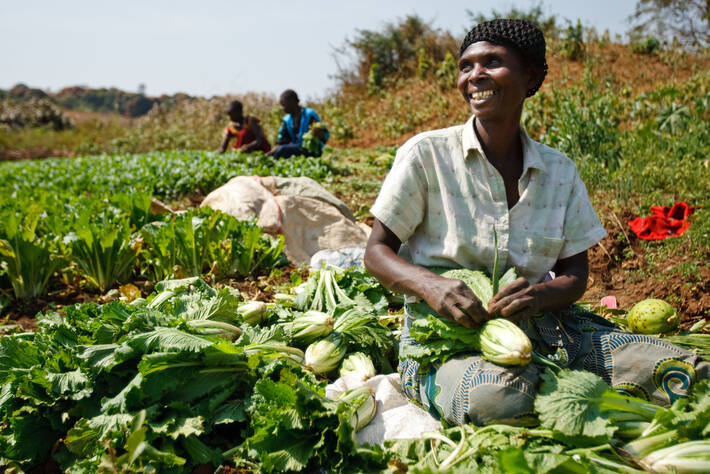
Farmer urges Nigerians to help FG achieve food security
Share
Facebook Twitter LinkedIn Pinterest Email

Agriculture experts have provided reasons why the Federal Government’s food palliatives are ineffective in addressing Nigeria’s growing food prices.

The experts shared their views in separate interviews on Sunday in Lagos.

The Federal Government promised to distribute staple food items to underprivileged households across the 36 states and the Federal Capital Territory to address growing food inflation.

However, Mr. Akin Alabi, agriculture expert and co-founder of Corporate Farmers International, said the distribution of palliatives is not a solution to the current food crisis.

“We have to understand that Nigeria has a population of more than 200 million people. If the government wants to provide intervention in terms of food, can they really provide for 200 million people? The government can only provide for 10 percent of the entire households within the population.

“Definitely, it is rather impossible to get the true effect of any Federal Government palliative down to the citizens,” Alabi said.

“The only way we can have an effect is when we begin to deal directly or provide solutions to the cost of primary production by providing subsidies for farm inputs,” he added.

Alabi also called for the empowerment of farmers in primary food production, either in livestock or crop cultivation, to enhance food security.

“Without these, we will only be struggling, and there is no amount of palliatives the government wants to roll out that will cushion the food inflation. How long can a 10kg or 5kg of rice feed a household? Very limited days. When the government begins to look at the major causes of food inflation through primary food production, then we can have ripple effects on food inflation. If not, we will just keep deceiving ourselves. There is no economy that survives on palliatives,” the expert said.

On his part,, a strategic agriculture communication expert, Dr. Ismail Olawale questioned the method of the palliatives distribution.

“The problem with the palliatives is that there is a kind of uncoordinated distribution system. Today, you will hear that the Federal Government has given some 200,000 households some amount of money, and at another time, you will hear that some metric tonnes of rice have been distributed.

“There is a problem with how these palliatives are distributed, hence the lack of evidence of their effect on food prices. Are people benefiting from the cash palliatives still beneficiaries of the foodstuff palliatives? This grey line should be cleared.

“We should also address the issue of favoritism in the distribution of the palliatives by politicians and their affiliates. We should ensure even distribution of these palliatives by reaching out to the targeted people and households,” Olawale said.

He also stressed the need for adequate monitoring of the distribution for maximum impact.

“We are also not sure if there is a functional line in monitoring the distribution of the palliatives for its effects to be evident.

“Also, we need to consider the sustainability of these palliatives to see their effect on food prices. The government should also set market policies that will help crash the cost of food items,” he added.

An agriculture analyst and farmer, Mr. Omotunde Banjoko called for sustainable solutions to address food inflation.

“The food palliatives being distributed cannot solve the current food prices challenge. The problems we are facing presently have root causes, and until they are addressed, food distribution cannot be the solution. One major issue we see with the palliatives is the ineffective distribution.

“If, for example, 300 people are sharing half a bag of rice, how effective will it be on the current food prices? We have seen cases where these food palliatives are being diverted. So, we doubt the effect it will have on food inflation.

“The solution to what we are currently facing is to address insecurity on farms, ensure proper funding for farmers to increase their capacity, and provide farm equipment on lease to farmers to increase food production,” Banjoko said.

He also reiterated the need for youth inclusion in agriculture to boost local production.

“Youths should be encouraged to embrace agriculture to increase local production. We should put in place the right agriculture policies, set up commodity boards to regulate prices, and recapitalize the Bank of Agriculture so that farmers can have access to zero-interest loans.

“Let us look into improving our agriculture value chains and storage. We need to address the real issues and stop the waste of resources or emptying our reserves. Palliatives are not the solution to food inflation,” Banjoko said.

Federal government Food inflation food palliatives
Share. Facebook Twitter Pinterest LinkedIn WhatsApp Reddit Tumblr Email
Editor
  • Website

Related Posts

Santuscom’s fertilizer to improve soil, crops

June 23, 2026

Nigeria’s neem advantage: Unlocking a strategic bioeconomy industry for climate, agriculture and industrial growth, Dr Fakunle Aremu

June 22, 2026

AFAN predicts drop in food prices after fertiliser distribution

June 22, 2026

Leave A Reply Cancel Reply

Despite tight monetary policy, Nigeria’s broad money supply climbs to N129.21trn in May

June 23, 2026

Nigerians keep N5.19trn outside banks despite cashless drive

June 23, 2026

Santuscom’s fertilizer to improve soil, crops

June 23, 2026

DSN CEO: Data classification key to Nigeria’s data sovereignty

June 23, 2026
About Us
About Us

ASHENEWS (AsheNewsDaily.com), published by PenPlus Online Media Publishers, is an independent online newspaper. We report development news, especially on Agriculture, Science, Health and Environment as they affect the under-reported rural and urban poor.

We also conduct investigations, especially in the areas of ASHE, as well as other general interests, including corruption, human rights, illicit financial flows, and politics.

Contact Info:
  • 1st floor, Dogon Daji House, No. 5, Maiduguri Road, Sokoto
  • +234(0)7031140009
  • ashenewsdaily@gmail.com
Facebook Twitter Instagram Pinterest
© 2026 All Rights Reserved. ASHENEWS Daily Designed & Managed By DeedsTech

Type above and press Enter to search. Press Esc to cancel.