

• Home
  • Agric
  • Sci & Tech
  • Health
  • Environment
  • Hausa News
  • More
    • Business/Banking & Finance
    • POLITICS
    • Entertainments & Sports
    • International
    • Investigation
    • Law & Human Rights
    • Africa
    • ACCOUNTABILITY/CORRUPTION
    • Hassan Gimba
    • Column
    • Prof. Jibrin Ibrahim
    • Prof. M.K. Othman
    • Defense/Security
    • Education
    • Energy/Electricity
    • Entertainment/Arts & Sports
    • Society and Lifestyle
    • Food & Agriculture
    • Health & Healthy Living
    • International News
    • Interviews
    • Investigation/Fact-Check
    • LAW & HUMAN RIGHTS
    • Oil & Gas/Mineral Resources
    • PRESS FREEDOM/JOURNALISM/PR
    • General News
    • Presidency
  • About Us
    • Contact Us
    • Board Of Advisory
    • Privacy Policy
    • Ethics Policy
    • Teamwork And Collaboration Policy
    • Fact-Checking Policy
    • Advertising
  • Media OutReach Newswire
    • Wire News
  • The Stories
Facebook Twitter Instagram
Trending
  • How Sokoto, UNICEF are rewriting the story of child development – Usman M. Binji
  • Tinubu signs executive order to coordinate crypto regulation, establishes CBN-led council
  • UNICEF urges stronger leadership, community action to tackle child health challenges
  • Fact-check: Viral images of “300 bandits” in Zamfara are from South Africa, by Shehu Muhammad Shehu
  • CBN’s proposed banking rules may push Zenith, UBA, Fidelity into holding company structure
  • Ogun distributes agricultural Inputs to 2,740 cassava farmers
  • Nigeria key to achieving PPR-free West Africa, Continent — AU-IBAR
  • NALDA establishes Renewed hope mega farm estates in 4 states
Facebook Twitter Instagram YouTube
AsheNewsAsheNews
  • Home
  • Agric

    Ogun distributes agricultural Inputs to 2,740 cassava farmers

    July 17, 2026

    Nigeria key to achieving PPR-free West Africa, Continent — AU-IBAR

    July 17, 2026

    NALDA establishes Renewed hope mega farm estates in 4 states

    July 17, 2026

    Benue pledges stronger partnership to boost seed distribution, food security

    July 17, 2026

    AANI partners with REA to deploy renewable energy for smallholder farmers

    July 17, 2026
  • Sci & Tech

    Delta unveils digital platform for outdoor advertising management

    July 17, 2026

    RMRDC launches digital journal to drive innovation, industrial growth

    July 17, 2026

    Abia startup law 2025 hailed as game changer for innovation

    July 17, 2026

    Abia, Enugu call for collaboration to train 150,000 tech talents

    July 16, 2026

    Ntel launches new growth strategy for digital, real estate expansion

    July 15, 2026
  • Health

    How Sokoto, UNICEF are rewriting the story of child development – Usman M. Binji

    July 17, 2026

    UNICEF urges stronger leadership, community action to tackle child health challenges

    July 17, 2026

    Bauchi NGO mobilises 100 pints of blood for emergency care

    July 17, 2026

    FG to revive women political empowerment centres nationwide

    July 17, 2026

    NOA urges Nigerians to stay vigilant against Ebola outbreak

    July 17, 2026
  • Environment

    Kaduna strengthens flood preparedness as state remains at high risk

    July 17, 2026

    FG reports steady progress on legacy highways, approves new road contracts

    July 17, 2026

    FG mobilises N7.6bn for child nutrition

    July 17, 2026

    WaterAid Nigeria unveils solar powered water facility in Lagos

    July 16, 2026

    Zulum distributes 7,250 gas cylinders to teachers, sanitation workers

    July 16, 2026
  • Hausa News

    UNA signs MoU to launch air Bissau in Guinea-Bissau

    June 15, 2026

    Otti plans 250-room 5-star hotel in Umuahia

    April 11, 2026

    Anti-quackery task force seals 4 fake hospitals in Rivers

    August 29, 2025

    [BIDIYO] Yadda na lashe gasa ta duniya a fannin Ingilishi – Rukayya ‘yar shekara 17

    August 6, 2025

    A Saka Baki, A Sasanta Saɓani Tsakanin ‘Yanjarida Da Liman, Daga Muhammad Sajo

    May 21, 2025
  • More
    1. Business/Banking & Finance
    2. POLITICS
    3. Entertainments & Sports
    4. International
    5. Investigation
    6. Law & Human Rights
    7. Africa
    8. ACCOUNTABILITY/CORRUPTION
    9. Hassan Gimba
    10. Column
    11. Prof. Jibrin Ibrahim
    12. Prof. M.K. Othman
    13. Defense/Security
    14. Education
    15. Energy/Electricity
    16. Entertainment/Arts & Sports
    17. Society and Lifestyle
    18. Food & Agriculture
    19. Health & Healthy Living
    20. International News
    21. Interviews
    22. Investigation/Fact-Check
    23. LAW & HUMAN RIGHTS
    24. Oil & Gas/Mineral Resources
    25. PRESS FREEDOM/JOURNALISM/PR
    26. General News
    27. Presidency
    Featured
    Recent

    How Sokoto, UNICEF are rewriting the story of child development – Usman M. Binji

    July 17, 2026

    Tinubu signs executive order to coordinate crypto regulation, establishes CBN-led council

    July 17, 2026

    UNICEF urges stronger leadership, community action to tackle child health challenges

    July 17, 2026
  • About Us
    1. Contact Us
    2. Board Of Advisory
    3. Privacy Policy
    4. Ethics Policy
    5. Teamwork And Collaboration Policy
    6. Fact-Checking Policy
    7. Advertising
    Featured
    Recent

    How Sokoto, UNICEF are rewriting the story of child development – Usman M. Binji

    July 17, 2026

    Tinubu signs executive order to coordinate crypto regulation, establishes CBN-led council

    July 17, 2026

    UNICEF urges stronger leadership, community action to tackle child health challenges

    July 17, 2026
  • Media OutReach Newswire
    • Wire News
  • The Stories
AsheNewsAsheNews
Home»Food & Agriculture»The 3 technological trends driving the future of crop production
Food & Agriculture

The 3 technological trends driving the future of crop production

NewsdeskBy NewsdeskDecember 10, 2025Updated:December 10, 2025No Comments4 Mins Read
Share
Facebook Twitter LinkedIn Pinterest Email

From AI-driven analytics to satellite imagery, advances in technology are transforming how the agriculture industry monitors and manages crop production. Where producers once relied exclusively on intuition and experience, important decisions are now increasingly guided by ongoing research and data. With access to accurate insights and smarter tools, farmers can ultimately produce higher yields while using fewer resources.

Microbial product developments

One of the most significant shifts in modern agriculture has been the rise of biological technology, which is already making a profound impact on crop production. Microorganisms such as bacteria, fungi and other microbes play a vital role in soil health and plant development.

Soil health plays a critical role in crop productivity, yet a natural process known as nutrient fixation often limits the availability of nutrients for plant growth. During this process, soil particles temporarily bind essential nutrients making them unavailable to plant roots.

The introduction of specialised microbial products offers an innovative solution. These products work to reverse nutrient fixation, releasing previously locked nutrients and improving their availability for crop uptake. By enhancing nutrient accessibility, microbial solutions help producers maximise soil potential and support sustainable plant growth.

Specialised products such as Omnia’s range of biostimulants, biofertilizers and root-stimulating products fall under this umbrella. Among them is Rhizovator™ G1, a biostimulant blend that boosts germination, root and biomass growth, supports microbial life, and improves nutrient efficiency and resilience.

AgriBio: a case in point

In an era of unprecedented environmental change, the outcomes in terms of yield size are significant. Maize, for example, has a genetic potential of around 35 tonnes per hectare. Yet, in reality, given environmental factors such as drought and soil degradation, the actual average yield in South Africa is much lower, at around 5 tonnes per hectare.

With today’s technology – precision farming techniques, advanced electronics and AI-powered solutions – paired with innovation in the field of biological technology, producers could harvest between 10 and 12 tonnes per hectare.

As a result of these kinds of technologies, maize yields have in fact increased exponentially. Similar results have been observed with other crops, demonstrating the broad impact of these technologies.

Smart machinery driving modern efficiency

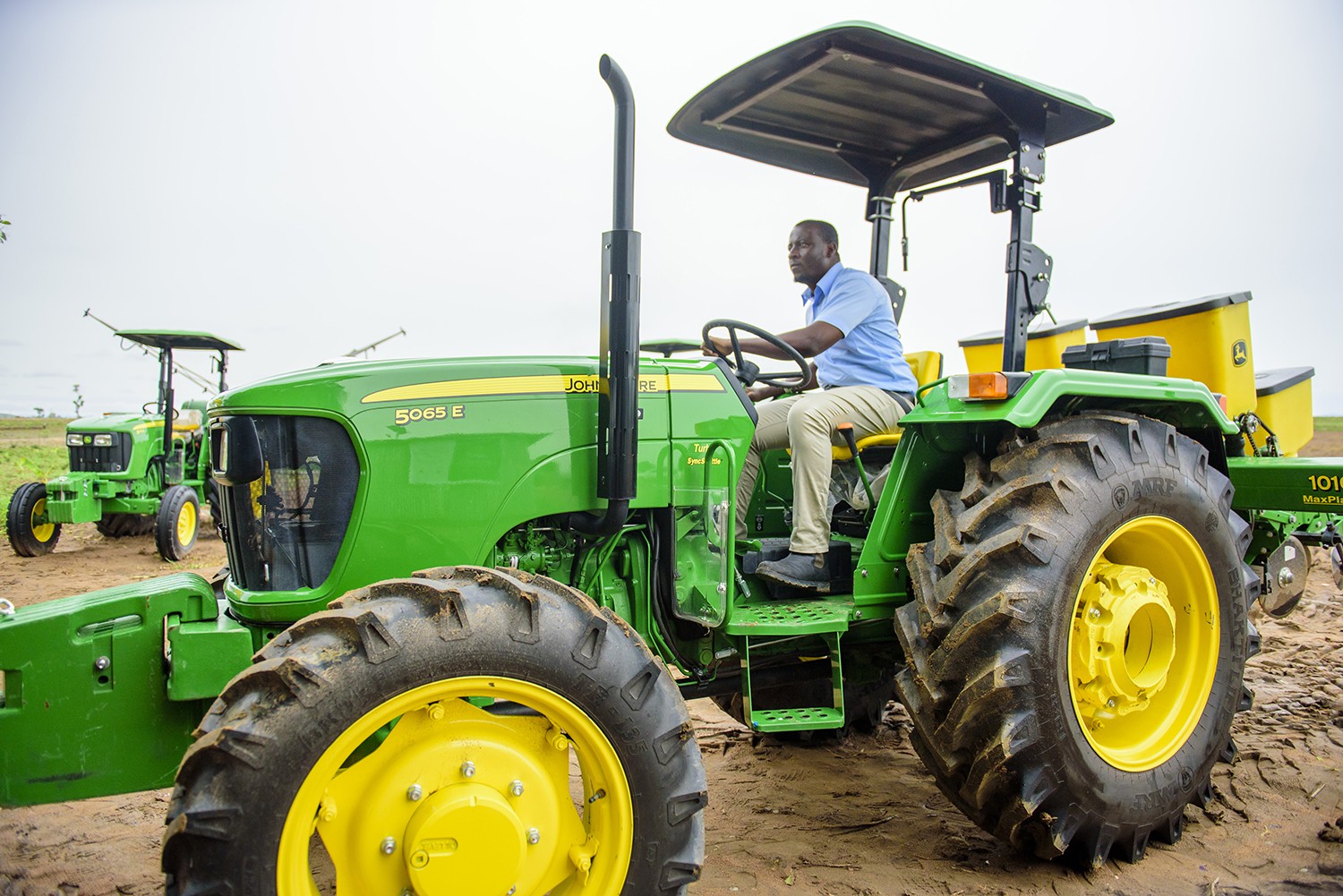
Another trend in agriculture is the evolution of hardware – the machinery and equipment that are key to farming success. Over the past decade, tractors, planters and harvesters have been equipped with advanced technologies such as GPS, sensors and AI-enabled equipment. Many of these machines now operate with autonomous steering capabilities, navigating different types of terrain and applying different rates of chemicals with minimal human input.

These developments have been instrumental in precision farming, which uses data and analytics to manage crops and soil with high accuracy, optimising inputs, reducing waste and improving yields.

This shift in hardware goes beyond creating bigger, faster machines; it’s about integrating smart technology and tools with existing farming systems to produce more sustainable outcomes in the long term.

Bulk data analyses

The last few years have also seen producers relying more heavily on advanced types of analyses – data that can revolutionise decision-making by providing precise insights into aspects such as soil health, plant nutrition and water management. At Omia, multiple types of analyses are combined and cross-referenced to enhance the accuracy of reports and maximise the usefulness of datapoints.

For instance, Omnia’s OMNI-PRECISE™ solution combines soil physical and chemical analyses, variable rate technology, zone management, and proximal and remote sensing, all supported by the expertise of an experienced agronomist. By using these analyses to identify variations within fields, producers can greatly reduce specific risks associated with each unit by implementing the best rectification strategy.

The advent of AI has supercharged this, enabling faster data processing, more accurate predictions, and real-time decision-making. Collectively, these technologies are changing the way producers optimise their resources and make informed decisions, enabling them to build more efficient and climate-resilient businesses.

South Africa
Share. Facebook Twitter Pinterest LinkedIn WhatsApp Reddit Tumblr Email
Newsdesk
  • Website

Related Posts

Ogun distributes agricultural Inputs to 2,740 cassava farmers

July 17, 2026

Nigeria key to achieving PPR-free West Africa, Continent — AU-IBAR

July 17, 2026

NALDA establishes Renewed hope mega farm estates in 4 states

July 17, 2026

Leave A Reply Cancel Reply

How Sokoto, UNICEF are rewriting the story of child development – Usman M. Binji

July 17, 2026

Tinubu signs executive order to coordinate crypto regulation, establishes CBN-led council

July 17, 2026

UNICEF urges stronger leadership, community action to tackle child health challenges

July 17, 2026

Fact-check: Viral images of “300 bandits” in Zamfara are from South Africa, by Shehu Muhammad Shehu

July 17, 2026
About Us
About Us

ASHENEWS (AsheNewsDaily.com), published by PenPlus Online Media Publishers, is an independent online newspaper. We report development news, especially on Agriculture, Science, Health and Environment as they affect the under-reported rural and urban poor.

We also conduct investigations, especially in the areas of ASHE, as well as other general interests, including corruption, human rights, illicit financial flows, and politics.

Contact Info:
  • 1st floor, Dogon Daji House, No. 5, Maiduguri Road, Sokoto
  • +234(0)7031140009
  • ashenewsdaily@gmail.com
Facebook Twitter Instagram Pinterest
© 2026 All Rights Reserved. ASHENEWS Daily Designed & Managed By DeedsTech

Type above and press Enter to search. Press Esc to cancel.