


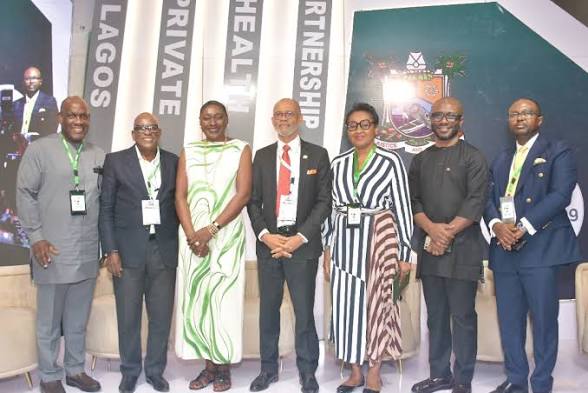
The Lagos State Government has unveiled a comprehensive 10-year Primary Healthcare (PHC) Financing Plan (2026–2036) aimed at expanding functional health centres and achieving universal health insurance coverage.
Prof. Akin Abayomi, Lagos State Commissioner for Health, introduced the plan during a two-day retreat in Lekki focused on developing a sustainable and accountable funding model for the state’s growing population.
The retreat themed “Advancing Sustainable Health Systems in Lagos: A 10-Year PHC Financing Plan” aligns with the Lagos State Development Plan 2052 (LSDP 2052), a 30-year roadmap to overhaul the health system, strengthen primary care, and reverse poor maternal and child health indicators.
Abayomi described the 30-year plan as a rare long-range vision on the continent, noting that Lagos is the only geopolitical entity in Africa with such a document.
He said Lagos currently has approximately 340 Primary Health Centres, nearly half of which require urgent upgrades.
“Our goal is to increase this to 600 fully functional, well-equipped and well-staffed PHCs,” Abayomi said.
The Commissioner expressed concern over current health indices, citing 430 maternal deaths per 100,000 live births and the fact that four out of every ten children suffer from malnutrition, which he described as unacceptable.
He lamented the severe shortage of doctors and nurses in the state, worsened by the “Japa” phenomenon, and stressed the need for better working conditions to retain and attract healthcare professionals.
Abayomi called for a shift from high out-of-pocket health expenditure to insurance-based financing.
Dr. Ibrahim Mustafa, Permanent Secretary of the Lagos State Primary Health Care Board, emphasised transparency in fund utilisation and effective management of schemes like the Basic Healthcare Provision Fund.
The Special Adviser to the Governor on Health, Dr. Kemi Ogunyemi, described the plan as a strategic pathway for long-term impact through strong partnerships.
Health Economist Dr. Olamide Okulaja noted that 77 per cent of healthcare spending in Nigeria is still out-of-pocket, while only 20 per cent of facilities nationwide are fully functional.
Stakeholders from the 20 Local Government Areas and 37 Local Council Development Areas attended the retreat. They agreed that the success of the 2026–2036 plan would depend on sustained political will, improved data management, and strong accountability.
