


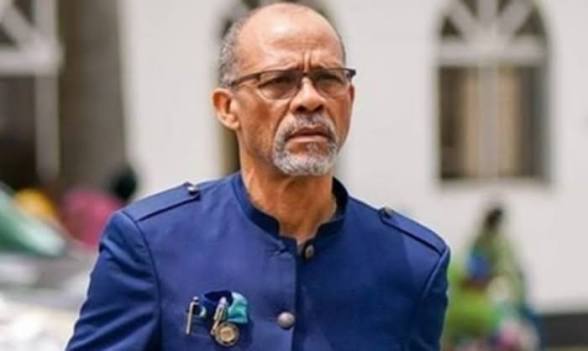
Lagos State faces a severe shortage of doctors and nurses that could take centuries to resolve without urgent intervention, Health Commissioner Prof. Akin Abayomi has warned.
Abayomi spoke on Wednesday during the Lagos State Primary Health Care Financing Retreat on Advancing Sustainable Health Systems in Lagos: A 10-Year PHC Financing Plan.
He identified workforce shortages as the greatest crisis confronting the health sector and urged local government chairmen to support ongoing reforms.
“We have problems in health. The main crisis is the workforce. We have a serious shortage of doctors and nurses,” Abayomi said.
According to him, Lagos, with nearly 30 million residents, requires about 30,000 doctors but currently has only 7,000 practising in the state.
He added that the state also needs at least 40,000 nurses to meet healthcare demands, warning that current numbers fall far short.
Abayomi noted that current medical training capacity is too low to bridge the deficit within a reasonable timeframe.
“If we’re only producing 200 doctors every year, when are we going to catch up with that 30,000 deficit? It will take us almost 500 years. But we don’t have that kind of time,” he said, stressing the urgency of expanding training and improving retention.
Abayomi explained that the shortage reflects a wider global workforce crisis, but African countries suffer heavier losses due to the migration of skilled professionals.
“When Europe or America has a shortage of skills, they go abroad to look for that skill, and the best place is Africa and India,” he said.
He warned that many healthcare workers remaining in Nigeria are exhausted from carrying workloads meant for much larger teams.
“Those left behind are tired and burnt out because they are working the load that 10 doctors or nurses should be doing,” Abayomi stated.
READ ALSO: Lagos unveils 10-year primary healthcare financing plan
To address the crisis, he outlined a four-point strategy focused on improving welfare, better working conditions, increased training, and attracting professionals back home.
“We can look after them better. We can improve their working conditions, we can train more, and attract those who have gone to come back,” he said.
Abayomi disclosed that Lagos is establishing a standalone University of Medicine and Health Sciences to significantly boost healthcare workforce production.
He said the institution would increase annual medical graduates from about 300 to 2,500 to tackle the state’s growing human resource deficit in healthcare.
